
Last Updated on
Vienna’s Innere Stadt, the 1st District, is where the city’s grand history, culture, and daily life come together. At the center of Austria’s capital, this area is more than a tourist hotspot—it’s the true heart of Vienna. Streets here are filled with imperial palaces, world-class museums, stylish cafes, and the everyday rhythm of Viennese life. If you want to understand Vienna, you must experience Innere Stadt.
But the district is not just about famous sights. It’s a living, breathing part of the city, home to locals, students, artists, and professionals. Walk through the narrow lanes, and you’ll see historic buildings standing next to modern shops. The 1st District invites visitors to discover its layers: royal splendor, artistic treasures, hidden corners, and lively neighborhoods.
This guide reveals what makes Innere Stadt special—from iconic landmarks like the Stephansdom to cozy coffee houses, from shopping streets to quiet courtyards. You’ll find practical tips, local secrets, and clear advice to help you make the most of your visit. Whether you have a day or a week, Vienna’s imperial heart has something for everyone.
History And Heritage Of Innere Stadt
The roots of Innere Stadt go back more than 2,000 years. The area began as the Roman settlement Vindobona, where soldiers and merchants lived along the Danube. Over time, the district grew into the center of the Habsburg Empire. Many buildings date from the medieval and Baroque periods, showing the city’s power and ambition.
The district was once surrounded by city walls. In the mid-1800s, the walls were replaced by the Ringstrasse, a wide boulevard that circles the old town. Today, the Ringstrasse marks the boundary of Innere Stadt and is lined with palaces, theaters, and parks.
Key historical facts:
- The district covers about 2.9 km² and has around 17,000 residents.
- Most of Vienna’s oldest churches, including Stephansdom, are here.
- The area is a UNESCO World Heritage site, thanks to its preserved architecture and urban layout.
The mix of Roman, medieval, and imperial influences gives Innere Stadt its unique look and feel. While many cities changed their old centers, Vienna’s 1st District still keeps its historic charm.
Iconic Sights And Landmarks
Innere Stadt is packed with famous sights. Some are grand and well-known, others are hidden gems. Here are the must-see landmarks:
Stephansdom (st. Stephen’s Cathedral)
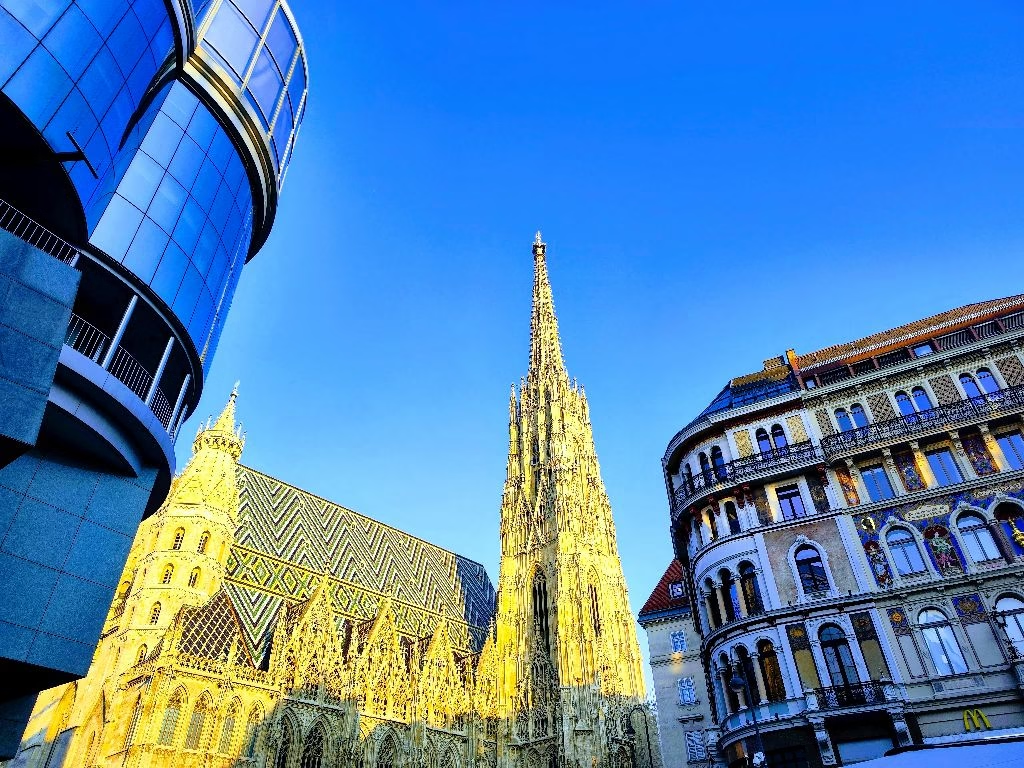
This Gothic masterpiece stands in the middle of the district. The cathedral was started in 1137 and finished in the 16th century. Its tall south tower (136 meters) is a city symbol.
- Climb the tower for a panoramic view of Vienna.
- Visit the catacombs below to see medieval tombs.
- The colorful roof tiles form patterns and the city’s coat of arms.
Hofburg Palace
Once home to the Habsburg emperors, the Hofburg is a huge complex with museums, official offices, and the Austrian president’s residence.
- The Imperial Apartments show royal life.
- The Sisi Museum tells the story of Empress Elisabeth.
- The Spanish Riding School hosts classical horse shows.
Ringstrasse
This grand boulevard circles Innere Stadt. Walk or take the tram to see impressive buildings:
- Vienna State Opera: World-famous performances.
- Parliament: Greek-style columns.
- Burgtheater: Austria’s top theater.
Rathaus (city Hall)
Built in Neo-Gothic style, the Rathaus is where Vienna’s government meets. Its tower is a landmark, and the square hosts events like the Christmas market.

Museumsquartier
While just outside the 1st District, the Museumsquartier is an easy walk. The area has top museums:
- Leopold Museum: Modern Austrian art.
- Kunsthalle Wien: Contemporary exhibitions.
- MUMOK: Modern art.
St. Peter’s Church
A Baroque church known for its ornate interior and concerts. It’s smaller than Stephansdom but just as beautiful.
Albertina Museum
Famous for its collection of prints, drawings, and photography. The palace itself is worth seeing.
Jewish Museum
The Jewish Museum Vienna documents the city’s Jewish history and culture. It’s located on Dorotheergasse.
Demel And Café Central
Historic coffee houses that offer a taste of Viennese tradition. Try the famous Sachertorte or apple strudel.
Navigating Innere Stadt: Getting Around
The district is compact and easy to explore on foot. Most streets are pedestrian-friendly, and public transport is excellent.
Walking
Almost all main sights are within a 15-minute walk of each other. The narrow lanes, arcades, and courtyards make wandering enjoyable. Comfortable shoes are a must.
Public Transport
Vienna’s U-Bahn (subway) has several stops in Innere Stadt:
- Stephansplatz (U1, U3): For the cathedral and main shopping streets.
- Karlsplatz (U1, U2, U4): Near the opera and Ringstrasse.
- Trams run along the Ringstrasse, offering easy access.
Horse-drawn Carriages (fiaker)
For a classic experience, ride a Fiaker. These carriages are not cheap, but they offer a unique view of the city.
Cycling
Vienna has bike lanes, but Innere Stadt’s streets can be busy. If you’re confident, try the Citybike Wien rental system.
Parking
Driving is not recommended. Parking is expensive and limited. Most hotels offer information about nearby garages.
Shopping In The 1st District
Innere Stadt is Vienna’s main shopping area. From luxury brands to local goods, you’ll find something for every taste.
Graben
A wide pedestrian street with high-end stores:
- Louis Vuitton
- Cartier
- Rolex
Graben is also home to the Pestsäule, a historic monument.
Kärntner Strasse
This street leads from Stephansdom to the opera. Here, you’ll find:
- Fashion chains (Zara, H&M)
- Souvenir shops
- Jewelry stores

Kohlmarkt
Known for luxury shopping:
- Chanel
- Tiffany & Co.
- Demel pastry shop
Rotenturmstrasse
A mix of international brands and local boutiques. Good for gifts and unique finds.
Naschmarkt (nearby)
Just outside the 1st District, the Naschmarkt is Vienna’s most famous food market. Try fresh produce, spices, and snacks.
Shopping Tips
- Shops usually open at 10 am and close at 6-7 pm.
- Sundays are quiet; most stores are closed.
- Tax-free shopping is possible for non-EU visitors (ask for receipts).
Culinary Experiences: Food And Drink
Vienna’s 1st District is famous for its cafes and restaurants. The food scene blends tradition and modern tastes.
Traditional Viennese Cafes
The coffee house culture is part of Vienna’s identity. Sit, read, and enjoy a pastry—no rush.
- Café Central: Once visited by Freud and Trotsky.
- Café Sacher: Try the original Sachertorte.
- Café Demel: Famous for cakes and chocolate.
Local Restaurants
Sample classic dishes like:
- Wiener Schnitzel: Breaded veal, served with potatoes.
- Tafelspitz: Boiled beef with horseradish.
- Gulasch: Hearty stew, Hungarian-style.
Popular spots:
- Figlmüller: Known for large schnitzels.
- Plachutta: Famous for tafelspitz.
International Cuisine
Many restaurants serve Italian, Asian, and French food. Vegetarian and vegan options are common.
Street Food
Look for sausage stands (“Würstelstand”) around Stephansplatz. Try a Käsekrainer (cheese sausage) or hot dog.
Dining Etiquette
- Table service is slow—enjoy the experience.
- Tipping: 5-10% is standard, rounded up.
- Reservations are wise for dinner.
Arts And Culture: Museums, Music, And More
Innere Stadt is Vienna’s cultural capital. Museums, galleries, theaters, and music venues are everywhere.
Museums
Besides Albertina and the Jewish Museum, there are:
- Mozarthaus Vienna: Mozart’s former home, now a museum.
- Haus der Musik: Interactive sound museum.

Galleries
- Kunsthistorisches Museum: Masterpieces from Europe and Egypt.
- Dorotheum: Art auctions and exhibitions.
Theaters And Opera
- Vienna State Opera: Tickets can be expensive; try standing room for budget options.
- Burgtheater: Top German-language theater.
Classical Concerts
Many churches and halls host concerts:
- Stephansdom: Organ and choir music.
- St. Peter’s Church: Baroque concerts.
Street Performers
On weekends, you’ll see musicians and artists on Graben and Stephansplatz.
Festivals
Innere Stadt hosts events like:
- Vienna Film Festival (summer, at Rathausplatz)
- Christmas Markets (November–December)
Hidden Gems And Local Secrets
While big sights draw crowds, Innere Stadt has many quiet corners and lesser-known attractions.
Heiligenkreuzerhof
A peaceful courtyard off Graben, with old buildings and a small café. Few tourists find it.
Ferstel Passage
A covered arcade with shops, bars, and the Palais Ferstel. Look for the marble fountain and art nouveau details.
Ruprechtskirche
Vienna’s oldest church, dating to the 9th century. Simple, quiet, and atmospheric.
Vienna’s Secret Courtyards
Many buildings have inner courtyards (“Hof”). Some are open to visitors. Look for open gates and explore.
The Anker Clock
A unique Art Nouveau clock at Hoher Markt. Each hour, figures parade across the clock face.

Local Markets
- Am Hof Markt: Weekend farmers’ market with crafts and snacks.
- Freyung Markt: Organic produce and food stalls.
Bookstores
- Morawa: Large bookstore near Stephansplatz, with English books.
- Shakespeare & Company: Small, cozy, with a good selection.
Comparing Major Attractions
Here’s a quick comparison of three top sights in Innere Stadt:
| Attraction | Type | Highlight | Admission |
|---|---|---|---|
| Stephansdom | Cathedral | Gothic architecture, tower view | Free entry, fee for tower/catacombs |
| Hofburg Palace | Palace/Museum | Imperial Apartments, Sisi Museum | Paid |
| Vienna State Opera | Opera House | World-class performances | Paid (standing tickets are cheaper) |
Accommodation: Where To Stay
Innere Stadt has many choices, from luxury hotels to budget hostels.
Luxury Hotels
- Hotel Sacher Wien: Famous for elegance and Sachertorte.
- Grand Hotel Wien: Classic style, near the opera.
Mid-range
- Hotel Austria: Comfortable and central.
- Pension Nossek: Historic building, good value.
Budget
- Hostel Ruthensteiner: Friendly and affordable.
- Wombat’s City Hostel: Popular with young travelers.
Apartment Rentals
Airbnb and Booking. com list apartments in the district. This option is good for families or longer stays.
Comparison Table: Accommodation Types
| Type | Price Range (per night) | Location | Features |
|---|---|---|---|
| Luxury Hotel | $300–$700 | Central, near sights | Spa, fine dining, historic rooms |
| Mid-Range Hotel | $120–$250 | Close to attractions | Comfort, breakfast, Wi-Fi |
| Hostel | $40–$80 | District edge or nearby | Dorms, shared kitchens, social vibe |
| Apartment | $100–$300 | Various | Kitchen, more space, flexible stays |
Safety, Practical Info, And Local Etiquette
Vienna’s 1st District is safe and welcoming. Still, a few tips help visitors enjoy their stay.
Safety
- Pickpocketing is rare but can happen in crowded areas. Keep bags close.
- Emergency number: 112 (EU-wide).
- Police stations are near Stephansplatz and Rathaus.
Money
- Austria uses the Euro (€).
- Credit cards accepted in most places, but small shops may prefer cash.
Language
- German is spoken, but most staff speak English.
- Basic greetings: “Guten Tag” (Hello), “Danke” (Thank you).
Local Etiquette
- Be polite and speak quietly in public spaces.
- In cafes, don’t rush; wait for the waiter to bring the bill.
- Dress neatly, especially in upscale restaurants and theaters.
Tourist Information
- Vienna Tourist Info office is at Albertinaplatz.
- Free city maps are available.
Accessibility
- Most sights are wheelchair accessible.
- Elevators are common in museums and hotels.
Best Time To Visit Innere Stadt
Vienna’s 1st District is enjoyable year-round, but the experience changes with the seasons.
Spring (march–may)
- Mild weather, flowers in parks.
- Less crowded than summer.
Summer (june–august)
- Warm, lively, many festivals.
- Outdoor cafes, street music.
- Can be busy; book ahead.
Autumn (september–november)
- Beautiful fall colors.
- Wine festivals and local events.
- Fewer tourists.
Winter (december–february)
- Magical Christmas markets.
- Cold, but cozy cafes and indoor sights.
- New Year’s events.
Weather Comparison Table
| Season | Avg. Temperature (°F) | Rainy Days | Highlights |
|---|---|---|---|
| Spring | 45–65 | 10–12 | Flowers, fewer crowds |
| Summer | 65–85 | 8–10 | Festivals, outdoor dining |
| Autumn | 40–65 | 10–13 | Wine events, fall colors |
| Winter | 25–45 | 12–14 | Christmas markets, indoor culture |
Practical Tips And Two Non-obvious Insights
Making the most of Innere Stadt requires more than following the crowds. Here are practical tips and a couple of insights many visitors miss:
- Explore Early or Late: Sights like Stephansdom and Hofburg are busiest from 10 am to 3 pm. Visit early morning or late afternoon for quieter moments and better photos.
- Courtyard Access: Many historic buildings have open courtyards, especially in summer. They are not always advertised, but locals use them for lunch or relaxation. Try entering through open gates—most are public spaces.
- Standing Opera Tickets: The Vienna State Opera offers cheap “standing room” tickets. Arrive early, pay €10–15, and enjoy world-class music.
- Museum Combo Tickets: Some museums offer joint tickets (e.g., Hofburg + Albertina), which save money and time.
- Tap Water is Drinkable: Vienna’s tap water comes from the Alps and is very clean. Save money and avoid plastic bottles.
Frequently Asked Questions
What Is The Best Way To Get Around Innere Stadt?
Walking is the easiest way, as most sights are close together. Public transport (U-Bahn and trams) is useful for longer distances. Horse-drawn carriages are a fun but expensive option.
Are There Free Things To Do In The 1st District?
Yes, many sights like Stephansdom (main hall), city parks, street concerts, and courtyards are free. Walking the Ringstrasse and window shopping cost nothing.
What Are The Must-try Foods In Innere Stadt?
Try Wiener Schnitzel, Sachertorte, apple strudel, and cheese sausages from Würstelstands. Traditional cafes offer classic pastries.
Is Innere Stadt Safe At Night?
Yes, it’s one of the safest areas in Vienna. Streets are well-lit, and police are visible. Normal precautions (watch valuables) are enough.
How Many Days Do I Need To See Innere Stadt?
One day covers the highlights, but two or three days let you explore museums, cafes, and hidden spots. The district rewards slow travel.
Final Thoughts
Vienna’s Innere Stadt is more than a collection of historic buildings and museums—it’s a place where the city’s imperial past meets modern life. Every street tells a story, every café welcomes you to pause and enjoy. Whether you’re drawn by art, history, shopping, or simply the beauty of Vienna’s old town, the 1st District offers a rich experience.
Plan your visit, but leave room for surprises. Wander, listen, taste, and soak up the atmosphere. This is Vienna at its finest—its imperial heart, alive and open to all.
If you want to read more about Vienna’s history and attractions, visit the official Vienna Tourism website.
I’m Andrea, a travel writer based between Vienna and the Croatian coast, and I’ve been exploring both countries in depth for the past 10 years.
I’ve taken 50+ solo trips across Austria, Croatia, Germany, Switzerland, Slovenia, Italy and the wider Balkans, and I speak German, Croatian and English fluently, which means I get to have conversations most tourists never do. I know which Viennese coffee house the locals actually go to (hint: not the famous ones), and I know the Dalmatian islands well enough to tell you which ferry to take and which to avoid.
My writing is grounded in lived experience: I’ve navigated Austrian bureaucracy as a resident, hiked the Julian Alps in September when the crowds have gone, and eaten my way through Dubrovnik’s back streets at midnight. I cover Central Europe and the Adriatic for solo travellers who want something more than a highlight reel.
I also write in depth about Vienna and Austria at allaboutvienna.com, where you’ll find everything from neighbourhood guides to seasonal event coverage and expat tips.
When I’m not writing I’m usually hiking, swimming in the Adriatic, or arguing about which city makes better coffee. (It’s Vienna. It’s always Vienna.)