
Vienna Neighbourhoods Guide
This guide covers every tourist-relevant district in Vienna: what makes each one worth visiting, what you will find there, and what kind of traveller it suits best.
Vienna is not one city, it is twenty-three. Each of the city’s official districts, called Bezirke, has its own character, pace, and personality. The imperial grandeur of the First District feels a world away from the multicultural street life of Ottakring. The art galleries and coffee houses of Neubau bear little resemblance to the wine-covered hillsides of Döbling. Knowing which neighbourhood to visit, and which to stay in, can completely transform your experience of this city.
Whether you are planning your first trip to Vienna or your tenth, use this page as your starting point and follow the links to our dedicated guide for each area.
Quick tip: Not all 23 Viennese districts are of interest to visitors. This guide focuses on the ones that genuinely reward exploration. For a complete hotel comparison by neighbourhood, see our Where to Stay in Vienna guide.
The Tourist Core: Districts 1 to 9
The inner districts sit inside or just outside the Ringstrasse, Vienna’s grand imperial boulevard. These are the areas where most visitors spend the majority of their time, and with good reason: the density of architecture, museums, coffee houses, and history is unlike anywhere else in Europe.
1st District: Innere Stadt — The Imperial Heart
The First District is where Vienna was born and where its most famous landmarks still stand: St. Stephen’s Cathedral, the Hofburg Palace, the Spanish Riding School, the Vienna State Opera, and the Kunsthistorisches Museum. It is a Unesco World Heritage Site and, in many respects, the most beautiful square kilometre in Central Europe.
It is also the most expensive, the most crowded, and the most touristy part of the city. If you stay here, you will pay a premium, but you will wake up in the heart of everything. The Innere Stadt rewards slow exploration: duck into the courtyards, follow the Roman ruins beneath the Hoher Markt, and find your way to the Judenplatz memorial before the tour groups arrive.
Best for: First-time visitors, history lovers, luxury travellers, those who want to walk everywhere
2nd District: Leopoldstadt — History, Prater & the Ferris Wheel
Leopoldstadt sits just across the Danube Canal from the First District and is one of the most layered neighbourhoods in the city. It has a long Jewish heritage, the Karmelitermarkt was once the heartof Jewish commerce, and the district was tragically the staging point for deportations during the Second World War. Today that history is honoured at the Jewish Museum and the memorial on Karmeliterplatz.
The other face of Leopoldstadt is pure pleasure. The Prater park stretches across the eastern half of the district, home to the Riesenrad, Vienna’s giant ferris wheel, and kilometres of chestnut-lined paths for cycling and walking. The emerging restaurant scene around Karmelitermarkt and Praterstrasse has made this one of the most talked-about areas in the city for food lovers.
Best for: Food lovers, history travellers, families, cyclists, those looking for a local feel close to the centre
3rd District: Landstraße — Belvedere, Art & the Hundertwasserhaus
Landstrasse holds two of Vienna’s most visited attractions: the Belvedere Palace complex, home to Klimt’s The Kiss, and the Hundertwasserhaus, the flamboyant residential building designed by artist Friedensreich Hundertwasser. These two sights alone justify a visit, but the neighbourhood around them, a mix of grand Ringstrasse apartments and quieter residential streets, is worth lingering in.
The Rochusmarkt, one of Vienna’s smaller daily markets, operates here and is popular with locals for its bakeries, butchers, and coffee stalls. The district is largely residential and less visited than those to the north and west, which makes it a good base for travellers who prefer a quieter setting within easy reach of the centre.
Best for: Art lovers, couples, travellers seeking a quieter residential base with easy transit access
4th District: Wieden — Naschmarkt, Karlsplatz & Academic Vienna
Wieden is a compact district anchored by two unmissable landmarks: Karlsplatz, one of the grandest baroque squares in Central Europe, and the Naschmarkt, Vienna’s largest open-air market. The Naschmarkt runs for almost a kilometre along the Wienzeile and draws a genuinely mixed crowd: locals doing their weekly shop alongside visitors sampling their way through Austrian cheeses, Turkish spices, and fresh seafood.
The district is home to the Vienna University of Technology and has the quietly intellectual energy that comes with it. The Wien Museum on Karlsplatz is currently one of the best redesigned city museums in Europe. The Freihausviertel, tucked into the southern part of the district, is one of Vienna’s most charming micro-neighbourhoods: a web of courtyards, independent shops, and neighbourhood bars that most visitors miss entirely.
Best for: Market lovers, architecture enthusiasts, off-the-beaten-track explorers
5th District: Margareten — Vienna’s Up-and-Coming Quarter
Margareten does not have a headline attraction. What it has is something rarer: a working-class neighbourhood in rapid, organic transformation, with a street art scene, independent coffee shops, and a growing cluster of small restaurants and wine bars. It borders Naschmarkt to the north and is increasingly popular with young Viennese who have been priced out of Neubau.
For visitors, Margareten offers a genuine alternative to the tourist districts: good food, affordable accommodation, easy access to the centre, and an authentic daily-life atmosphere. It is one of the better choices for travellers who want to feel they are living in Vienna, not just visiting it.
6th District: Mariahilf — Shopping, Mozart & Theater an der Wien
Mariahilf is dominated by Mariahilfer Strasse, Vienna’s main shopping boulevard: a long pedestrianised street of international chains, department stores, and the occasional independent shop. It is not the most characterful street in the city, but it serves a practical purpose and the surrounding area compensates with considerably more charm.
The district is home to Theater an der Wien, where Mozart’s Magic Flute had its world premiere and which continues to stage major opera and musical productions. The Haus des Meeres aquarium, housed inside a former Second World War anti-aircraft tower, is one of Vienna’s most genuinely unexpected attractions, an indoor ocean inside a concrete fortress.
Best for: Shoppers, theatre-goers, families, budget-conscious travellers who want central accommodation
7th District: Neubau — Vienna’s Bohemian Creative Quarter
Neubau is where Vienna is young, creative, and slightly self-conscious about both. The MuseumsQuartier, one of the largest cultural complexes in the world, anchors the eastern edge, with the Leopold Museum, MUMOK, and dozens of smaller galleries and performance spaces spread across a former imperial stable. On summer evenings, the courtyard fills with Viennese sprawled on deck chairs drinking wine and watching the lights come on across the city.
Beyond the MQ, the streets of Neubau are some of the most enjoyable in Vienna for wandering without a map: independent bookshops, concept stores, natural wine bars, and coffee houses that take their craft seriously. Spittelberg, the cobblestoned village within the district, is one of the most photographed corners of the city and home to the best of Vienna’s smaller Christmas markets in December.
Best for: Art lovers, young travellers, coffee culture enthusiasts, first-timers who want a local feel with easy access to the big sights
8th District: Josefstadt — Vienna’s Elegant Village
Josefstadt is the smallest district in Vienna and one of the most underrated. It has an almost village-like quality: quiet residential streets, a handful of small theatres, excellent traditional coffee houses, and some of the best neighbourhood restaurants in the city. The Theater in der Josefstadt is one of Austria’s oldest and most respected stages.
There are no headline tourist sights here, and that is precisely the point. Josefstadt is the kind of neighbourhood that rewards travellers who have already done the imperial circuit and are looking for something more like the way Viennese people actually live.
9th District: Alsergrund — The University District
Alsergrund is Vienna’s academic neighbourhood, home to the Medical University of Vienna, the General Hospital (AKH), and the Votivkirche, one of the most dramatic neo-Gothic churches in the city. The district has a young, intellectual energy and a strong concentration of wine bars, bookshops, and coffee houses catering to students and academics.
The Servitenviertel, the residential pocket around Servitenplatz, is one of the most charming and least-visited neighbourhoods in central Vienna: a cluster of Biedermeier buildings around a small baroque church, with a weekly farmers market and some excellent neighbourhood restaurants. The Sigmund Freud Museum, in the apartment where Freud lived and worked, is one of the most thoughtfully curated small museums in the city.
Read our full guide: Alsergrund Guide, Vienna’s Hidden University District
Beyond the Core: The Outer Districts Worth Knowing
13th District: Hietzing — Schönbrunn, Villas & Green Vienna
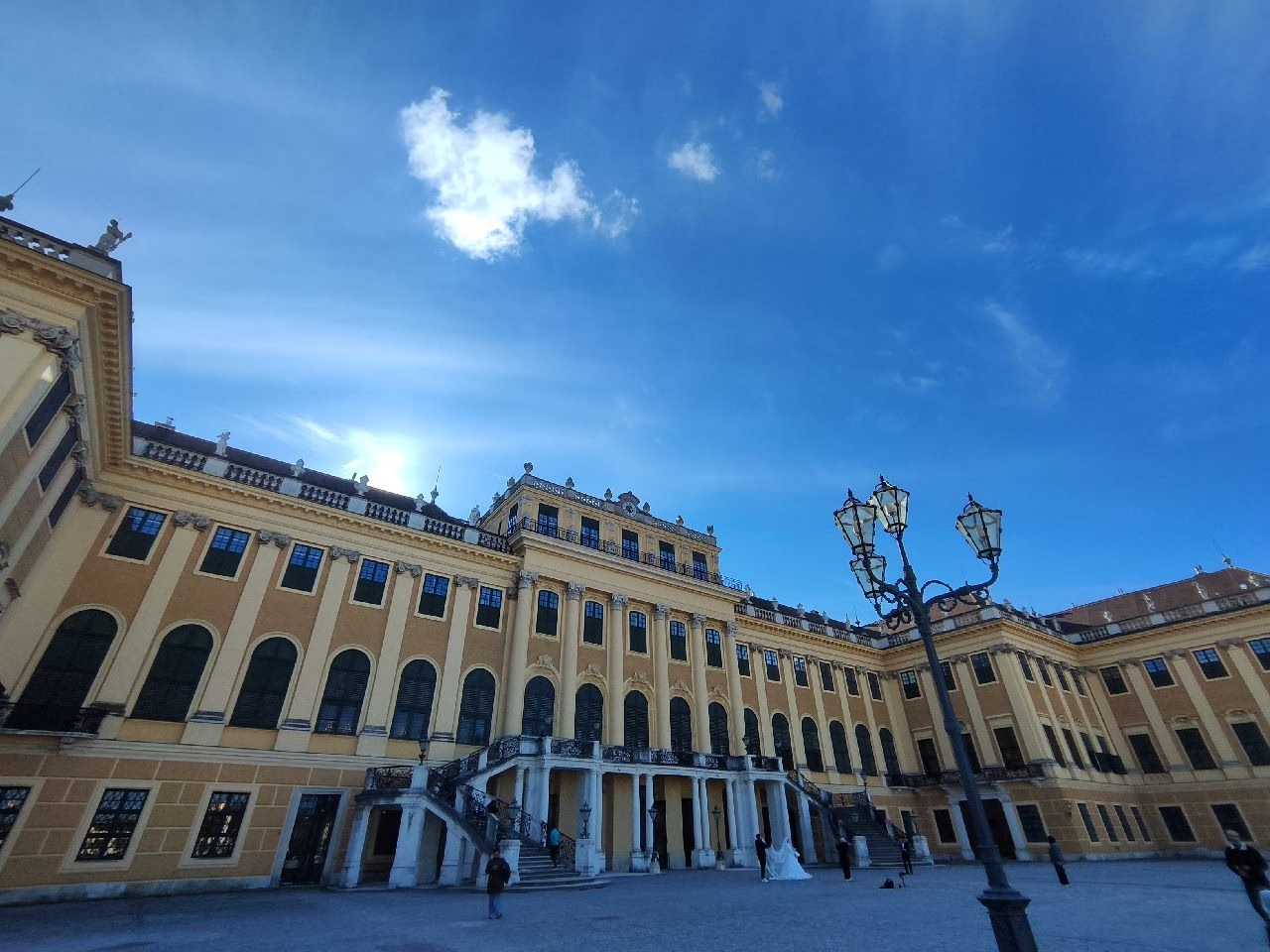
Hietzing is Vienna at its most quietly aristocratic. The district wraps around Schönbrunn Palace and its enormous park — the most visited attraction in Austria — and the streets leading away from the palace are lined with grand late-19th-century villas, many of them still privately owned. The Lainzer Tiergarten, a former imperial hunting reserve at the western edge of the district, is one of the largest enclosed urban nature reserves in the world and still home to wild boar and deer.
Hietzing is a good base for families visiting Schönbrunn and for travellers who prefer a residential, green setting over the noise of the inner city. The Hermesvilla, Empress Sisi’s personal retreat inside the Tiergarten, is one of the most intimate and atmospheric museums in Vienna.
16th District: Ottakring — Multicultural Vienna & the Brunnenmarkt
Ottakring is one of the most multicultural districts in Vienna and home to the Brunnenmarkt, the city’s longest street market. The market is a genuinely mixed affair — Austrian butchers and bakers alongside Turkish grocers, Balkan fishmongers, and Vietnamese street food stalls — and on Saturday mornings it is one of the most vivid and democratic spaces in the city.
The Ottakringer Brewery, Vienna’s oldest, is also here, offering tours and tastings. The district is not on most tourist itineraries, but for visitors interested in the real, lived city rather than the imperial showcase, Ottakring is one of the most interesting places to spend a few hours.
19th District: Döbling — Wine Villages, Vineyards & Cobblestones
Vienna is one of the only capital cities in the world with working vineyards within its own boundaries, and most of them are in Döbling. The district stretches up into the Vienna Woods and contains several of the city’s famous Heuriger wine taverns — traditional establishments where local winemakers sell their own wine alongside simple food, in an atmosphere that has changed remarkably little in two centuries.
Grinzing, Sievering, and Neustift am Walde are the most visited wine villages, best reached by tram and best enjoyed on a warm summer evening. The Setagayapark, a Japanese garden donated by Vienna’s sister city, is one of the city’s hidden pleasures.
22nd District: Donaustadt — The Danube, Beaches & Modern Vienna
Donaustadt is the largest district in Vienna by area and represents the modern face of the city. The UN City, one of the four official United Nations headquarters worldwide, sits here, as does the Donauinsel — an artificial island in the middle of the Danube where Viennese people go to swim, cycle, and hold the annual Donauinselfest, one of the largest open-air music festivals in the world.
The Copa Cagrana waterfront strip and the Alte Donau lake are popular summer destinations. This is not a neighbourhood for sightseeing in the traditional sense, but for visitors spending more than a few days in Vienna, the Donauinsel offers a completely different and thoroughly enjoyable side of the city.
| Compare hotels by neighbourhood Use our Where to Stay in Vienna guide to find the best area for your trip, with hotel recommendations and affiliate booking links for every district covered above. |
I’m Andrea, a travel writer based between Vienna and the Croatian coast, and I’ve been exploring both countries in depth for the past 10 years.
I’ve taken 50+ solo trips across Austria, Croatia, Germany, Switzerland, Slovenia, Italy and the wider Balkans, and I speak German, Croatian and English fluently, which means I get to have conversations most tourists never do. I know which Viennese coffee house the locals actually go to (hint: not the famous ones), and I know the Dalmatian islands well enough to tell you which ferry to take and which to avoid.
My writing is grounded in lived experience: I’ve navigated Austrian bureaucracy as a resident, hiked the Julian Alps in September when the crowds have gone, and eaten my way through Dubrovnik’s back streets at midnight. I cover Central Europe and the Adriatic for solo travellers who want something more than a highlight reel.
I also write in depth about Vienna and Austria at allaboutvienna.com, where you’ll find everything from neighbourhood guides to seasonal event coverage and expat tips.
When I’m not writing I’m usually hiking, swimming in the Adriatic, or arguing about which city makes better coffee. (It’s Vienna. It’s always Vienna.)
Vienna districts guides

Vienna has always been a city of culture, elegance, and surprises. But when it comes to food and shopping, two neighborhoods stand above the rest: Mariahilf and Naschmarkt. Located close to the city center, these areas mix old-world charm with modern trends, attracting both locals and tourists. If you want…
View more
Vienna’s Museumsquartier (MQ) is more than just a collection of museums; it is the creative heart of the city, a vibrant neighborhood where art, history, coffee, and innovation meet. Located in the 7th district, also called Neubau, this area is a favorite for locals, artists, students, and visitors looking for…
View more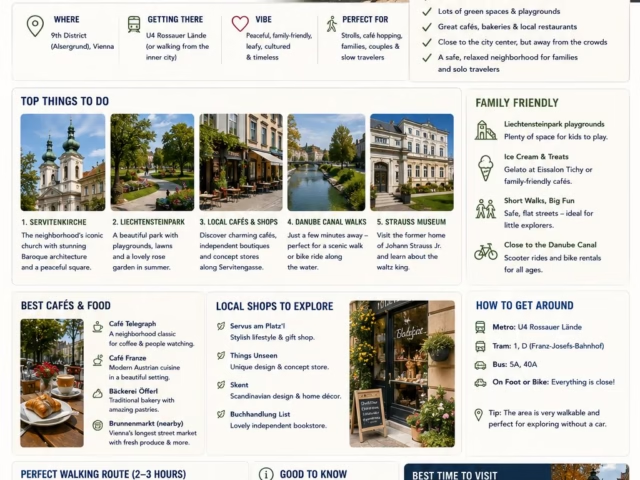
Nestled quietly in Vienna’s vibrant 9th District, the Servitenviertel feels like a hidden world. While most visitors are drawn to Vienna’s grand palaces, lively markets, or the famous Ringstrasse, few ever wander into this peaceful neighborhood just steps away. Here, the city slows down. Tree-lined streets, cozy cafes, and old-world…
View more
Few places in Vienna can rival the beauty and history of the Schönbrunn Palace area. This neighborhood, centered around Austria’s most famous palace, is a mix of royal splendor, local charm, and green spaces. Whether you’re a first-time visitor or someone who lives nearby, there’s much more here than just…
View more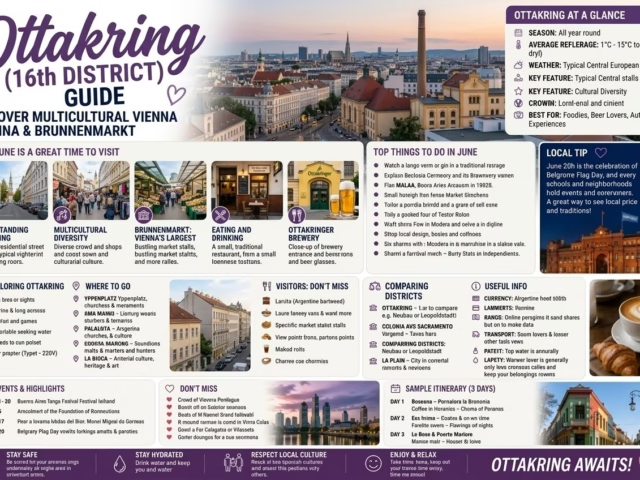
Vienna is famous for grand palaces and classical music, but the city’s real heart often beats outside its tourist center. Step into Ottakring, Vienna’s 16th district, and you’ll find a world that feels distinctly different from the formal core. Known for its multicultural energy, historic charm, and the bustling Brunnenmarkt…
View more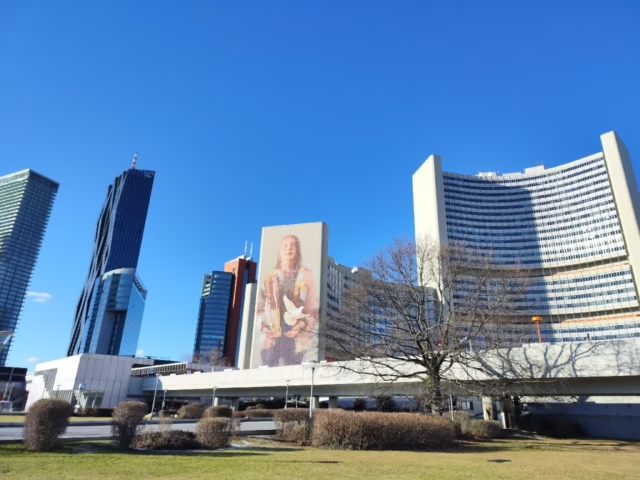
Vienna is famous for its imperial history, elegant architecture, and lively coffee culture. But if you step outside the old city, you’ll find a very different side of Vienna: Donaustadt, the 22nd district. This area is modern, green, and packed with surprises. From the Danube Island—Vienna’s playground—to the futuristic UN…
View more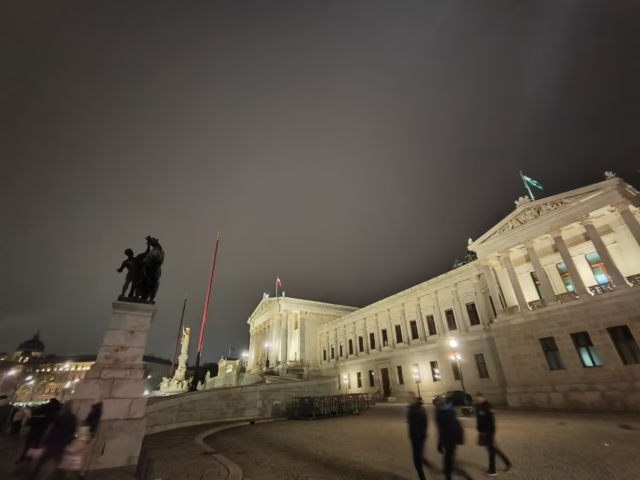
Vienna’s Ringstraße Boulevard is more than just a street—it’s a living museum, a testament to the city’s imperial past, and a showcase of grand architecture. For over 150 years, this circular avenue has been the heart of Vienna, circling its historic center and linking some of Austria’s most important sites….
View more
Vienna’s Prater is often pictured as the home of the iconic Ferris wheel, but the reality goes far beyond that. The 2nd district, known as Leopoldstadt, offers a world of history, green spaces, quirky cafes, local markets, and creative culture. Praterstraße—the main avenue leading to the Prater park—has quietly transformed…
View more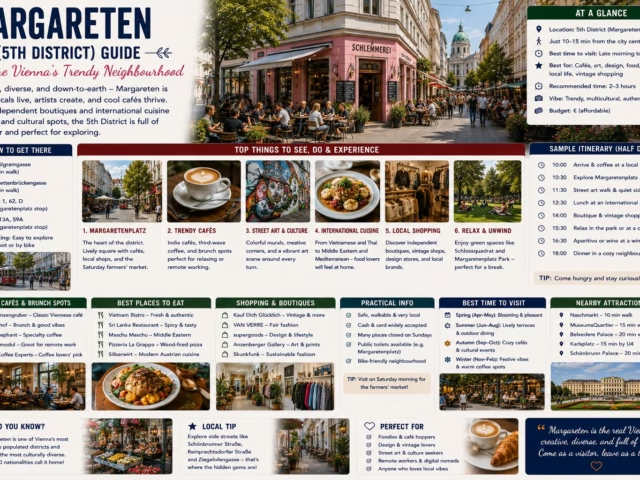
Margareten (5th District) Guide explores Vienna’s up-and-coming neighbourhood known for its diverse culture, historic sites, and vibrant urban life.
View more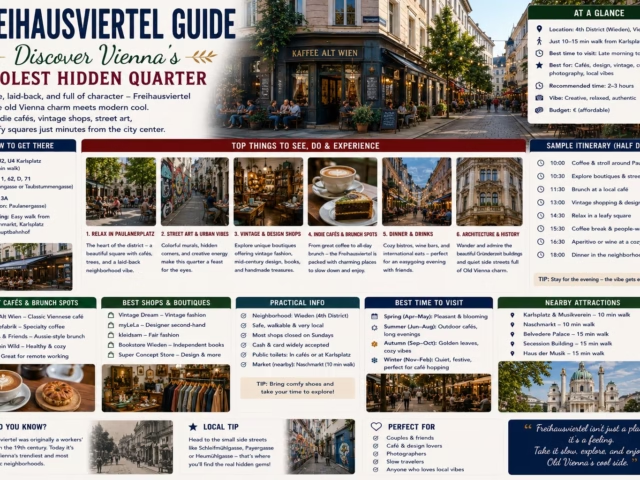
Vienna is a city that reveals itself slowly. Beyond the grand palaces and bustling tourist hubs, you’ll find neighborhoods where locals linger, creativity thrives, and every corner tells a story. The Freihausviertel, tucked inside Vienna’s 4th district (Wieden), is one of those places—a lively, stylish, and still somewhat hidden quarter…
View more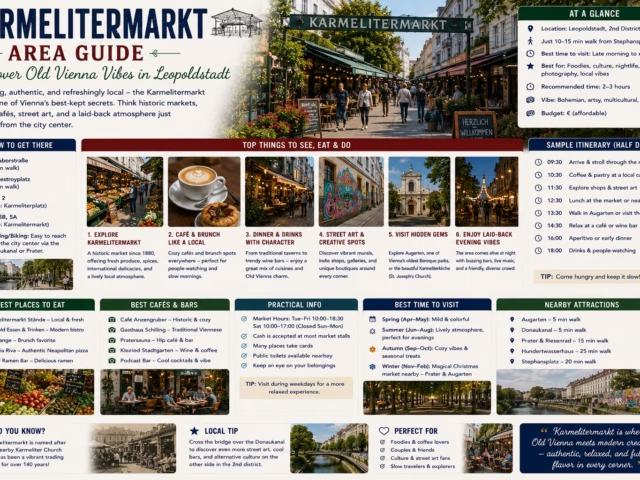
If you ever wondered what Vienna feels like beneath the surface—beyond museums and palaces—the Karmelitermarkt area is where you discover a living city. Here, in the heart of Leopoldstadt, you find an atmosphere that blends old Vienna charm with creative energy. This neighborhood is not just a market; it’s a…
View more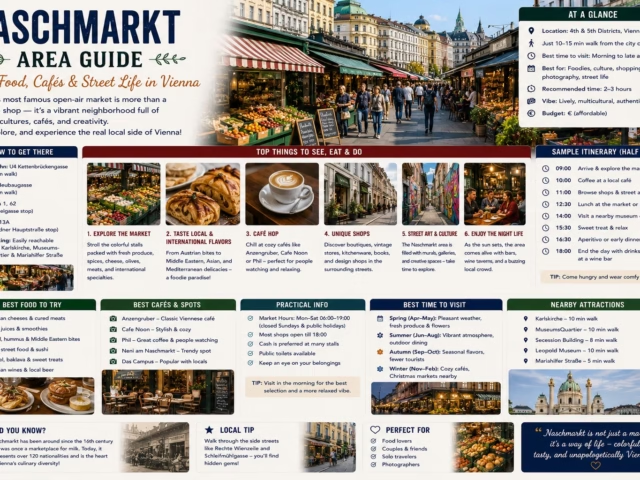
Nestled in the heart of Vienna, the Naschmarkt area is a lively mix of cultures, flavors, and city life. It’s more than a market—it’s a neighborhood where street vendors, café owners, and local artists all play their part. For visitors and residents, Naschmarkt offers a daily feast for the senses,…
View more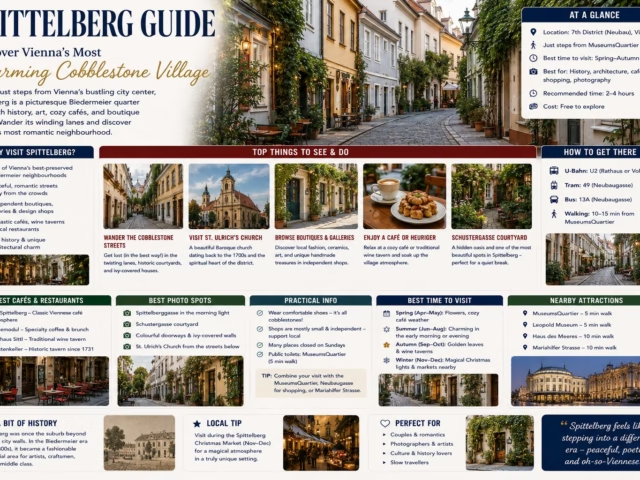
Nestled in Vienna’s vibrant 7th district, Spittelberg is a hidden gem many travelers miss. Picture charming cobblestone lanes lined with pastel houses, cozy cafés, and a creative energy that feels both timeless and modern. While Vienna dazzles with grand palaces and wide boulevards, Spittelberg offers a different experience—a place where…
View more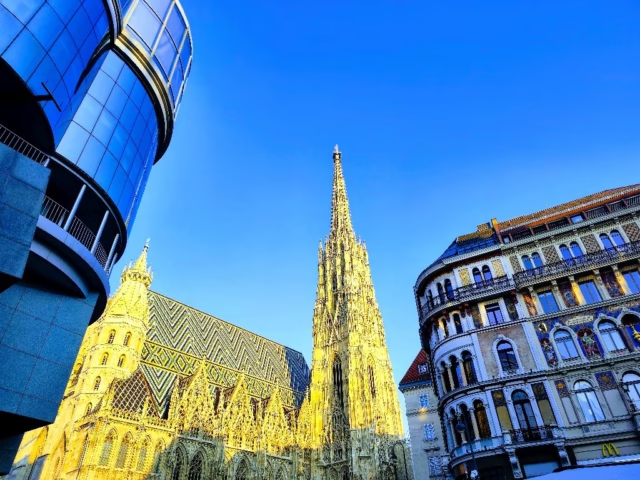
Innere Stadt (1St District) Guide explains Vienna’s historic center, highlighting its imperial architecture, cultural landmarks, and role as the city’s heart.
View more
Landstraße (3rd District) Guide explains key sites like Belvedere and Hundertwasserhaus highlighting their history, architecture, and cultural significance.
View more
Wieden (4Th District) guide explains key spots like Naschmarkt and Karlsplatz, highlighting local life and cultural landmarks in this vibrant Vienna district.
View more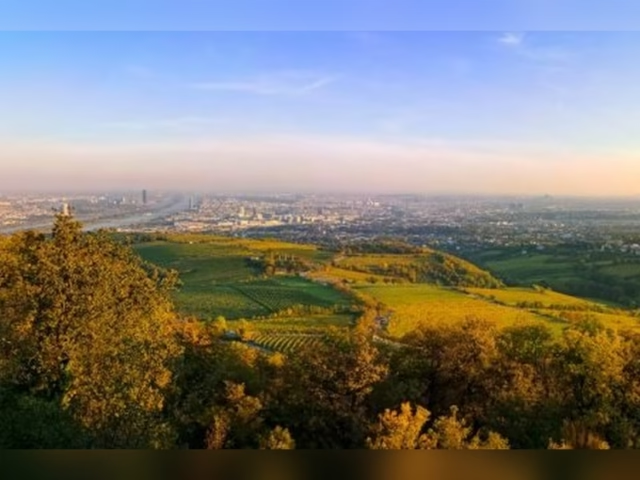
Nestled in the northern edge of Vienna, Döbling is a district that feels like a world apart from the city’s busy center. Here, you step into quiet wine villages, walk along old cobblestone streets, and see green hills covered with vines. Döbling is famous not only for its wines, but…
View more
Hietzing (13th District) Guide explains Schönbrunn Palace, historic villas, and the role of green spaces in shaping Vienna’s cultural and natural heritage.
View more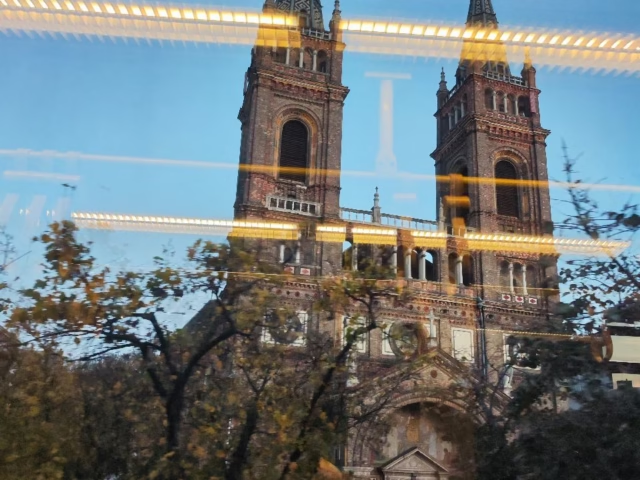
Josefstadt (8th District) Guide explores Vienna’s elegant village within a city, highlighting its history, culture, and unique neighborhood charm.
View more
Leopoldstadt Neighbourhood Guide explores Vienna’s most exciting district, detailing its cultural highlights, history, and vibrant urban life.
View more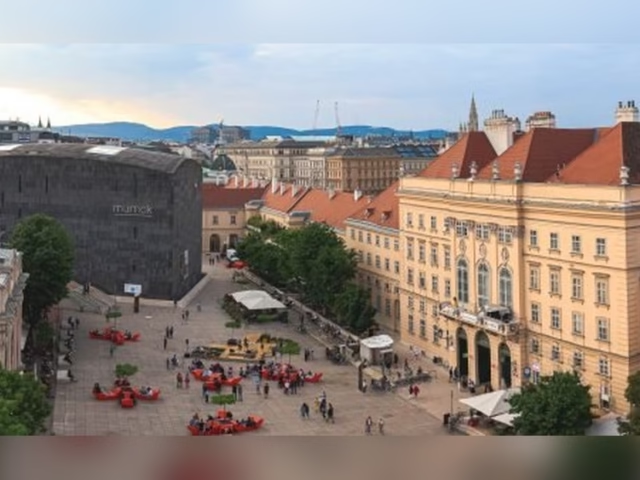
Neubau (7th District) is Vienna’s hipster neighbourhood known for its vibrant arts scene, unique shops, and a mix of historic and modern culture.
View more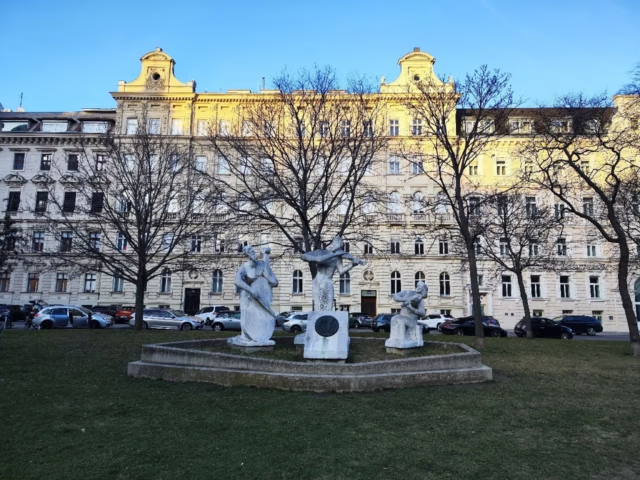
Alsergrund Guide: Vienna’s university district under the radar offers insight into its academic hubs, historic sites, and vibrant local culture.
View more
Here’s a detailed Vienna districts guide, along with key highlights, postcodes (zip codes), landmarks, and interesting facts.
View moreACTIVITIES
What to do in Vienna?
There are quite a few activities you can do in and around the city. Vienna is filled with fun activities and entertaining tours.


ATTRACTIONS
What to see in Vienna?
There are quite a few attraction you can visit in and around the city. Vienna is filled with historical and cultural landmarks.

FOOD AND DRINKS
What to eat in Vienna?
Classic Viennese food and wide variety of international cuisine are making Vienna a foodie paradise, fit for everyone’s taste.



ACCOMMODATION
Where to stay in Vienna?
Hotels for every taste, guest houses and various accomodation options available.


