
Traveling to Austria is a dream for many. Known for its rich history, beautiful landscapes, and vibrant cities like Vienna and Salzburg, Austria welcomes millions of visitors each year. Entry rules for Europe are changing, with new digital border systems arriving. Whether you’re planning a vacation, business trip, or study abroad, knowing the latest rules can save you from costly mistakes and stressful surprises.
This guide gives you everything you need to know about Austria entry requirements in 2026. It covers visa rules, passport standards, new digital systems, health regulations, and tips for different traveler types. If you’re from the US, UK, EU, Asia, Africa, or anywhere else, you’ll find practical advice for your situation. Many travelers miss important details about the still-delayed ETIAS system and end up confused about what’s actually required right now. We’ll clarify what is and isn’t in effect.
Overview Of Austria Entry Requirements In 2026
Austria is part of the Schengen Area. This means entry rules are similar to many European countries, but Austria has its own updates for 2026. The main requirements fall into these categories:
- Passport and ID standards
- Visa requirements (tourism, business, study, family visits)
- Digital travel authorization (ETIAS)
- Health and vaccination rules
- Proof of funds and accommodation
- Travel insurance
- Customs and security checks
The Austrian government updates its entry rules often. For 2026, several new systems are coming in, especially for non-EU travelers.
Passport And Id Standards
Your passport is the most important document for entering Austria. In 2026, Austria will be strict about passport validity and biometric features.
| Requirement | Minimum Standard | Exceptions | ||
|---|---|---|---|---|
| Passport Validity | Valid for at least 3 months beyond your planned departure from the Schengen area, and issued within the last 10 years | EU citizens: Valid national ID accepted | ||
| Biometric Passport | Strongly recommended; needed to use automated border gates | Children need their own passport or ID | At least 2 for entry/exit stamps | No exceptions |
If your passport is not biometric or is close to expiring, renew it before your trip. Many travelers miss the blank page requirement and are delayed at the airport.
Visa Requirements For Austria In 2026
Visa rules depend on your nationality and reason for visiting. Austria follows Schengen Visa standards but adds its own checks.
Tourist And Business Visas
Most travelers visit Austria for tourism or business. Here’s what you need in 2026:
- Schengen short-stay visa (Type C): Needed for most non-EU, non-EEA, and non-Swiss citizens
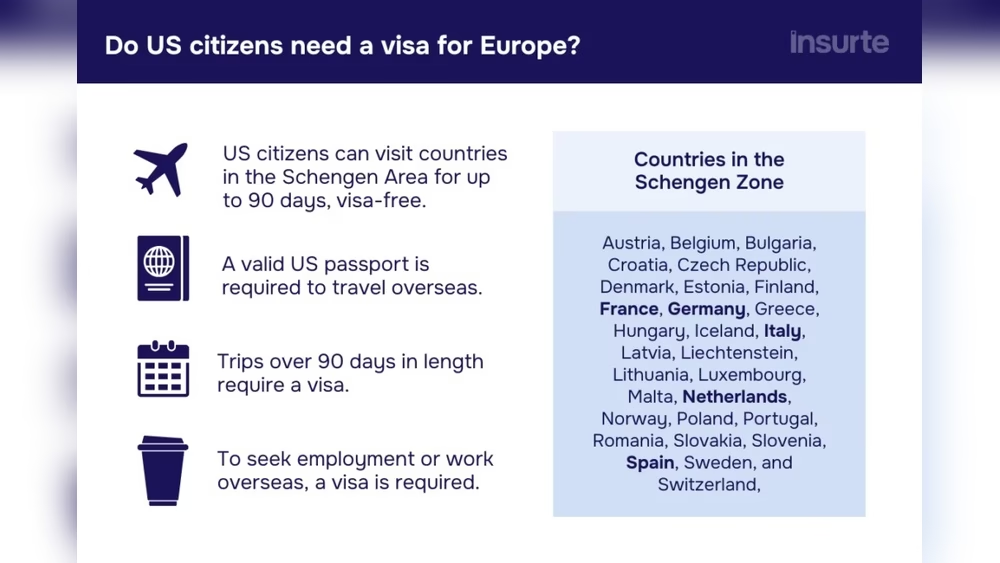
- Visa-free countries: US, Canada, Australia, Japan, South Korea, UK, and others can stay up to 90 days without a visa. ETIAS will eventually be required for this group too, but as far as we can confirm it has not launched yet
- Multiple entry: Possible for business travelers with proof of need
Student And Work Visas
If you plan to study or work in Austria, you need different visas:
- Student visa (Type D): For courses longer than 90 days
- Work visa: Based on job offer; includes Red-White-Red Card for skilled workers
Family Visit And Other Purposes
- Family reunification: Requires proof of relationship and sponsorship
- Medical treatment: Visa plus medical documents
Apply as early as you can. Schengen visa applications can usually be filed up to 6 months before your trip, and no later than 15 days before.
| Visa Type | Duration | Main Requirements |
|---|---|---|
| Schengen Type C | Up to 90 days | Passport, proof of funds, accommodation, travel insurance (required for visa applicants) |
| Student Type D | Course duration | Acceptance letter, funds, insurance |
| Work Visa | Job contract | Job offer, qualifications, insurance |
| Family Visa | Variable | Proof of relationship, sponsor’s ID |
ETIAS: Digital Travel Authorization (Not Yet Active)
Important: as far as we can confirm, ETIAS (European Travel Information and Authorization System) has not launched yet. It has been repeatedly delayed, and the EU has said it will announce the start date ahead of time, with a transition period after launch. Check the official EU travel site (travel-europe.europa.eu) for the current status before you book. Until it opens, visa-exempt travelers do not need to do anything extra beyond a valid passport to enter Austria. Be cautious of third-party websites charging a fee to “apply” for ETIAS now; none are official, since the system isn’t open for applications.
Separately, the EU’s Entry/Exit System (EES), a biometric border-registration system, began rolling out in October 2025, became fully operational in April 2026, and is a different system from ETIAS; it doesn’t require any advance application, just fingerprints and a facial scan taken by border officers at your first crossing.
Who Needs Etias?
- Citizens of countries like the US, UK, Canada, Australia, Japan, South Korea, and more
- Not needed for EU, EEA, or Swiss citizens
How To Apply
- Online application takes 10–20 minutes
- Requires passport data, travel plans, background questions
- Fee: €20 for adults once live (this is the confirmed current fee, revised up from an earlier €7 proposal), free for travelers under 18 and over 70
Approval Time
- Most applications approved within minutes
- Some may take up to 14 days if flagged for extra checks
Common Mistakes
- Using an expired passport for ETIAS
- Wrong answers to security questions
- Not checking ETIAS status before departure
Once active, ETIAS will not be a visa but an extra layer of pre-screening, similar to the US ESTA system. Until it launches, it isn’t required.
Health And Vaccination Rules
Austria is strict about health standards, especially after the COVID-19 pandemic. In 2026, these are the main health requirements:
Vaccinations
- No compulsory vaccines for entry, but proof of vaccination may be needed during outbreaks
- Recommended vaccines: Measles, Hepatitis A and B, Influenza, COVID-19 (if advised by Austrian health authority)
Health Insurance
- Travel health insurance is not an entry requirement for visa-free visitors, but it is strongly recommended. Schengen visa applicants must have it
- Minimum coverage for Schengen visa applicants: €30,000, including medical treatment and repatriation
Health Screening
- Random checks at airports for symptoms of contagious diseases
- A yellow fever vaccination certificate is required if you arrive from certain countries in South America or Africa
Medication Rules
- Bring prescriptions for any medicine
- Some medicines banned or restricted in Austria—check before travel
Many travelers forget to buy proper insurance or bring vaccination documents. This can lead to denied entry or expensive medical bills.
Proof Of Funds And Accommodation
Austria wants proof that you can support yourself during your stay. Border officers can ask for this at the border, and visa applicants must show it during the application.
Proof Of Funds
- No fixed official daily amount is published for tourists, so carry enough to credibly cover your stay, plus a return or onward ticket
- Bank statements, credit card limits, or cash
Accommodation
- Hotel booking confirmation or rental agreement
- Invitation letter if staying with friends or family
If you cannot show proof of funds or accommodation, border officers may refuse entry.
Travel Insurance Requirements
Travel insurance is mandatory for Schengen visa applicants. Visa-free visitors and EU travelers are not asked for it at the border, but it is strongly advised, since non-EU health cover rarely applies in Austria.
Minimum Coverage
- €30,000 for medical expenses (the minimum for Schengen visa applicants)
- Covers accidents, illness, and repatriation
Accepted Insurance Types
- International travel insurance
- EU health card (EHIC) for EU/EEA citizens
Not Accepted
- Domestic health insurance unless it covers Austria
- Insurance with limited coverage
Carry your policy documents in English or German where possible, so they are easy to check.
Customs And Security Checks
Austria follows Schengen customs rules but adds its own security checks in 2026.
What You Can Bring
- Personal items, clothes, electronics
- Duty-free limits for alcohol, tobacco, and gifts
What’s Restricted
- Weapons, pepper spray, certain knives
- Large amounts of cash (over €10,000 must be declared)
- Some foods, plants, and animal products
Security Technology
- Biometric scans at airports
- Random luggage searches
Travelers often forget to declare cash or bring restricted items. This can lead to fines or confiscation.
| Item | Allowed | Restricted | Prohibited |
|---|---|---|---|
| Alcohol | 1 liter spirits, 4 liters wine | Large quantities | None |
| Tobacco | 200 cigarettes | More than 200 | None |
| Cash | Up to €10,000 | Above €10,000 (must declare) | None |
| Weapons | None | Pepper spray, knives | Firearms |
| Food | Processed foods | Fresh meat, dairy | Endangered species |
Entry Requirements For Different Traveler Groups
Eu, Eea, And Swiss Citizens
- Entry with national ID or passport
- No visa or ETIAS required
- Can stay, work, and study freely
Us, Uk, Canada, Australia, Japan, South Korea
- No visa needed for stays up to 90 days
- ETIAS will eventually be required but, as far as we can confirm, has not launched yet, so no action is needed for now
- Proof of funds, insurance, and accommodation required
Other Countries
- Most need a Schengen visa
- ETIAS not available
- Longer processing times, extra documents
Refugees And Asylum Seekers
- Entry rules are strict
- Must apply from outside Austria
- Need legal documents and proof of need
Many travelers assume their nationality is visa-free, but rules change often. Always check the latest updates.
Austria Entry Process Step-by-step
To help you understand what to expect, here’s a typical entry process in 2026:
- Prepare documents: Passport, visa or ETIAS, insurance, funds, accommodation proof
- Apply for a visa if needed: At an Austrian consulate, for nationalities that require one. ETIAS is not yet available to apply for.
- Book flights and accommodation: Keep confirmation emails
- Arrive at border: Present all documents to border officer
- Biometric scan: Fingerprint and facial recognition
- Customs check: Declare any large cash or restricted items
- Entry granted: If all documents are valid
Common mistakes include missing documents, wrong insurance, or expired passport. Double-check everything before you travel.
New Technologies And Border Controls In 2026
Austria is adopting new technology at its borders. This includes:
- Biometric gates: Faster entry for travelers with biometric passports
- Entry/Exit System (EES): fingerprints and a facial image are registered at your first crossing
Travelers should expect less human contact and more automated systems. If you are not comfortable with digital forms or biometric scans, ask for help at the airport.
Special Rules For Children And Minors
If you are traveling with children, extra rules apply:
- Children need their own passport or ID
- Once ETIAS launches, children from visa-exempt countries will need one too (no fee under 18)
- Parental consent letter if child travels alone or with one parent
Minors must have proper documents and sometimes extra checks. Don’t assume children can travel on a parent’s passport.
Non-obvious Tips For Smooth Entry
Many guides miss small details that matter. Here are two non-obvious insights:
- Digital Copies: Keep digital copies of all documents on your phone or email. If you lose originals, border officers may accept digital copies while you sort things out.
- Airport Arrival Time: Arrive at least 2–3 hours before your flight, especially during busy seasons. Austria’s new systems may cause unexpected delays, even for frequent travelers.
Common Mistakes And How To Avoid Them
Travelers often make these mistakes when entering Austria:
- Not checking passport validity
- Ignoring ETIAS rules for visa-free countries
- Forgetting travel insurance
- Not preparing proof of funds
- Bringing restricted items or failing to declare cash
Avoid these mistakes by planning ahead and double-checking the latest rules on official Austrian government websites or trusted sources like SchengenVisaInfo.
What Happens If You’re Denied Entry?
If you don’t meet Austria’s entry requirements, border officers may:
- Refuse entry and send you back
- Detain you for questioning
- Fine you for undeclared cash or restricted items
You may appeal, but this takes time and money. It’s better to prepare properly before your trip.
Entry Requirements For Short-stay Vs. Long-stay
Short-stay (up to 90 days): Most tourists, business visitors, and family guests fall into this category. Requirements are:
- Valid passport
- ETIAS or visa (depending on nationality)
- Insurance
- Proof of funds
- Accommodation
Long-stay (over 90 days): Students, workers, and residents need:
- National visa (Type D)
- Extra documents (job offer, acceptance letter)
- Medical certificate
- Background check
If you plan to stay longer, start your application early and check for new updates.
Austria Entry For Transit Travelers
If you’re passing through Austria to another country:
- Transit visa may be needed for some nationalities
- Once ETIAS launches, it applies if you enter the Schengen area, not for airside-only transit
- Must not leave airport transit area unless permitted
Transit travelers often forget they need authorization even for short layovers. Always check your route and entry needs.
Entry Requirements For Business Travelers
Business travelers must show:
- Invitation from Austrian company
- Proof of business purpose (meeting, conference)
- Insurance and funds
Multiple-entry visas are possible if you travel often. Keep all documents organized and ready.
Austria Entry For Students And Researchers
Students need:
- Acceptance letter from Austrian university
- Proof of funds for living expenses
- Insurance
- Visa (Type D) for courses over 90 days
Researchers may get special visas. Contact your institution for help.
Austria Entry For Family Visits
Family visitors must provide:
- Invitation letter from Austrian relative or friend
- Proof of relationship
- Insurance and funds
If you bring children, bring birth certificates and consent letters.
Austria Entry For Medical Treatment
If you come for medical treatment:
- Visa plus medical documents
- Letter from hospital or clinic in Austria
- Proof of funds and insurance
Medical travelers often need extra checks. Apply early and prepare all paperwork.
Austria Entry For Refugees And Asylum Seekers
Austria has strict rules for refugees:
- Apply from outside Austria
- Provide proof of need (danger, persecution)
- Pass background and health checks
Refugee entry takes longer and needs legal help. Contact international organizations for support.
Austria Entry For Digital Nomads And Remote Workers
Digital nomads must:
- Apply for long-stay visa if staying over 90 days
- Show proof of remote work (contracts, income)
- Insurance and funds
Austria does not have a special digital nomad visa, but skilled workers may qualify for Red-White-Red Card.
Austria Entry For Retirees And Pensioners
Retirees need:
- Proof of pension or regular income
- Health insurance
- Accommodation
Some retirees may get long-stay visas if they can support themselves.
How To Prepare For Austria Entry In 2026
Follow these steps for a smooth journey:
- Check your passport and renew if needed
- Find out if you need a visa or ETIAS
- Buy travel insurance with enough coverage
- Prepare proof of funds and accommodation
- Apply early for visas or ETIAS
- Keep digital and paper copies of all documents
- Review customs rules for restricted items
If you’re unsure, ask the Austrian embassy or check reliable online sources.
Frequently Asked Questions
What Is ETIAS And Do I Need It For Austria In 2026?
ETIAS will be a digital travel authorization for visa-free travelers to Austria and other Schengen countries, similar to the US ESTA. As far as we can confirm, it has not launched yet, and no application is currently possible or required. Check the official EU travel site for the current start date. Citizens from countries like the US, UK, Canada, Australia, Japan, and South Korea can currently enter with just a valid passport. EU, EEA, and Swiss citizens will not need ETIAS even once it launches.
How Long Does It Take To Get An Austria Visa In 2026?
Visa processing times vary. Short-stay Schengen visas are usually decided within about 15 days, but can take up to 45 days in some cases. For long-stay (Type D) visas, processing can take 2–3 months due to extra security checks. Apply early to avoid delays.
Can I Use My National Id To Enter Austria?
EU, EEA, and Swiss citizens can use a national ID or passport. Non-EU citizens need a valid passport (a biometric passport is recommended) and a visa if their nationality requires one. ETIAS will be added once it launches. Children need their own passport or ID.
Is Travel Insurance Really Required For Austria?
Travel insurance is mandatory if you need a Schengen visa, with minimum coverage of €30,000 for medical expenses and repatriation. Visa-free visitors are not asked for it at the border, but it is strongly recommended. EU citizens can use their EU health card but are advised to get extra insurance.
Do I Need To Apply For ETIAS Right Now?
No. As far as we can confirm, ETIAS has not launched and there is no live application portal, so there is nothing to apply for yet. Ignore any third-party website claiming to process ETIAS applications for a fee; these are not official. Once ETIAS does launch, applications will open through the official europa.eu domain, and this guide will be updated accordingly.
Austria is a welcoming country, but it’s serious about entry rules. By preparing carefully, understanding the latest requirements, and avoiding common mistakes, you can enjoy a safe and smooth journey in 2026. Whether you’re visiting for a week or planning a long stay, this guide gives you the key information to enter Austria with confidence.
Last Updated on

I’m Andrea, a travel writer based between Vienna and the Croatian coast, and I’ve been exploring both countries in depth for the past 10 years.
I’ve taken 50+ solo trips across Austria, Croatia, Germany, Switzerland, Slovenia, Italy and the wider Balkans, and I speak German, Croatian and English fluently, which means I get to have conversations most tourists never do. I know which Viennese coffee house the locals actually go to (hint: not the famous ones), and I know the Dalmatian islands well enough to tell you which ferry to take and which to avoid.
My writing is grounded in lived experience: I’ve navigated Austrian bureaucracy as a resident, hiked the Julian Alps in September when the crowds have gone, and eaten my way through Dubrovnik’s back streets at midnight. I cover Central Europe and the Adriatic for solo travellers who want something more than a highlight reel.
I also write in depth about Vienna and Austria at allaboutvienna.com, where you’ll find everything from neighbourhood guides to seasonal event coverage and expat tips.
When I’m not writing I’m usually hiking, swimming in the Adriatic, or arguing about which city makes better coffee. (It’s Vienna. It’s always Vienna.)