
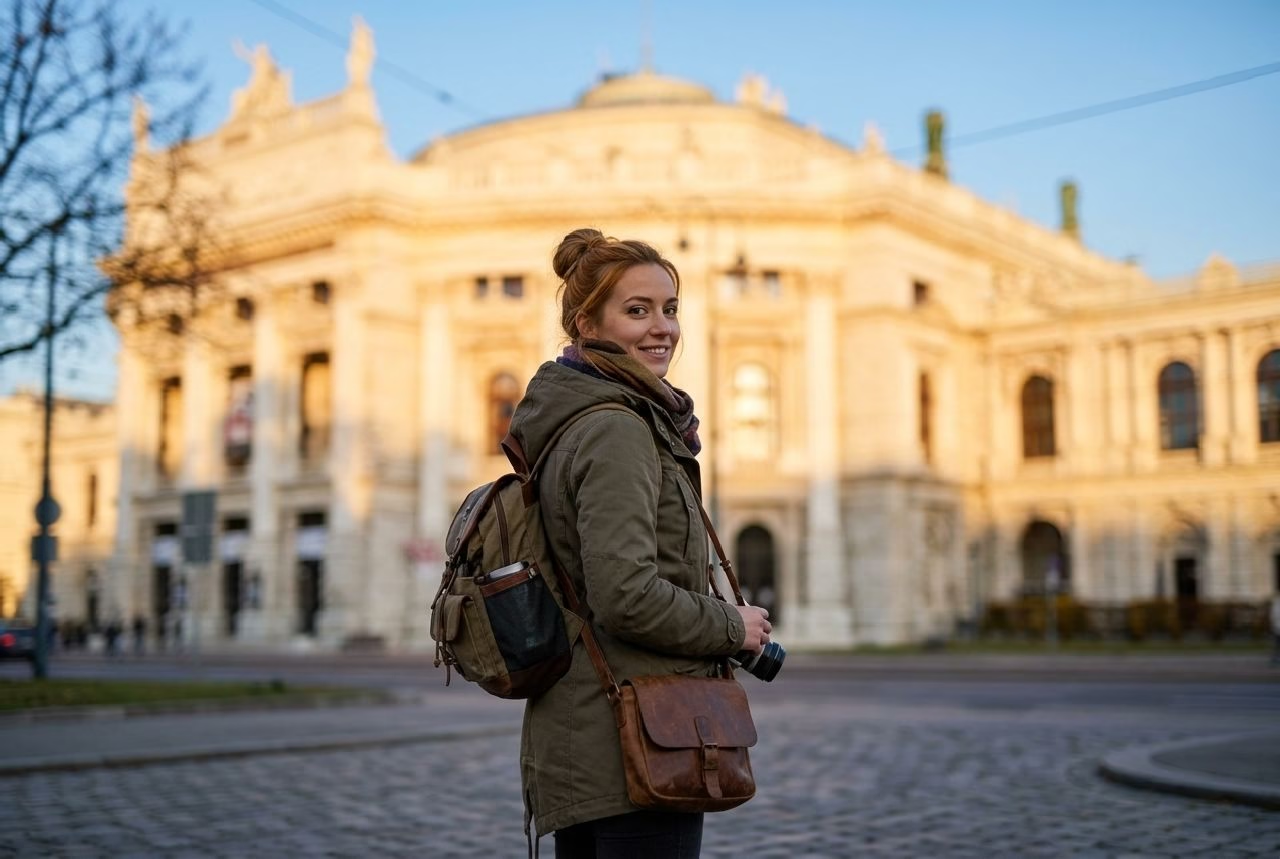
Solo Travel in Vienna: The Complete Guide
Vienna is, in many respects, the ideal city for solo travel. It is extraordinarily safe. It is compact enough to navigate entirely on foot or by tram.
It has a coffee house culture that was essentially designed for people who want to spend several hours alone with a book and a Melange without being made to feel uncomfortable. It has a world-class cultural programme of opera, concerts, museums, and theatre, all of which are perfectly enjoyable alone and several of which become considerably more accessible to the budget-conscious solo traveller than to groups.
And it has a quality of daily life that is oriented toward the individual: the Viennese take their own company seriously, and the solo visitor who sits at a cafe table with a newspaper and orders a second coffee will be left entirely in peace, which is either exactly what they want or something they will quickly learn to appreciate.
This guide covers everything a solo traveller needs to know before and during a visit to Vienna: where to stay, how to meet people if you want to, how to eat well alone, how to use the standing ticket system to attend the opera for almost nothing, which neighbourhoods suit solo visitors best, and how to navigate the specific pleasures and challenges of experiencing this particular city on your own.
Why Vienna Works for Solo Travellers
Safety
Vienna is consistently ranked among the safest cities in the world, and for solo travellers this is not an abstract statistic. The practical reality is that you can walk through the inner districts alone at any hour of the night without feeling threatened, that the public transport runs reliably late into the night on weekends, and that the standard precautions appropriate in any large city (awareness in crowded places, care with valuables on public transport) are sufficient without any additional vigilance. The city’s low crime rate applies equally to tourists and residents, and solo female travellers in particular report a quality of safety and freedom of movement in Vienna that is genuinely unusual by the standards of major European cities.
Safety rating: Vienna ranked 3rd safest city in the world in the 2024 Economist Safe Cities Index. Violent crime against tourists is extremely rare. Standard city precautions apply; heightened vigilance is not necessary in any part of the inner city or main tourist areas
The Coffee House Culture
The Viennese coffee house is one of the great institutions of solo culture anywhere in the world. The unspoken contract of the coffee house is precisely what the solo traveller needs: you order one coffee, you are brought a glass of water without asking, newspapers are available on wooden holders, and you may sit for as long as you wish without pressure to order again or to vacate the table. No city in Europe provides a better infrastructure for solitary hours of reading, writing, thinking, or simply watching the world go by at the pace the world actually moves at.
For the solo traveller, the coffee house also provides a social environment that is comfortable precisely because it makes no demands. You are alone but surrounded by people, in a warm and beautiful room, with excellent coffee. The Viennese understand this quality of their coffee houses and take it seriously; a solo visitor sitting quietly in Cafe Central or Cafe Hawelka is not an object of curiosity or concern but simply another person doing what the coffee house was made for.
The Walkability
The historic inner city of Vienna is small enough to walk across in about thirty minutes, and the major attractions of the first and second rings of districts are all within comfortable walking distance of a central base. The ability to navigate on foot independently, without coordinating with other people, making spontaneous decisions about where to turn and what to look at, is one of the specific pleasures of solo urban travel, and Vienna’s compact, flat, and well-maintained pedestrian environment supports it excellently. Getting lost in the inner city, which is almost impossible given the orientation landmarks of the Stephansdom spire and the Ring boulevard, is nevertheless a pleasure when it does occur: the streets of the first and second districts reward aimless exploration in a way that few European cities of comparable size can match.
Where to Stay as a Solo Traveller
Hostels
Vienna has a good selection of hostels across the inner and adjacent districts, ranging from the large and social to the smaller and more design-oriented. The major hostel brands including Wombat’s, Meininger, and A&O operate here with the quality and organisation that their international reputations suggest. For solo travellers who want to meet other people easily, a hostel with a common room, bar, and organised social activities is the most reliable environment; Vienna’s hostels are generally well-run and the common areas tend to generate conversation among solo guests naturally.
The best-located hostels for the solo traveller are those in or adjacent to the inner districts, where the proximity to the major sights and the concentration of cafes, bars, and restaurants makes it easy to move between the hostel environment and independent exploration without long transport journeys. Wombat’s on Mariahilfer Strasse and in the Naschmarkt area, and Meininger in the Schoenbrunn and central areas, are among the most consistently recommended.
Budget and Mid-Range Hotels
Vienna’s budget and mid-range hotel market is competitive and the quality is generally high relative to the price. Solo travellers in this segment should be aware that single room supplements are common: many hotels charge a price for a single room that is only marginally less than the double room rate. Booking direct with smaller hotels, or using booking platforms that filter specifically for single rooms, can mitigate this. The areas around the Naschmarkt, Mariahilfer Strasse, and the inner districts of Josefstadt and Alsergrund offer the best combination of price, location, and neighbourhood character for solo mid-range travellers.
Apartments and Longer Stays
For solo travellers staying more than a few days, a small apartment offers a quality of independence and domestic comfort that a hotel room struggles to match. Vienna’s apartment rental market, accessible through Airbnb, Booking.com, and local platforms including Willhaben, has a good supply of studios and one-bedroom apartments in the inner and adjacent districts at prices that compare favourably with hotel rooms of equivalent quality. The ability to shop at a Naschmarkt or a local Wuerstlstand and eat at home on some evenings significantly reduces the solo travel food budget while adding to the sense of actually living in the city rather than simply visiting it.
Eating Alone in Vienna
Solo dining in Vienna is a completely natural and unself-conscious activity, and this is worth stating clearly because it is not the case in all European cities. The coffee house culture already addressed above extends in important ways to the broader restaurant culture: Viennese restaurants and Beisl establishments routinely seat solo diners without comment, a single place is set without drama, and the experience of eating alone in a good Viennese Gasthaus is one of quiet pleasure rather than social awkwardness.
The Beisl
The Beisl is the quintessential Viennese neighbourhood restaurant: a small, informal establishment serving traditional Austrian food at moderate prices, with an atmosphere oriented toward the local community rather than the tourist trade. Solo dining in a Beisl is particularly comfortable because the scale and informality of the setting make a single diner unremarkable, and the straightforward menu of Schnitzel, Tafelspitz, Gulash, and seasonal Austrian cooking provides the satisfaction of a genuinely good meal without the pressure of an elaborate multi-course experience.
Finding a good Beisl in any Vienna neighbourhood requires only that you walk away from the main tourist streets and look for places with handwritten menus in German, no photographs of food on the exterior, and a clientele that is clearly local. The price-to-quality ratio in a good Beisl is among the best in the European restaurant landscape.
Market Food
The Naschmarkt is the finest option for solo eating in Vienna, partly because of the quality and variety of the food available and partly because eating at market stalls and counters is inherently a solo-friendly activity. Standing at a stall with a plate of Kaesekrainer or a bowl of soup, watching the market life around you, is one of the pleasures of the Vienna solo experience. The Naschmarkt’s restaurants and sit-down establishments are also well suited to solo dining; the atmosphere at the Naschmarkt side restaurants is convivial rather than intimate, making a solo table feel comfortable rather than conspicuous.
The Standing Opera Ticket
The Vienna State Opera sells standing tickets (Stehplaetze) for 3 to 10 euros from the ticket office 80 minutes before curtain. This is one of the most remarkable value propositions in European cultural life, and it is a proposition that is particularly well suited to the solo traveller: a single standing ticket is easy to obtain, you can attend on impulse without forward planning, and the standing area at the rear of the stalls and in the gallery provides a perfectly adequate view of the stage for a performance at one of the world’s great opera houses. The solo standing ticket holder at the Vienna State Opera is in good company; the Stehplaetze regulars include a significant number of solo operagoers, many of them students, who attend regularly and know the repertoire well.
Opera tip: Arrive at the opera box office 90 minutes before curtain to be sure of getting a standing ticket. Queue early; popular productions sell standing places quickly. The gallery Stehplatz at the rear gives a view of the full stage and the full auditorium
Meeting People as a Solo Traveller
Vienna is not the easiest European city in which to make spontaneous connections with local people, and this is worth being honest about. The Viennese social culture values privacy, restraint, and the cultivation of long-established friendships over the easy informality that makes some other cities feel immediately welcoming to strangers. A Viennese person sitting in a coffee house will not, as a rule, initiate conversation with the person at the next table; this is not unfriendliness but a different conception of the appropriate relationship between strangers in a shared public space.
This should not discourage solo travellers who want to meet people; it simply means that the context for doing so matters more in Vienna than in more extrovert cities. The environments where connections happen most naturally are: hostels and their common areas, organised walking tours and day trips (which attract other solo travellers and create shared experience quickly), language exchange events (which take place regularly in Vienna cafes and bars and are genuinely mixed in terms of participants), and the city’s music and cultural events, where shared enthusiasm for a performance creates a natural basis for conversation.
Walking Tours and Day Trips
Vienna has a good selection of walking tour operators offering free and paid tours of the inner city, covering everything from imperial history to the Third Man filming locations to the coffee house culture. These tours are attended predominantly by solo travellers and small groups, and the shared experience of three hours walking the city with a knowledgeable guide creates the kind of organic social contact that is difficult to manufacture in other ways. The Third Man Tour, which follows the filming locations of Carol Reed’s 1949 film through the Second District and the Vienna sewers, is particularly popular with solo visitors and generates good conversation among participants who have seen the film.
Language Exchanges and Meetups
Vienna has an active language exchange scene, with regular events organised through platforms including Meetup.com and Couchsurfing that bring together local people learning English and visitors learning German in a structured but informal setting. These events are genuinely useful for solo travellers who want to meet both local Viennese and other international visitors in a context that makes conversation natural. The Meetup platform also lists English-language events including book clubs, hiking groups, board game evenings, and other interest-based activities that are open to visitors and provide an easy point of entry into the social life of the city.
Solo Travel by Season
Spring and Autumn: The Best Solo Seasons
The spring months of April and May and the autumn months of September and October are the best seasons for solo travel in Vienna. The cultural programme is running at full intensity, the weather is mild and comfortable for extended walking, the summer tourist crowds have not yet arrived or have departed, and the city has a quality of daily life that is at its most characteristically Viennese. Coffee houses fill with regulars rather than tourists, the Naschmarkt is at its most active, and the opera and concert tickets are available without the booking difficulties of the December or summer peak.
Winter: Ball Season and Christmas Markets
Winter in Vienna offers the solo traveller a specific set of pleasures that are largely unavailable in other seasons. The Christmas market season from mid-November to 24 December provides a series of evening destinations that are atmospheric and easily navigated alone, particularly the smaller markets at Spittelberg and the Freyung where the scale and character of the setting suits a solo visit better than the crowded Rathausplatz market. The ball season from January through February is harder to access as a solo traveller, since most balls are attended by couples and groups, but the Stehplatz tickets available for the Vienna State Opera and the regular concerts at the Musikverein and Konzerthaus provide a full programme of evening cultural events for the solo winter visitor.
Summer: Outdoor Culture
Summer brings the Rathausplatz Film Festival, an entirely free outdoor cinema operating nightly from late June through August in front of the City Hall, which is one of the great solo evening activities in Vienna: you arrive alone, sit on the grass or on a deckchair, eat a Wuerstel from the food stalls around the perimeter, and watch a film in the open air. The festival shows opera, classical concert recordings, and films, and the atmosphere among the mixed crowd of tourists and residents is relaxed and warm. The Donauinsel beach bars and the Donaukanal waterfront provide similar outdoor solo-friendly environments on warm evenings.
Day Trips for Solo Travellers
Vienna’s position in Central Europe makes it one of the finest bases for day trips in the region, and solo travel suits day trips particularly well: you set your own pace, you stop where you want, and you make the journey at times that work for you rather than coordinating with others. The most accessible day trips from Vienna by public transport include: Klosterneuburg monastery (20 minutes by suburban rail); the Wachau Valley wine villages of Duernstein and Melk (1.5 to 2 hours by train or boat); Bratislava (1 hour by Railjet); and the Kahlenberg viewpoint above the city (45 minutes by U-Bahn and bus).
For solo travellers with a car, or willing to use tour operator transfers, the Salzkammergut lake district (2.5 to 3 hours) and Hallstatt (3.5 hours) are viable full-day excursions that reward the effort considerably. The Austrian Federal Railways OBB app is the most practical tool for planning and booking all public transport day trip options, with real-time journey planning and ticket purchase in a single interface.
Practical Tips for Solo Travellers in Vienna
- The Vienna City Card covers all public transport for 24, 48, or 72 hours and includes museum discounts; for solo travellers covering a lot of ground, the 48-hour card is usually the most cost-effective option.
- The OBB Sparschiene advance purchase fares make day trips by train significantly cheaper; book online a few days before rather than at the station on the day.
- The Vienna Tourist Board’s online event calendar (wien.info) is the most comprehensive resource for what is happening in the city on any given day; check it each morning for events you might not otherwise know about.
- The Wienerlinie’s 24-hour public transport (on weekends) means you never need to worry about being stranded after an evening event; the night buses cover all main routes on weekdays.
- If you want to attend a sold-out event or museum that requires advance booking, the tourist information office at Albertinaplatz can sometimes advise on last-minute availability options that are not obvious from online booking systems.
- The Naschmarkt on Saturday mornings is one of the finest solo travel experiences in Vienna; the combination of the main market, the Saturday flea market on the adjacent stretch, and the restaurants opening for lunch creates three or four hours of completely absorbing activity.
| Plan your solo Vienna trip Use our neighbourhood guides to choose the best base for a solo visit, our itinerary pages to structure your days, and our Vienna events calendar to fill your evenings with opera, concerts, and outdoor film in the city that does solo culture better than anywhere in Europe. |
I’m Andrea, a travel writer based between Vienna and the Croatian coast, and I’ve been exploring both countries in depth for the past 10 years.
I’ve taken 50+ solo trips across Austria, Croatia, Germany, Switzerland, Slovenia, Italy and the wider Balkans, and I speak German, Croatian and English fluently, which means I get to have conversations most tourists never do. I know which Viennese coffee house the locals actually go to (hint: not the famous ones), and I know the Dalmatian islands well enough to tell you which ferry to take and which to avoid.
My writing is grounded in lived experience: I’ve navigated Austrian bureaucracy as a resident, hiked the Julian Alps in September when the crowds have gone, and eaten my way through Dubrovnik’s back streets at midnight. I cover Central Europe and the Adriatic for solo travellers who want something more than a highlight reel.
I also write in depth about Vienna and Austria at allaboutvienna.com, where you’ll find everything from neighbourhood guides to seasonal event coverage and expat tips.
When I’m not writing I’m usually hiking, swimming in the Adriatic, or arguing about which city makes better coffee. (It’s Vienna. It’s always Vienna.)
Solo travel to Vienna guides
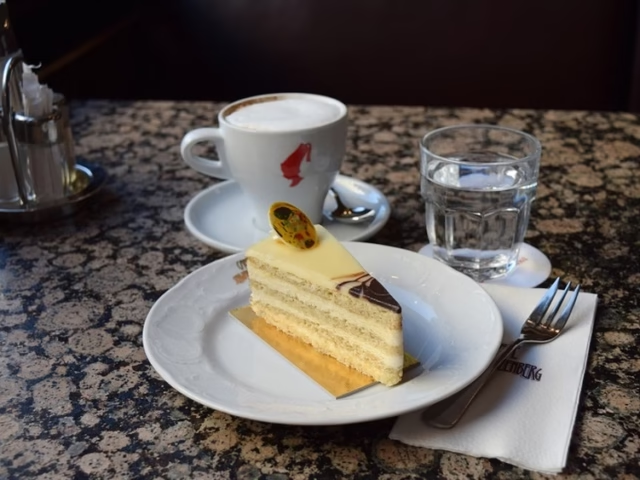
A solo traveler’s guide to Viennese coffeehouse culture: what to order, how to sit for hours without feeling rushed, and which cafés suit a quiet solo visit.
View more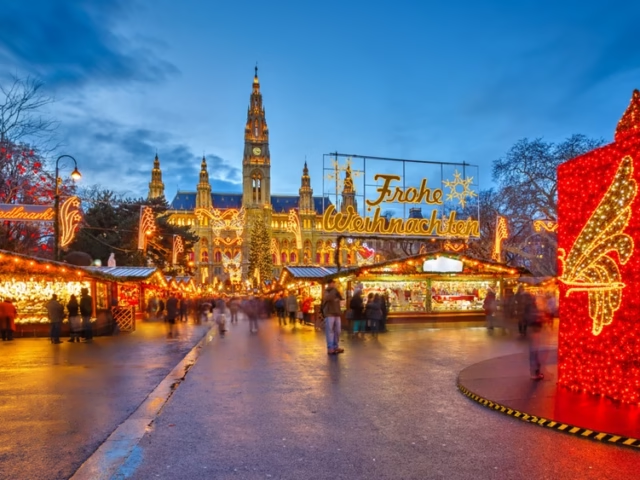
Imagine exploring Vienna on your own terms—wandering through grand palaces, sipping coffee in centuries-old cafés, and discovering hidden gems that only solo travelers truly appreciate. When you travel alone in Vienna, you unlock a unique freedom to dive deep into its rich history, vibrant culture, and stunning architecture at your…
View more
A complete solo traveler’s guide to getting around Vienna: the U-Bahn, trams, buses, ticket prices, walking, and taxis.
View more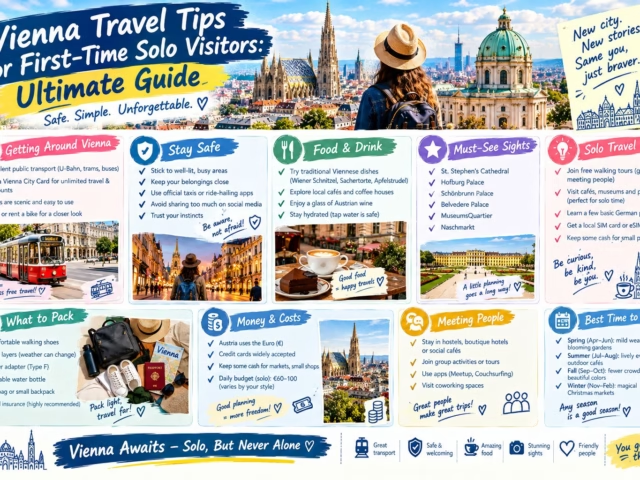
Planning your first solo trip to Vienna? You’re about to discover a city full of charm, history, and vibrant culture that’s perfect for exploring on your own terms. But before you dive into the stunning palaces, cozy coffee houses, and lively streets, there are some insider tips that can make…
View more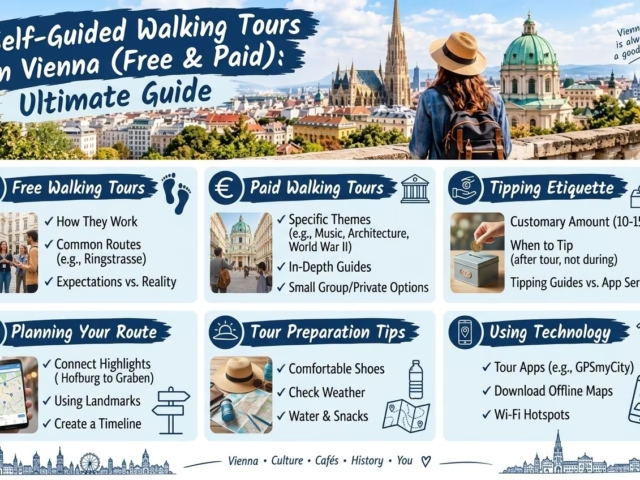
Discover Vienna at your own pace with self-guided walking tours that suit your style and budget. Whether you want to explore for free or prefer a paid experience with extra perks, there’s a perfect option waiting for you. Imagine strolling through grand palaces, charming streets, and hidden gems, all on…
View more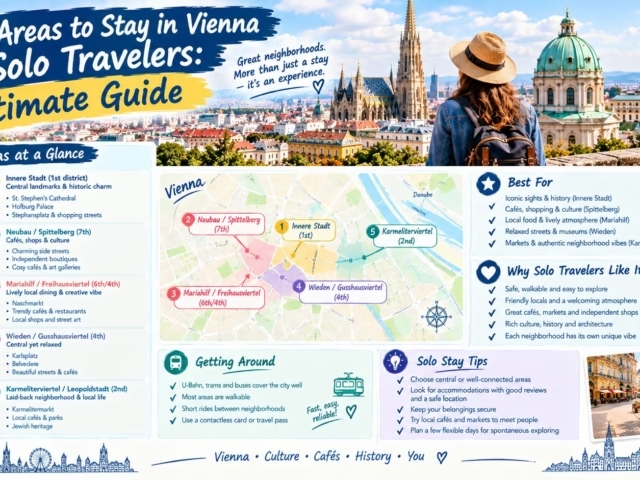
Planning a solo trip to Vienna? Choosing the right neighborhood can make all the difference in how much you enjoy your stay. You want a place that feels safe, easy to explore, and full of energy—without overwhelming you. Whether you’re into history, arts, shopping, or just soaking up local vibes,…
View more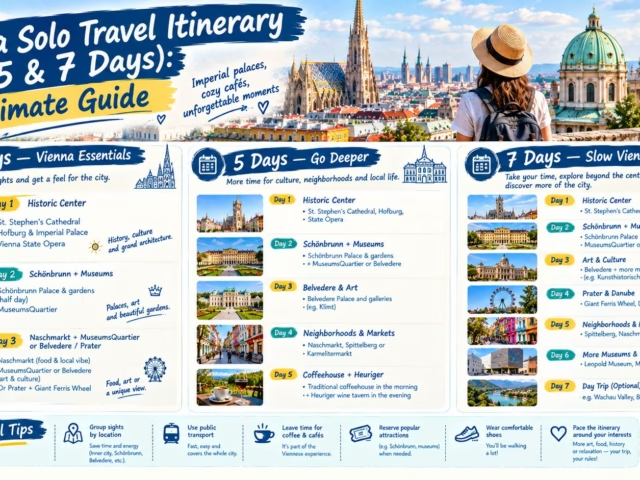
Planning your solo trip to Vienna? Whether you have 3, 5, or 7 days, this itinerary is designed just for you. Vienna isn’t just a city to visit—it’s a place to experience fully, at your own pace and style. You’ll discover stunning palaces, vibrant markets, world-class museums, and cozy cafés…
View more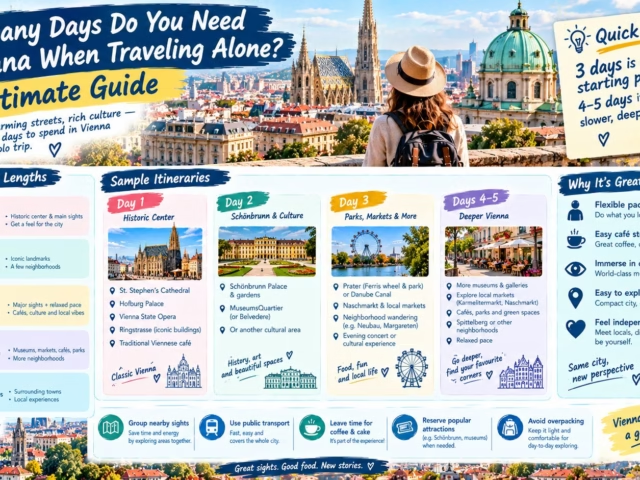
Planning a solo trip to Vienna? You might be wondering how many days you really need to soak in all the magic this city has to offer. Vienna is packed with stunning palaces, vibrant street life, world-class museums, and cozy cafés that invite you to slow down and savor every…
View more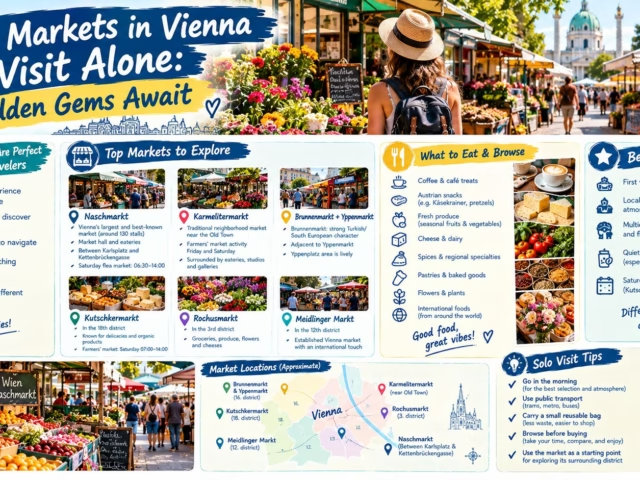
Exploring Vienna on your own opens up a world of discovery, especially when it comes to its vibrant markets. Imagine wandering through lively stalls filled with fresh produce, unique crafts, and delicious local treats—all at your own pace. Whether you’re craving a taste of traditional Austrian flavors or searching for…
View more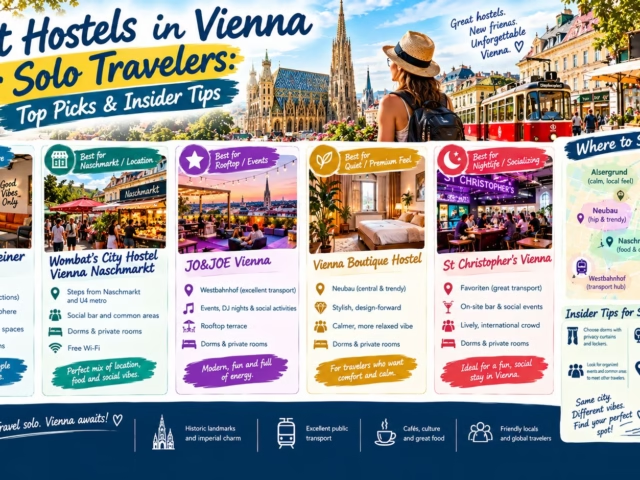
Traveling solo in Vienna is an exciting adventure waiting for you. But finding the right place to stay can make all the difference. You want a hostel that feels safe, friendly, and full of opportunities to meet new people. Imagine waking up in a vibrant, social space where you instantly…
View more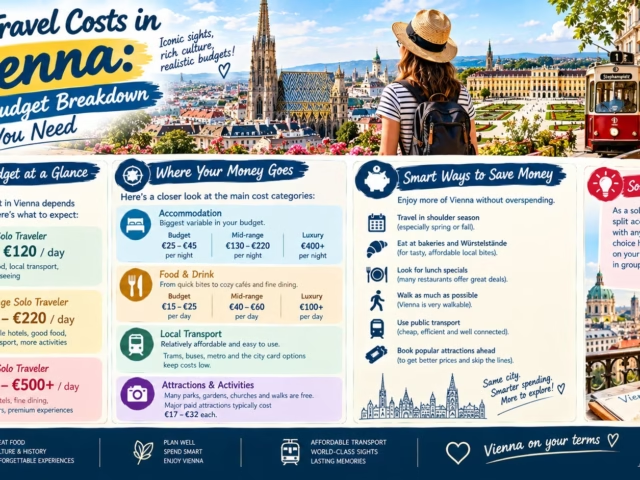
Planning your solo trip to Vienna but wondering how much you’ll really need each day? You’re in the right place. Understanding the daily costs can make all the difference between stressing over your budget and enjoying every moment of your adventure. From cozy accommodations and tasty meals to getting around…
View more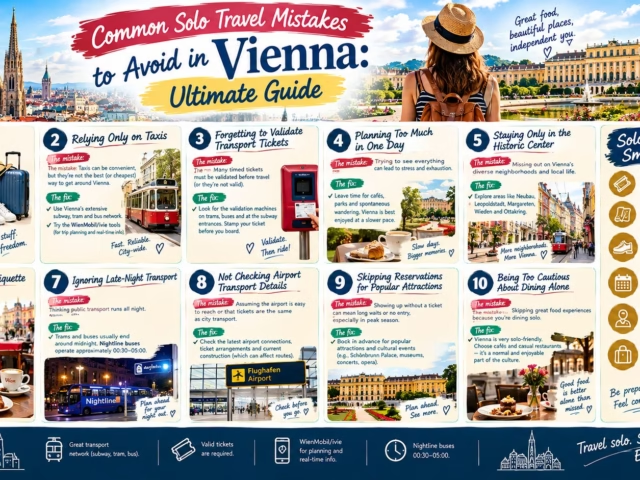
Traveling solo to Vienna can be one of the most exciting experiences of your life. But if you’re not careful, small mistakes can turn your dream trip into a stressful ordeal. Are you ready to explore the city’s stunning palaces, vibrant coffee houses, and rich history without running into avoidable…
View moreMore guides about solo travel to Vienna
ACTIVITIES
What to do in Vienna?
There are quite a few activities you can do in and around the city. Vienna is filled with fun activities and entertaining tours.


ATTRACTIONS
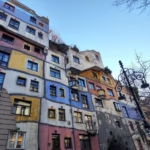
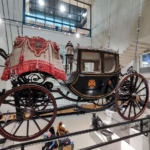
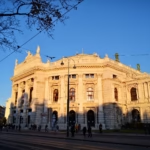
What to see in Vienna?
There are quite a few attraction you can visit in and around the city. Vienna is filled with historical and cultural landmarks.

FOOD AND DRINKS
What to eat in Vienna?
Classic Viennese food and wide variety of international cuisine are making Vienna a foodie paradise, fit for everyone’s taste.


ACCOMMODATION
Where to stay in Vienna?
Hotels for every taste, guest houses and various accomodation options available.


