
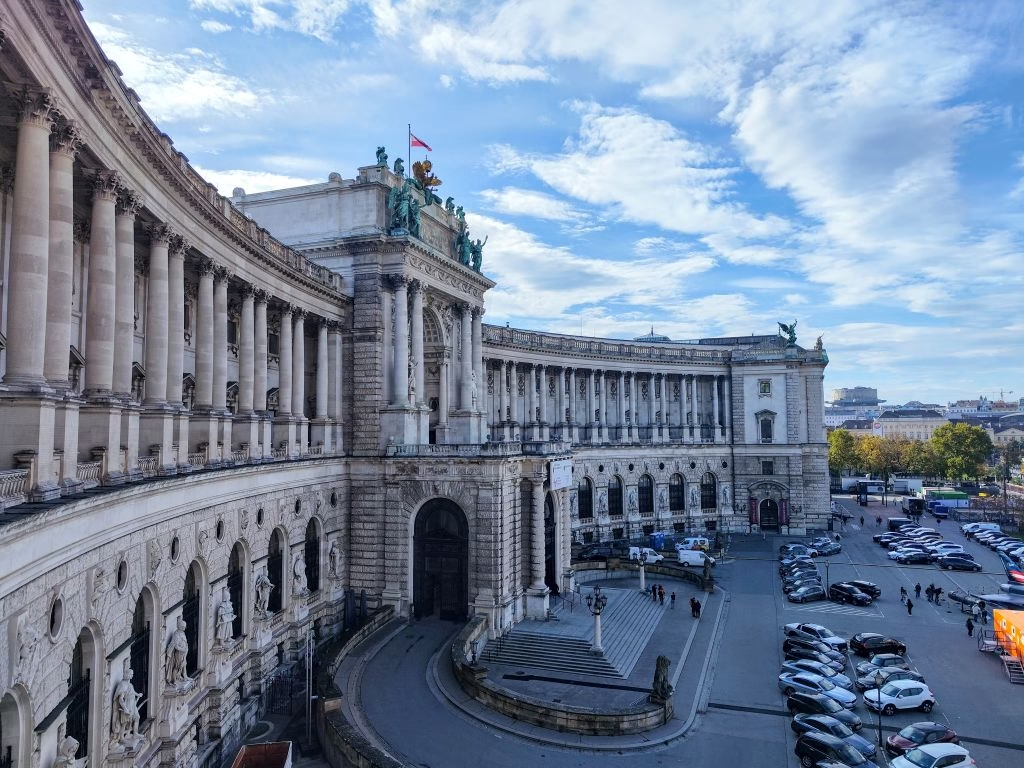
Visit Vienna: The Complete Travel Guide
Vienna defies most of the expectations visitors bring to it. It is not merely a city frozen in Habsburg amber, replaying its imperial past for tourists who come to see the palaces and leave.
It is one of the most consistently liveable cities on the planet, first in the Economist Intelligence Unit’s Global Liveability Index for the fourth consecutive year, and it functions with an efficiency, cultural seriousness, and physical beauty that is difficult to appreciate fully until you are standing in it.
The basics: Vienna is the capital and largest city of Austria, with a population of around 1.9 million in the city proper and close to 2.9 million in the greater metropolitan area. It sits on the Danube in northeastern Austria, bordered by the Vienna Woods to the west and the Hungarian plain to the east. It is a short distance from Bratislava, Brno, and Budapest, making it one of the best-connected cities in Central Europe for multi-destination travel.
This page is your master guide to visiting Vienna. It covers everything from first-time basics to the kind of detail that makes a second or third visit feel like a completely different trip. Use the section links to go deeper on any topic, and follow the internal links throughout to our dedicated guides for each area.
Quick Facts About Vienna
| Category | Detail |
| Country | Austria |
| Population | 1.9 million (city); 2.9 million (metro area) |
| Language | German (Austrian dialect). English widely spoken in tourist areas. |
| Currency | Euro (EUR). Cards accepted almost everywhere; cash still preferred at markets and smaller restaurants. |
| Time Zone | CET (UTC+1) / CEST (UTC+2) in summer |
| Electricity | 230V / 50Hz, Type F (Schuko) plugs |
| Dialling Code | +43 (Austria); +43 1 (Vienna) |
| Airport | Vienna International Airport (VIE), 18km southeast of the city |
| Main Train Station | Vienna Hauptbahnhof (Wien Hbf), international trains; Wien Meidling for some regional routes |
| UNESCO Status | Historic Centre of Vienna designated World Heritage Site in 2001 |
Why Visit Vienna
The most honest answer to this question is that Vienna rewards different things to different visitors, and almost all of them leave wanting to return. For some, the pull is the music: Vienna is the city of Mozart, Beethoven, Schubert, Brahms, Mahler, and Strauss, and it remains one of the great capitals of classical music and opera. For others, it is the architecture: no other city in Europe has such a concentrated sequence of imperial baroque and Ringstrasse grandeur within a walkable area. For others still, it is the coffee house culture, the particular quality of an afternoon in a Viennese cafe, with a Melange and a newspaper and no pressure to leave, that has no real equivalent anywhere else.
And then there is the food, the wine, the museums, the ball season, the Christmas markets, the outer districts that most visitors never reach, the wine villages in the hills above the city, and the specific pleasure of a city that takes culture, pleasure, and daily life with equal seriousness.
The Music
Vienna’s relationship with classical music is not nostalgia, it is a living institution. The Vienna State Opera performs 300 nights a year and is one of the most demanding and prestigious houses in the world. The Musikverein, home of the Vienna Philharmonic, stages concerts of extraordinary quality in acoustics that are routinely described as the finest in existence. Standing tickets at the opera cost as little as 4 euros; the programming is at a level that would be headlining festivals anywhere else in the world.
The Architecture
The Ringstrasse, Vienna’s grand circular boulevard completed in the 1860s under Emperor Franz Joseph I, is one of the great feats of urban planning in the 19th century. The buildings that line it: the State Opera, the Parliament, the Kunsthistorisches and Natural History Museums, the Burgtheater, the Rathaus, were each designed by a different architect, competing to produce the most impressive building on the most important street in the empire. The result is an open-air architectural museum that takes about two hours to walk and that rewards every second of it.
The Coffee Houses
The Viennese coffee house is not a cafe in any ordinary sense. It is an institution with its own customs, vocabulary, and pace of life. You are expected to order one coffee and stay for as long as you want. Newspapers, in multiple languages, are provided on wooden holders. The waiter will bring you a glass of water without being asked and refill it without being asked again. The menu will list seventeen varieties of coffee, each with a specific preparation and a specific cup. Choosing the wrong one is not a mistake, it is an education.
More from our website: Things to Do in Vienna | Vienna Coffee Houses Guide | Vienna Music & Opera Guide | Vienna Architecture Guide
When to Visit Vienna
Spring (March to May): The Best Season
Spring is the finest time to visit Vienna. The cultural season is running at full intensity through May, the weather is mild and increasingly warm, the gardens come into bloom (the Belvedere in April is exceptional), and the summer tourist crowds have not yet arrived. The Wiener Festwochen performing arts festival begins in mid-May. Hotel prices are moderate. The terraces open. The city is at ease with itself.
Summer (June to August): Peak Season
Summer brings the full weight of the tourist season and the best of Vienna’s outdoor culture simultaneously. The Rathausplatz Film Festival (free outdoor cinema) runs through July and August. The Donauinselfest in late June is one of the world’s largest free music festivals. The Donaukanal beach bars operate, the Donauinsel is busy with swimmers and cyclists, and the evenings are long and warm. It is crowded, especially in July and August, and accommodation prices are at their highest. Book well in advance.
Autumn (September to November): The Second Best Season
Autumn is increasingly recognised as the best-value time to visit Vienna. The summer crowds have gone, the cultural season restarts with new-season opera and concert programming in September, the October light across the city and the Vienna Woods is extraordinary, and prices drop noticeably from their summer peak. The Viennale film festival in late October is one of the best in Central Europe. The chestnut trees in the Prater turn gold. The Heuriger wine taverns in Grinzing and Neustift are busy with the new vintage.
Winter (November to February): Christmas Markets & Ball Season
Winter in Vienna has its own powerful appeal. The Christmas market season runs from mid-November to 24 December across more than twenty locations, with the Rathausplatz, Schönbrunn, and Spittelberg markets among the most atmospheric in Europe. January and February bring the Viennese ball season, 400 formal balls, culminating in the Vienna Opera Ball in February. It is cold (regularly -2°C to 6°C in December and January), the days are short, and the coffee houses are full.
More from our website: See our full seasonal guide: Best Time to Visit Vienna, Month by Month
How to Get to Vienna
By Air
Vienna International Airport (VIE) is 18 kilometres southeast of the city centre, served by most major European carriers and long-haul airlines including Austrian Airlines (the national carrier), Lufthansa, British Airways, Emirates, and many others. The City Airport Train (CAT) reaches Wien Mitte in 16 minutes and runs every 30 minutes. The S-Bahn (suburban rail) S7 takes around 24 minutes and costs considerably less. Taxis and ride-sharing services are also available.
By Train
Vienna is exceptionally well-connected by rail. The Railjet and EuroCity services connect Vienna Hauptbahnhof to Salzburg (2.5 hours), Graz (2.5 hours), Munich (4 hours), Budapest (2.5 hours), Prague (4 hours), and Zurich (8 hours). Bratislava is just 1 hour by Railjet. Nightjet overnight trains connect Vienna to Amsterdam, Hamburg, Zurich, and Rome. The Nightjet network is the most extensive overnight train network in Europe and an excellent option for longer journeys from Western Europe.
By Bus
Flixbus and other long-distance coach operators serve Vienna from major European cities, arriving at the Vienna International Bus Terminal (VIB) at Erdberg, connected to the city centre by U3. Coach travel is the cheapest option for many routes but significantly slower than rail.
Getting Around Vienna
Vienna’s public transport network is one of the finest in the world. The Wiener Linien operates five U-Bahn (metro) lines, an extensive tram network, and a comprehensive bus system. The network runs 24 hours on weekends and public holidays, and from around 5am to midnight on weekdays, with night buses covering most routes during the gaps.
A single journey ticket (Einzelfahrschein) covers any single trip on any mode within the Vienna fare zone. The most practical options for visitors are the 24-hour or 7-day unlimited travel tickets, or the Vienna City Card which adds museum discounts to the transport coverage.
Internal link: Getting Around Vienna: The Complete Transport Guide for Visitors — U-Bahn map, tram routes, airport connections, and the Vienna City Card explained
Where to Stay in Vienna
Vienna’s accommodation options span the full range from budget hostels to the grand imperial hotels of the Ringstrasse. The choice of neighbourhood matters considerably, staying in the First District means walking distance to the major sights but paying a premium and accepting the noise of a tourist-dense area. Staying in the 7th or 8th Districts gives you a more residential, local atmosphere at lower prices, still within easy walking or tram distance of everything.
The most practical areas for first-time visitors are the First District (most expensive, most central), Mariahilf/Neubau (6th/7th Districts: excellent location, more affordable, good restaurant and bar access), and Leopoldstadt (2nd District: across the canal, fast growing, good value). For families, Hietzing near Schönbrunn is a quieter option.
More from our website: Where to Stay in Vienna: The Best Neighbourhoods for Every Traveller
| Find and book your Vienna hotel Compare hotels, apartments, and guest houses across every district. We recommend booking at least 6-8 weeks in advance for stays between May and September, and 2-3 months ahead for Christmas market season. |
Top Things to Do in Vienna
The Imperial Sights
St. Stephen’s Cathedral, the Hofburg Palace, Schönbrunn Palace, and the Belvedere are the four non-negotiable sights for any first visit. Between them they cover the full arc of Habsburg history, from the medieval foundations of the cathedral to the summer residence of Franz Joseph and Empress Sisi. Each can consume between one and three hours depending on how much of the interior you choose to explore. None of them should be rushed.
The Museums
Vienna is one of the great museum cities of the world. The Kunsthistorisches Museum holds one of the most important collections of Old Master paintings in existence, alongside extraordinary Egyptian, Greek, and Roman antiquities. The Leopold Museum in the MuseumsQuartier has the world’s largest Egon Schiele collection. The Albertina covers graphic arts from Raphael to the present. The Wien Museum, recently reopened after a major redesign, is the best city history museum in Central Europe. The Belvedere holds Klimt’s The Kiss alongside an outstanding collection of Austrian modernism.
The Music
Attending a performance at the Vienna State Opera or the Musikverein is one of the defining experiences of visiting the city. Standing tickets at the opera are available from 80 minutes before curtain for as little as 4 euros. The Volksoper is the city’s second major opera house, with a more accessible repertoire. Smaller concert venues: the Konzerthaus, the Kammeroper, the Burgtheater for theatre, operate year-round with programming of the highest quality.
The Coffee Houses
Choosing a coffee house in Vienna is a matter of temperament rather than recommendation. Cafe Central, in the vaulted Palais Ferstel, is the most architecturally impressive. Cafe Schwarzenberg on the Ringstrasse is the oldest. Cafe Hawelka in the First District is the most bohemian. Cafe Landtmann, beside the Burgtheater, is where the politicians and academics go. All of them operate on the same unspoken contract: one coffee, unlimited time, no pressure.
More from our website: Things to Do in Vienna | Vienna Coffee Houses Guide | Vienna Music & Opera Guide | Vienna Architecture Guide
Food & Drink in Vienna
Viennese cuisine is central European in character, richer and more substantial than most modern restaurant culture but more refined than its reputation sometimes suggests. The Wiener Schnitzel, veal (not pork, in the original) fried in breadcrumbs, is the dish that defines the city, but the repertoire extends well beyond it: Tafelspitz (boiled beef with horseradish and apple sauce), Zwiebelrostbraten (roast beef with onions), Gulasch (a Hungarian inheritance, deeply absorbed), and Beuschel (offal ragout, an acquired taste worth acquiring).
The dessert culture is serious. Sachertorte, the dense chocolate cake created at the Hotel Sacher, has been the subject of a legal dispute between the Sacher and Demel over the right to call their version the original. Apfelstrudel, Palatschinken (thin pancakes with various fillings), Kaiserschmarrn (torn pancake with plum sauce), and Topfenstrudel (curd cheese strudel) complete the core dessert canon.
Austrian wine is consistently underrated and the best domestic restaurants stock excellent Gruner Veltliner, Riesling, and Zweigelt from the Wachau, Kamptal, and Burgenland regions. The beer is also good, Ottakringer, brewed in the 16th District, is the Vienna house beer and far better than its relative obscurity outside Austria suggests.
Practical Information
Costs & Budget
Vienna sits in the mid-to-upper range of European capital city costs. Budget travellers staying in hostels, eating lunch at market stalls and dinner at traditional Beisl restaurants, and using standing opera tickets can manage on 60-80 euros per day. Mid-range travellers in a 3-star hotel, with museum entry and restaurant lunches, should budget 150-200 euros per day. Luxury travel in Vienna is at the top of the European scale but represents outstanding value relative to what is on offer.
Language
The official language is German, spoken in a distinctly Viennese dialect that differs enough from standard German to occasionally confuse even native German speakers from other countries. English is widely spoken in tourist areas, hotels, and most restaurants. Learning a few phrases: Bitte (please), Danke (thank you), Entschuldigung (excuse me), Zahlen bitte (bill please), is appreciated and will occasionally produce a warmer response from the city’s occasionally formal service culture.
Safety
Vienna is one of the safest capitals in Europe. Violent crime is extremely rare in tourist areas. The standard precautions that apply in any large city, awareness of pickpockets in crowded tourist areas, care with bags on public transport, are sensible but the threat level is genuinely low. The city’s police (Polizei) are professional and generally English-speaking in the central districts.
Tipping
Tipping in Vienna is customary but not obligatory and is handled differently from North American practice. The standard approach is to round up the bill to the nearest convenient number when paying, for a 13.40 euro bill, offering 15 euros and saying ‘Stimmt so’ (keep the change) is the norm. Large percentage tips are neither expected nor particularly common. In coffee houses, leaving the small change from your payment is the standard gesture.
| Plan your Vienna trip Use our full guide network to plan every element of your visit — from choosing a neighbourhood and booking accommodation to buying opera tickets and planning your daily itinerary. |
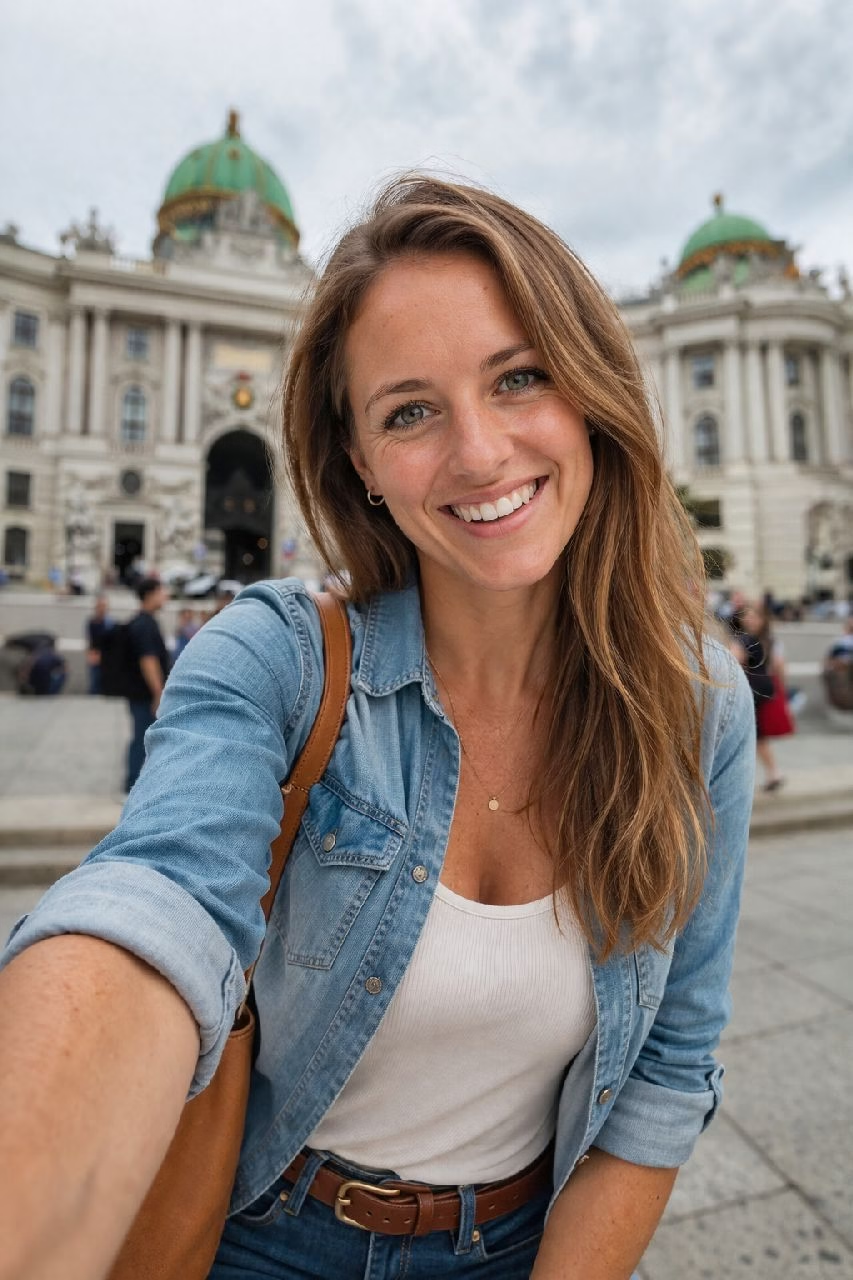
I’m Andrea, a travel writer based between Vienna and the Croatian coast, and I’ve been exploring both countries in depth for the past 10 years.
I’ve taken 50+ solo trips across Austria, Croatia, Germany, Switzerland, Slovenia, Italy and the wider Balkans, and I speak German, Croatian and English fluently, which means I get to have conversations most tourists never do. I know which Viennese coffee house the locals actually go to (hint: not the famous ones), and I know the Dalmatian islands well enough to tell you which ferry to take and which to avoid.
My writing is grounded in lived experience: I’ve navigated Austrian bureaucracy as a resident, hiked the Julian Alps in September when the crowds have gone, and eaten my way through Dubrovnik’s back streets at midnight. I cover Central Europe and the Adriatic for solo travellers who want something more than a highlight reel.
I also write in depth about Vienna and Austria at allaboutvienna.com, where you’ll find everything from neighbourhood guides to seasonal event coverage and expat tips.
When I’m not writing I’m usually hiking, swimming in the Adriatic, or arguing about which city makes better coffee. (It’s Vienna. It’s always Vienna.)
Vienna practical guides
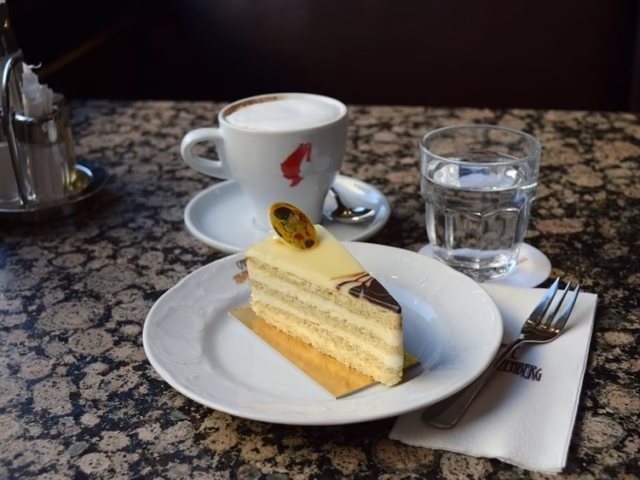
A solo traveler’s guide to Viennese coffeehouse culture: what to order, how to sit for hours without feeling rushed, and which cafés suit a quiet solo visit.
View more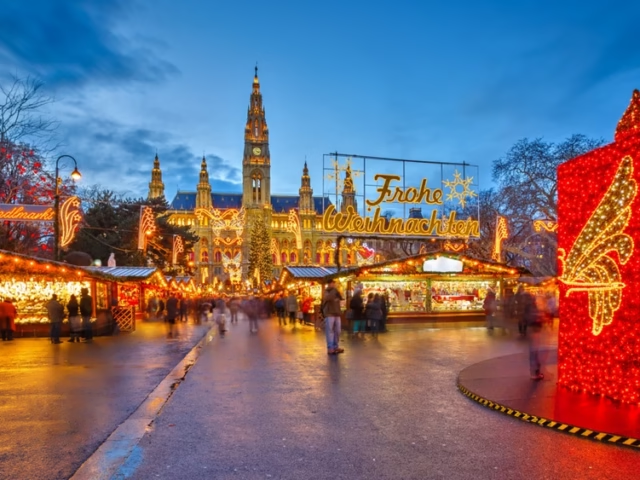
Imagine exploring Vienna on your own terms—wandering through grand palaces, sipping coffee in centuries-old cafés, and discovering hidden gems that only solo travelers truly appreciate. When you travel alone in Vienna, you unlock a unique freedom to dive deep into its rich history, vibrant culture, and stunning architecture at your…
View more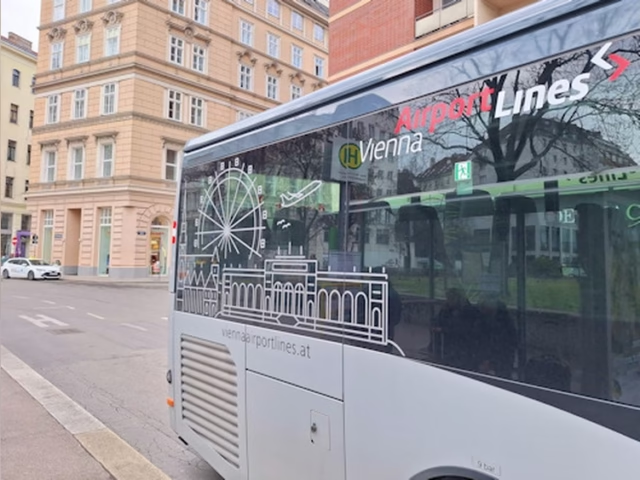
Getting from Vienna Airport to the City Centre: All Options ComparedVienna is famous for its history, beautiful buildings, and vibrant culture. But when you land at Vienna International Airport (VIE), one question comes up: how do you reach the city center quickly, comfortably, and affordably? Vienna’s airport is around 18…
View more
A complete solo traveler’s guide to getting around Vienna: the U-Bahn, trams, buses, ticket prices, walking, and taxis.
View more
Explore the top events in Vienna November 2026, highlighting cultural festivals, concerts, and exhibitions that define the city’s vibrant autumn season.
View more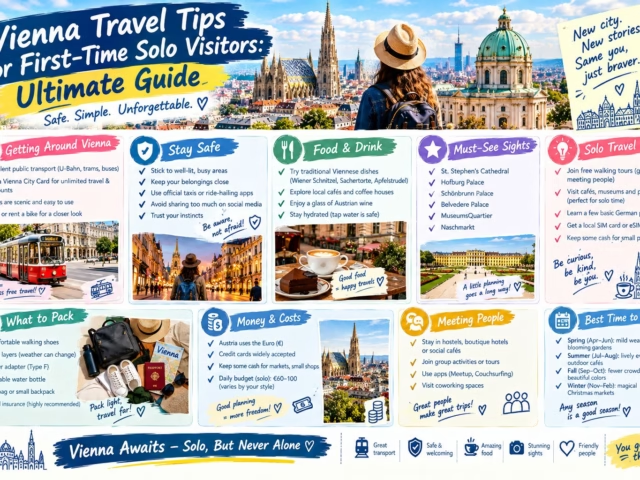
Planning your first solo trip to Vienna? You’re about to discover a city full of charm, history, and vibrant culture that’s perfect for exploring on your own terms. But before you dive into the stunning palaces, cozy coffee houses, and lively streets, there are some insider tips that can make…
View more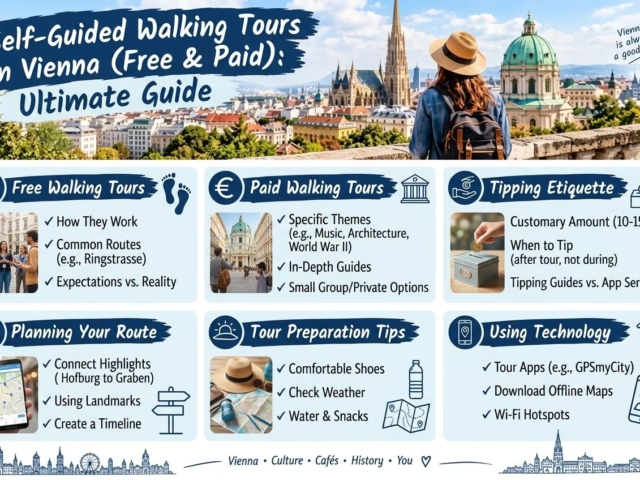
Discover Vienna at your own pace with self-guided walking tours that suit your style and budget. Whether you want to explore for free or prefer a paid experience with extra perks, there’s a perfect option waiting for you. Imagine strolling through grand palaces, charming streets, and hidden gems, all on…
View more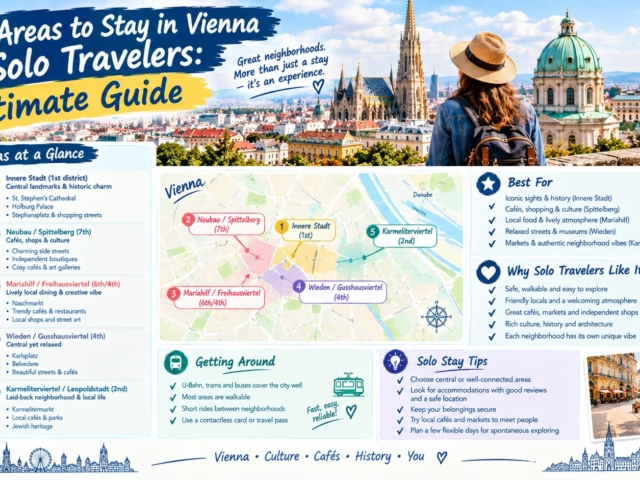
Planning a solo trip to Vienna? Choosing the right neighborhood can make all the difference in how much you enjoy your stay. You want a place that feels safe, easy to explore, and full of energy—without overwhelming you. Whether you’re into history, arts, shopping, or just soaking up local vibes,…
View more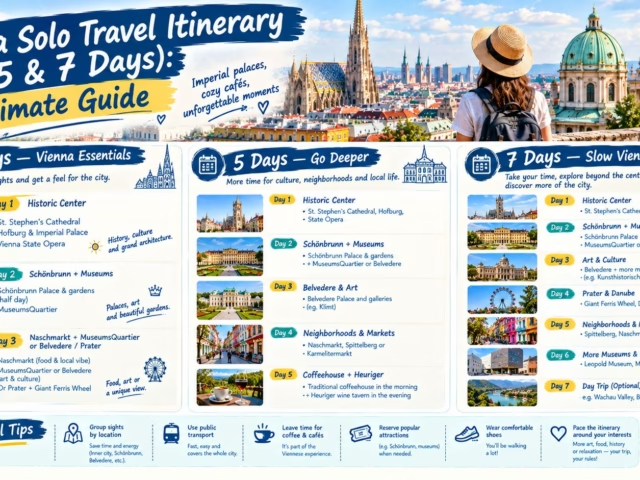
Planning your solo trip to Vienna? Whether you have 3, 5, or 7 days, this itinerary is designed just for you. Vienna isn’t just a city to visit—it’s a place to experience fully, at your own pace and style. You’ll discover stunning palaces, vibrant markets, world-class museums, and cozy cafés…
View more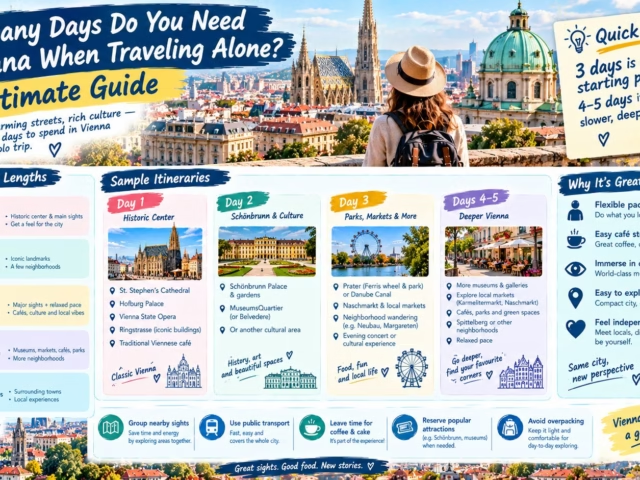
Planning a solo trip to Vienna? You might be wondering how many days you really need to soak in all the magic this city has to offer. Vienna is packed with stunning palaces, vibrant street life, world-class museums, and cozy cafés that invite you to slow down and savor every…
View more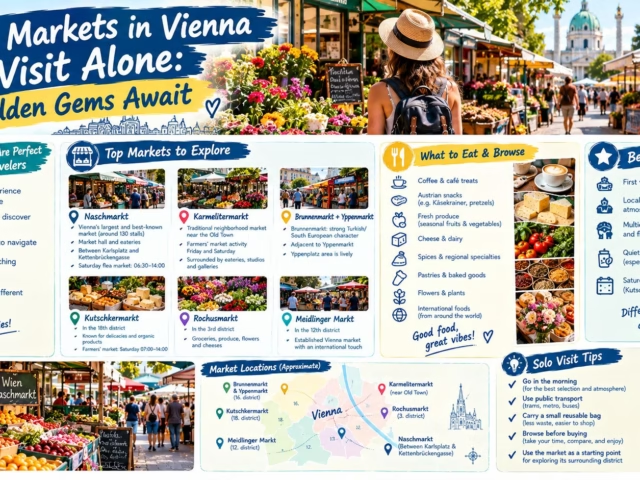
Exploring Vienna on your own opens up a world of discovery, especially when it comes to its vibrant markets. Imagine wandering through lively stalls filled with fresh produce, unique crafts, and delicious local treats—all at your own pace. Whether you’re craving a taste of traditional Austrian flavors or searching for…
View more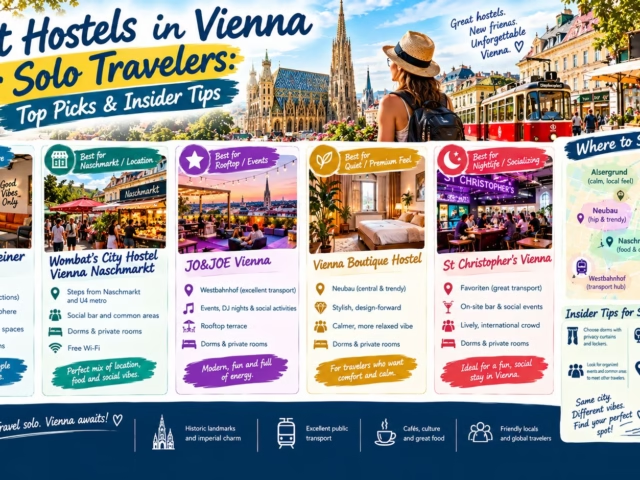
Traveling solo in Vienna is an exciting adventure waiting for you. But finding the right place to stay can make all the difference. You want a hostel that feels safe, friendly, and full of opportunities to meet new people. Imagine waking up in a vibrant, social space where you instantly…
View moreACTIVITIES
What to do in Vienna?
There are quite a few activities you can do in and around the city. Vienna is filled with fun activities and entertaining tours.


ATTRACTIONS
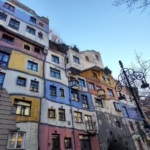
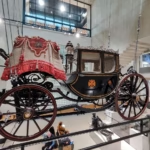
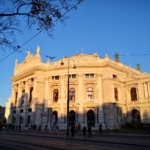
What to see in Vienna?
There are quite a few attraction you can visit in and around the city. Vienna is filled with historical and cultural landmarks.

FOOD AND DRINKS
What to eat in Vienna?
Classic Viennese food and wide variety of international cuisine are making Vienna a foodie paradise, fit for everyone’s taste.


ACCOMMODATION
Where to stay in Vienna?
Hotels for every taste, guest houses and various accomodation options available.


