

Vienna is often called the “City of Dreams” or the “City of Music,” but for many travelers and locals, it can feel like the “City of High Prices. ” The good news? Vienna offers a surprising number of world-class experiences that cost nothing.
You don’t need a Vienna Pass or any tourist card to access these treasures. Whether you’re a backpacker on a tight budget, a student, or just want to soak up the city without opening your wallet, Vienna’s streets, parks, cultural sites, and local neighborhoods are full of free adventures.
This guide uncovers the best free things to do in Vienna, with practical tips, real examples, and a few insider secrets most visitors miss. It doesn’t matter if you have a single day or a week—the following ideas will help you experience the real Vienna, beyond the usual tourist traps.
Explore Vienna’s Historic Heart
Vienna’s city center, called the Innere Stadt, is a UNESCO World Heritage site. The area is packed with stunning architecture, historic plazas, and elegant streets. Here’s how to experience its beauty for free.
St. Stephen’s Cathedral (stephansdom)
St. Stephen’s Cathedral is Vienna’s most famous church. You can enter the main part of the cathedral for free. Look up at the high vaulted ceilings, admire the art, and feel the centuries of history around you. The outside is covered in colorful tiles and intricate stonework. If you want to climb the towers, that costs extra, but the main entrance is always open to everyone.
Tip: Visit early in the morning or late evening to avoid crowds and enjoy the peaceful atmosphere. Don’t forget to walk around the building to see the unique patterns on the roof.
The Graben And Kohlmarkt
These two streets are Vienna’s elegant shopping area, but window shopping is completely free. Walk along the Graben to see the ornate Plague Column (Pestsäule), a baroque monument built after the 1679 plague. The Kohlmarkt connects you to the Hofburg Palace and is lined with luxury shops. Even if you can’t buy anything, the displays and buildings are impressive.
Hofburg Palace Complex
You don’t need a ticket to wander the Hofburg Palace courtyards and gardens. This huge complex once housed emperors and is now the official home of Austria’s president. Look for the Michaelerplatz entrance and explore the passageways, statues, and open squares.
Non-obvious insight: Most tourists miss the small park behind the National Library (Burggarten), where locals relax and musicians sometimes play for free.
Vienna’s Parks And Green Spaces
Vienna is one of Europe’s greenest cities. Parks are everywhere and open to all.
Stadtpark
The Stadtpark is famous for its golden Johann Strauss statue. But the real charm is in the quiet paths, flower gardens, and small lakes. It’s a great place for a picnic or simply resting between sightseeing.
Insider tip: Early spring and late autumn bring beautiful colors, and you’ll find fewer crowds.
Burggarten
Next to the Hofburg Palace, the Burggarten has a statue of Mozart surrounded by a treble-clef-shaped flowerbed. The park feels elegant but relaxed—perfect for reading or people-watching.
Volksgarten
The Volksgarten is known for its more than 3,000 rose bushes. In May and June, the air is full of fragrance. Statues and fountains make it one of Vienna’s most photogenic spots.
Prater Park
The Prater is much more than the famous Ferris wheel. The park itself is huge, with wide paths, open meadows, and old forests. Many locals come here to cycle, jog, or enjoy a picnic. The “Hauptallee” is a long, straight avenue lined with chestnut trees—great for a relaxing walk.
Augarten
The Augarten is one of Vienna’s oldest Baroque parks. Here you’ll find locals playing sports, families with children, and a peaceful vibe. Two giant flak towers from World War II add a dramatic touch to the landscape.
Non-obvious insight: In the Augarten, listen for the Vienna Boys’ Choir, which practices nearby. You can sometimes hear their singing drifting over the gardens.
Free Art And Architecture
Vienna is famous for its museums and art collections, but you don’t need a ticket to see world-class works.
Street Art In The Museumsquartier
The MuseumsQuartier (MQ) is known for its modern art museums, but the outdoor areas are filled with free art installations, pop-up exhibits, and creative benches. In summer, open-air events and performances happen here—many of them free. It’s a lively place to meet people or just enjoy the creative atmosphere.
Free Museum Days
Several museums in Vienna offer free entry on certain days or times:
- MAK (Museum of Applied Arts): Free entry every Tuesday from 6–9 pm.
- Wien Museum: Free on the first Sunday of every month.
- MUSA Museum: Free entry to many exhibitions; check their website for details.
Practical tip: Check museum websites before you visit; free entry times can change.
Hundertwasserhaus
The Hundertwasserhaus is an apartment building designed by artist Friedensreich Hundertwasser. The building is covered with colorful tiles, uneven lines, and trees growing from the walls. You can’t go inside (people live there), but the outside is a work of art and draws visitors from all over the world.
Vienna State Opera (wiener Staatsoper) Live Streams
In spring and summer, the Vienna State Opera broadcasts some performances live on a giant screen outside the opera house. Bring a jacket and a snack, and you can enjoy world-class opera for free.
Historic Churches
Vienna’s churches are architectural gems—and most are free to enter. Besides Stephansdom, don’t miss:
- Karlskirche: Free to enter the main part.
- Peterskirche (St. Peter’s Church): Known for its music performances.
- Votivkirche: Beautiful stained glass and peaceful atmosphere.
Non-obvious insight: Many churches host free organ concerts or choir rehearsals—check signs at the entrance for schedules.
Walks With A View
Vienna’s skyline is full of spires, domes, and towers. Some of the city’s best views are free.
Kahlenberg
Take a short bus ride (bus 38A from Heiligenstadt) to Kahlenberg, a hill on the edge of Vienna. From the top, you get a panoramic view over the city and the Danube River. There are hiking trails through vineyards and forests.
Donauinsel (danube Island)
The Danube Island is a 13-mile-long strip of land in the river. It’s a favorite spot for jogging, swimming, cycling, and sunbathing. There are free beaches, barbecue areas, and even a climbing park.
Belvedere Gardens
The Belvedere Palace is famous for its art collection, but the formal gardens are free to enter. Walk the terraced paths for a classic view of the city and the palace itself.
Am Himmel
Less famous than Kahlenberg, the Am Himmel viewpoint offers peaceful lawns and a unique “Tree of Life” circle. Locals love to come here for sunset.
Local Life: Markets, Neighborhoods, And Streets
Vienna’s real charm is in its neighborhoods, markets, and lively streets.
Naschmarkt
The Naschmarkt is Vienna’s most famous food market. Walking through is free, and you’ll see stalls selling everything from local cheese to Turkish sweets. Many vendors offer free samples, especially in the morning.
Brunnenmarkt
The Brunnenmarkt is a local favorite and less touristy than Naschmarkt. It’s the longest street market in Vienna and stretches through a multicultural neighborhood. Saturday mornings are especially lively.
Spittelberg
The Spittelberg area is full of narrow cobblestone streets, old houses, and small art galleries. In December, the Christmas market here is one of the city’s best, with free music and a cozy atmosphere.
Freihausviertel
A trendy district with independent shops, cafes, and street art. The vibe is creative and relaxed—a nice break from the city center’s formality.
Mariahilfer Straße
Vienna’s main shopping street is also great for people-watching. Street performers, pop-up events, and seasonal decorations make it lively all year.
Non-obvious insight: On some weekends, parts of Mariahilfer Straße become pedestrian-only, turning the area into a giant open-air festival.
Seasonal Events And Festivals
Vienna is a city of festivals. Many of them are free and open to all.
Christmas Markets
Vienna’s Christmas markets are world-famous. Most are free to enter, and you can wander through stalls, listen to choirs, and enjoy the decorations. The markets at Rathausplatz, Spittelberg, and Karlsplatz are especially beautiful.
New Year’s Eve Trail (silvesterpfad)
On December 31, the city center turns into a giant street party with free music stages, dance floors, and fireworks.
Donauinselfest
Europe’s biggest open-air music festival happens every June on the Danube Island. All concerts are free, and the lineup includes local bands and international stars.
Film Festival At Rathausplatz
Every summer, the square in front of the City Hall (Rathaus) becomes an open-air cinema, with free screenings of concerts, operas, and movies on a giant screen.
Museumsquartier Summer And Winter Events
MQ hosts many free events: outdoor yoga, silent discos, art installations, and ice skating in winter.
Non-obvious insight: Local universities often hold free lectures, concerts, and exhibitions open to the public. Check the events calendar on the University of Vienna’s website.
Vienna’s Hidden Corners
Some of Vienna’s best experiences are away from the main sights.
Strudlhofstiege
The Strudlhofstiege is an elegant outdoor staircase in the Alsergrund district. It’s a favorite spot for photographers and has a romantic, old-world feel.
Setagayapark
A Japanese-style garden in the 19th district, built as a symbol of friendship between Vienna and Tokyo. It’s peaceful, beautiful in cherry blossom season, and rarely crowded.
Lainzer Tiergarten
A huge nature reserve on the city’s edge, once used as the imperial hunting grounds. Wild boars, deer, and old forests make it a great place for a long walk. Entry is free, but check opening times (it closes at sunset).
Otto Wagner’s Architecture
Vienna is full of buildings designed by the famous architect Otto Wagner. Look for the Kirche am Steinhof (St. Leopold’s Church), the art nouveau pavilions at Karlsplatz, and the old city railway stations. Walking tours (self-guided) are easy to find online.
Vienna Woods (wienerwald)
The Vienna Woods are a UNESCO Biosphere Reserve and cover a huge area around the city. You can hike, spot wildlife, or just enjoy the quiet. Several trails start from subway stations at the city’s edge.
Free Music And Culture
Vienna’s music tradition is legendary. It’s not just for ticket-holders—many experiences are completely free.
Open-air Concerts
From April to September, free concerts happen in parks, squares, and even subway stations. Look for posters or check the city’s official events page.
Organ And Choir Music
Many churches have free lunchtime or evening concerts. Peterskirche and Stephansdom are especially popular.
University Concerts
Music students at the University of Music and Performing Arts often give free public performances. They are high quality and a great way to hear the next generation of musicians.
House Of Music (haus Der Musik) – Free Ground Floor
The museum charges for full entry, but the ground floor has free interactive exhibits and sound installations. Worth a quick stop.
Non-obvious insight: The Vienna Philharmonic rehearses in the Musikverein. Occasionally, rehearsals are open to the public—ask at the box office.
Vienna For Families And Kids
Vienna is very child-friendly, and many attractions are free for the little ones (and their parents).
Playgrounds In The City Center
There are modern playgrounds near the MuseumsQuartier, Stadtpark, and in the Prater. Some have water features in summer.
Schönbrunn Palace Gardens
The palace interior costs money, but the gardens are free. Kids love the maze, fountains, and the Gloriette viewpoint.
Donauinsel Family Areas
The Danube Island has free water playgrounds, sand beaches, and cycling paths. In summer, lifeguards watch over swimming areas.
Children’s Farms
On the edge of the Prater and in the Lainzer Tiergarten, you’ll find small, free petting zoos with goats, rabbits, and chickens. Great for young children.
Vienna City Library
The main library (at the Urban-Loritz-Platz) has a large children’s section and regular free storytelling events.
Practical Tips For Enjoying Free Vienna
Vienna’s free experiences are easy to access, but a few practical tips can help you make the most of your visit.
- Public Transport: While not free, Vienna’s subway, tram, and bus system is efficient and affordable. Some attractions require a short ride out of the center.
- Drinking Water: Vienna’s tap water is famous for its quality. Public drinking fountains are everywhere—bring a refillable bottle.
- Toilets: Public toilets often cost 50 cents. In parks and large train stations, you’ll find free options.
- Safety: Vienna is one of Europe’s safest cities. Still, watch your belongings in crowded tourist spots.
- Local Apps: Download the “WienMobil” app for public transport and the “wien.at” app for events and attractions.
- Respect Spaces: Some free sites (especially churches) are places of worship. Dress respectfully and keep noise down.
Sample One-day Free Vienna Itinerary
If you only have one day and want to see Vienna’s highlights for free, here’s a suggested route:
- Morning: Start at St. Stephen’s Cathedral. Walk the Graben and Kohlmarkt to the Hofburg Palace. Stroll through the Burggarten and Volksgarten.
- Late Morning: Head to the MuseumsQuartier for outdoor art. Visit the Naschmarkt for free samples and people-watching.
- Afternoon: Take the subway (U1) to Prater Park. Walk the Hauptallee or relax in the meadows.
- Evening: Return to the city center for a free organ concert at Peterskirche or enjoy a live opera stream at the State Opera.
- Night: If it’s summer, join locals at the Film Festival at Rathausplatz.
Comparing Vienna’s Free Sights
To help you choose, here’s a quick comparison of some of Vienna’s top free attractions by type and best time to visit.
| Attraction | Type | Best Time | Local Tip |
|---|---|---|---|
| St. Stephen’s Cathedral | Historic/Architecture | Morning/Evening | Look for free choir rehearsals |
| Prater Park | Nature/Recreation | Spring/Summer | Bring a picnic, watch for free events |
| MuseumsQuartier Outdoor Art | Modern Art/Culture | Year-round | Check for pop-up installations |
| Naschmarkt | Market/Local Life | Morning | Try free samples, avoid weekends for crowds |
| Belvedere Gardens | Historic Gardens | Spring | Best for sunset photos |
Comparing Free Vienna With Other European Cities
How does Vienna’s selection of free activities compare to other major European capitals?
| City | Number of Free Major Attractions | Quality of Parks | Free Music/Events | Walkability |
|---|---|---|---|---|
| Vienna | 30+ | Excellent | Very Good | High |
| Berlin | 25+ | Very Good | Excellent | High |
| Paris | 20+ | Excellent | Good | Medium |
| Prague | 15+ | Good | Good | High |
Vienna stands out for the number and variety of free public spaces, high-quality parks, and regular free cultural events. It’s also one of the easiest cities in Europe to explore on foot.
Why Vienna’s Free Attractions Matter
Vienna’s “free” side is more than just a way to save money. It’s a key to understanding the city’s identity. Austrians believe in the importance of public space, open gardens, and accessible culture. This philosophy means locals and visitors share the same parks, music, and festivals.
You won’t feel like an outsider, even if you never buy a ticket.
Many travelers overlook simple pleasures—like joining locals for a walk in the Volksgarten or discovering a free open-air concert. These moments often become the most memorable parts of a trip. And while Vienna has plenty of luxury, its greatest treasures are open to all.
Pro tip: If you want to dive even deeper, the city’s official tourist website has up-to-date details on free events and new attractions: Vienna Tourist Board.
Frequently Asked Questions
What Are The Absolute Must-see Free Attractions In Vienna?
If you only have a short time, don’t miss St. Stephen’s Cathedral, the Hofburg Palace courtyards, Stadtpark, and the Belvedere Gardens. For a taste of local life, walk through the Naschmarkt. In summer, try to catch a free opera broadcast at the State Opera or a film at Rathausplatz.
Are Vienna’s Public Parks Safe At Night?
Most parks in the city center, like Stadtpark and Volksgarten, are safe until closing (usually around 10 pm). The Prater and Donauinsel are popular but less crowded at night—stick to well-lit paths. Vienna is a very safe city, but always use common sense.
Do I Need To Speak German To Enjoy Vienna’s Free Attractions?
No. Most free sites are easy to enjoy without German. Signs at churches, parks, and events often have English translations. Locals are used to tourists and can usually help with basic questions.
How Can I Find Free Concerts Or Events During My Stay?
Check the official city events calendar, look for posters in the city center, or ask at your hotel/hostel. The MuseumsQuartier, Rathausplatz, and parks often have free music and performances, especially in summer.
Are There Free Things To Do With Kids In Vienna?
Yes! The Schönbrunn Palace gardens, Prater playgrounds, Donauinsel beaches, and city parks all offer free activities for kids. Many museums have free entry days for children, and the main library has regular free events.
Vienna proves that the best things in life—and travel—can truly be free. With open eyes and a little curiosity, you’ll discover a city that welcomes everyone, no pass required.
Last Updated on
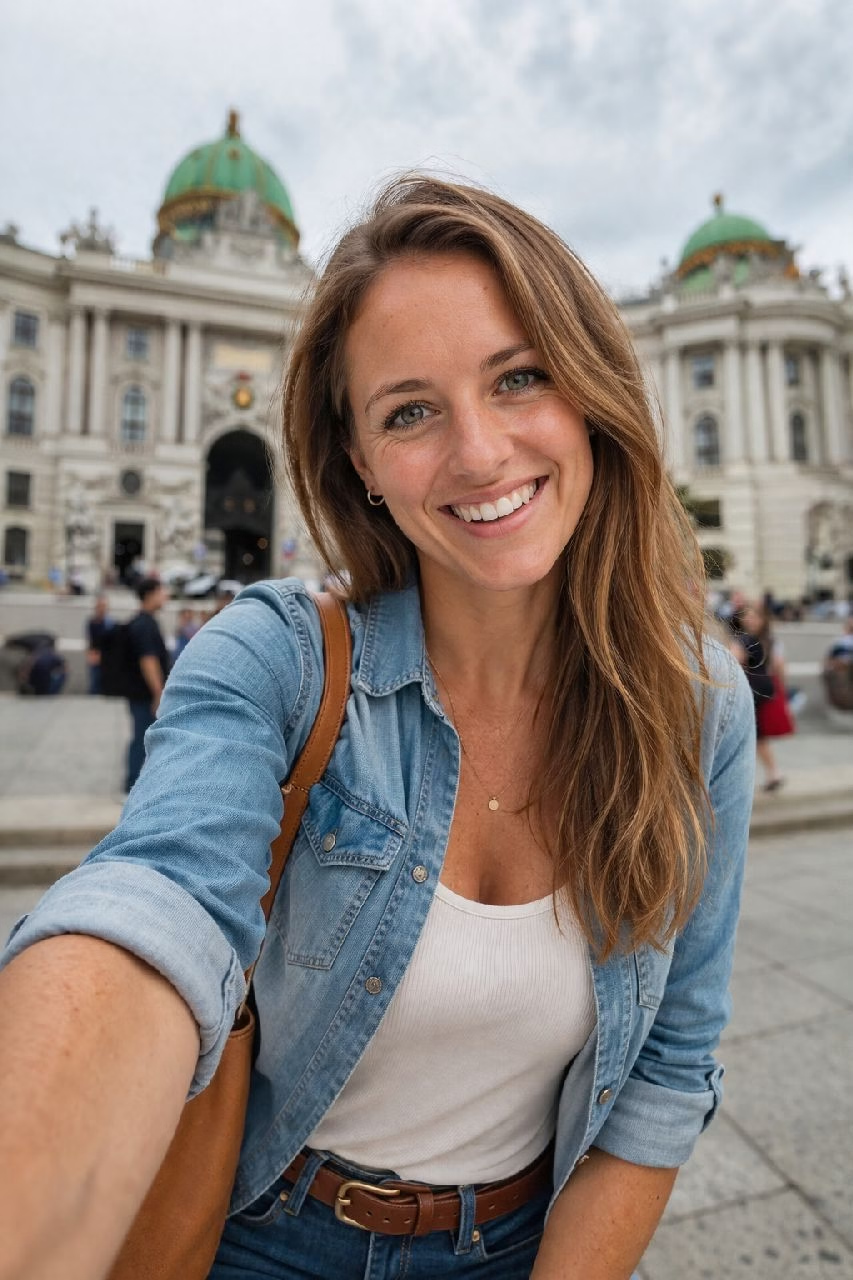
I’m Andrea, a travel writer based between Vienna and the Croatian coast, and I’ve been exploring both countries in depth for the past 10 years.
I’ve taken 50+ solo trips across Austria, Croatia, Germany, Switzerland, Slovenia, Italy and the wider Balkans, and I speak German, Croatian and English fluently, which means I get to have conversations most tourists never do. I know which Viennese coffee house the locals actually go to (hint: not the famous ones), and I know the Dalmatian islands well enough to tell you which ferry to take and which to avoid.
My writing is grounded in lived experience: I’ve navigated Austrian bureaucracy as a resident, hiked the Julian Alps in September when the crowds have gone, and eaten my way through Dubrovnik’s back streets at midnight. I cover Central Europe and the Adriatic for solo travellers who want something more than a highlight reel.
I also write in depth about Vienna and Austria at allaboutvienna.com, where you’ll find everything from neighbourhood guides to seasonal event coverage and expat tips.
When I’m not writing I’m usually hiking, swimming in the Adriatic, or arguing about which city makes better coffee. (It’s Vienna. It’s always Vienna.)