
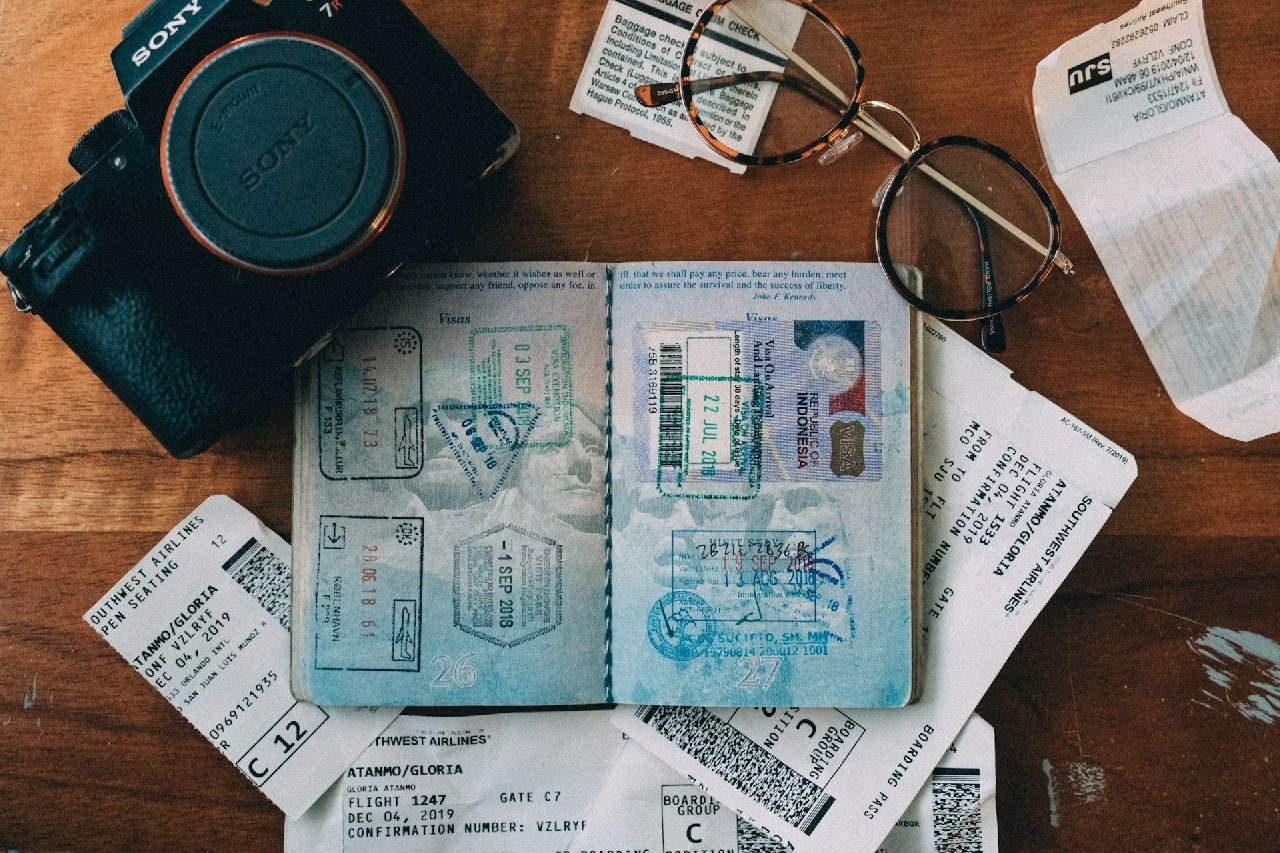
Traveling to Austria is a dream for many. Its beautiful cities, rich history, and stunning landscapes attract millions every year. But before you pack your bags, it’s important to know one thing: Do you need a visa to visit Austria? The answer depends on your nationality. This guide explains Austria’s visa requirements for travelers from every country, so you can plan your trip confidently and avoid surprises at the border.
Whether you’re coming for tourism, business, or family visits, understanding Austria’s visa policy is essential. Rules can change, and many travelers miss key details, like transit requirements or restrictions on work. This article covers the basics, then dives into a country-by-country breakdown, practical advice, examples, and answers to common questions.
By the end, you’ll know exactly what you need for a smooth entry into Austria.
Understanding Austria’s Visa Policy
Austria is part of the Schengen Area. This means it shares its visa policy with 26 other European countries. If you have a visa for any Schengen country, you can travel freely between them, including Austria. However, not everyone needs a visa. Some travelers can enter Austria visa-free for short stays.
Austria’s visa rules cover more than just entry. They also set guidelines for how long you can stay and what you can do during your visit. Many travelers are surprised to learn that even if they don’t need a visa, border officers may still ask for proof of accommodation, return tickets, or proof of funds.
These checks help Austria manage security and migration.
Types Of Visas For Austria
- Schengen short-stay visa (Type C): For tourism, business, or family visits up to 90 days in any 180-day period. This is the most common visa for short trips.
- National visa (Type D): For stays longer than 90 days, such as study, work, or residence. This visa is often required for students, workers, and family reunification.
- Airport transit visa: Needed by some nationalities when passing through Austrian airports, even if you do not leave the international transit area.
Most travelers want the Schengen short-stay visa. If you plan to stay longer, you must apply for a national visa.
Extra detail: The Schengen visa allows you to visit all Schengen countries, but you must apply to the country where you spend the most time or the country of first entry if time is equal. This rule catches many travelers by surprise and can cause problems at the border if not followed.
Visa-free And Visa-required Countries
Austria divides countries into two groups:
- Visa-exempt: Citizens can enter Austria for up to 90 days without a visa.
- Visa-required: Citizens must apply for a visa before arrival.
Visa-free does not mean you can work or study. You must leave after 90 days and cannot overstay.
Clarification: Even visa-exempt travelers must respect the 90/180 rule. This means you can stay up to 90 days within any 180-day period. The clock does not reset just by visiting a neighboring country outside Schengen.
Country-by-country Guide: Visa Requirements For Austria
This section lists Austria’s visa requirements for every major country. For clarity, countries are grouped by region. If your country is not listed, check the official Austrian embassy site.
Europe
Most Europeans do not need a visa for Austria, thanks to Schengen and EU agreements.
| Country | Visa Needed? | Notes |
|---|---|---|
| Germany | No | EU citizen, free movement |
| France | No | EU citizen, free movement |
| United Kingdom | No | Visa-free up to 90 days |
| Russia | Yes | Schengen visa required |
| Ukraine | No | Visa-free for biometric passport holders |
| Turkey | Yes | Schengen visa required |
| Serbia | No | Visa-free up to 90 days |
- EU/EEA/Swiss citizens: No visa needed, full freedom to travel and live.
- UK citizens: No visa for tourism up to 90 days, but not for work.
- Russia, Turkey, Belarus: Need a Schengen visa.
Non-obvious insight: Some countries like Ukraine have special rules; only biometric passport holders are visa-free. Travelers from Moldova and Georgia also benefit from visa-free access if they have biometric passports, but not with older passports. This catches many travelers off guard.
Practical example: If you have dual citizenship (for example, Russia and Germany), always travel with your EU passport for simpler entry.
North America
| Country | Visa Needed? | Notes |
|---|---|---|
| United States | No | Visa-free up to 90 days |
| Canada | No | Visa-free up to 90 days |
| Mexico | No | Visa-free up to 90 days |
| Cuba | Yes | Schengen visa required |
- US, Canada, Mexico: Visa-free for tourism, business, or family visits up to 90 days.
- Cuba: Must apply for a Schengen visa.
Tip: Even if you’re visa-free, you must have a passport valid for at least 3 months beyond your stay. Border officers may also ask for proof of accommodation and return flight.
Extra detail: Citizens of Central American countries like Costa Rica, Panama, and El Salvador are also visa-exempt, but must meet all entry requirements. Travelers with criminal records may face additional checks.
South America
Most South American countries are visa-free for Austria.
- Brazil: No visa needed for tourism up to 90 days.
- Argentina: No visa needed.
- Chile: No visa needed.
- Colombia: No visa needed.
- Peru: No visa needed.
- Venezuela: No visa needed.
- Ecuador: No visa needed.
- Bolivia: No visa needed.
- Uruguay: No visa needed.
- Paraguay: No visa needed.
Practical insight: Some South American passports have weaker travel power. Always check if your passport is valid and recognized by Austria.
Extra explanation: In rare cases, travelers with temporary or emergency travel documents may need a visa, even if ordinary passport holders are visa-free. This applies, for example, to those traveling with a laissez-passer or refugee travel document.
Asia
Visa rules vary widely across Asia.
| Country | Visa Needed? | Notes |
|---|---|---|
| Japan | No | Visa-free up to 90 days |
| South Korea | No | Visa-free up to 90 days |
| China | Yes | Schengen visa required |
| India | Yes | Schengen visa required |
| Singapore | No | Visa-free up to 90 days |
| Malaysia | No | Visa-free up to 90 days |
| Thailand | No | Visa-free up to 90 days |
| Philippines | Yes | Schengen visa required |
| Indonesia | Yes | Schengen visa required |
- Japan, South Korea, Singapore, Malaysia, Thailand: Visa-free up to 90 days.
- China, India, Philippines, Indonesia: Must apply for a Schengen visa.
Common mistake: Many Asian travelers assume all EU countries have the same rules. Austria follows the Schengen rules, but some countries have exceptions.
Extra detail: Travelers from Hong Kong and Macau with SAR passports are visa-free, but holders of regular Chinese passports need a visa. This subtle difference surprises many.
Africa
Most African countries need a Schengen visa.
- South Africa: Schengen visa required.
- Egypt: Schengen visa required.
- Nigeria: Schengen visa required.
- Morocco: Schengen visa required.
- Kenya: Schengen visa required.
- Tunisia: Schengen visa required.
- Algeria: Schengen visa required.
- Ghana: Schengen visa required.
- Ethiopia: Schengen visa required.
- Senegal: Schengen visa required.
Exception: Seychelles and Mauritius citizens are visa-free for short stays.
Hidden insight: Some African countries have bilateral agreements for diplomatic passports, but not for ordinary passports.
Extra explanation: Holders of UN travel documents or refugee passports from African countries often face special requirements and should always check with the Austrian embassy before travel.
Oceania
Most Oceania countries are visa-free for Austria.
- Australia: No visa needed for tourism up to 90 days.
- New Zealand: No visa needed.
- Fiji: No visa needed.
- Papua New Guinea: Schengen visa required.
- Tonga: No visa needed.
- Samoa: No visa needed.
Note: Visa-free does not allow you to work or study. For longer stays, you must apply for a national visa.
Practical tip: Some Pacific island countries have limited or no embassies in Austria. In these cases, you may need to apply through a neighboring country’s Austrian embassy.
Middle East
Visa requirements vary by country.
| Country | Visa Needed? | Notes |
|---|---|---|
| Israel | No | Visa-free up to 90 days |
| United Arab Emirates | No | Visa-free up to 90 days |
| Saudi Arabia | Yes | Schengen visa required |
| Iran | Yes | Schengen visa required |
| Turkey | Yes | Schengen visa required |
| Qatar | No | Visa-free up to 90 days |
- Israel, UAE, Qatar: Visa-free up to 90 days.
- Saudi Arabia, Iran, Turkey: Must apply for a Schengen visa.
Extra tip: Some Middle Eastern travelers face extra border checks. Bring proof of accommodation and return ticket.
Further explanation: Lebanon, Jordan, and Bahrain citizens need a Schengen visa. Palestinian Authority passport holders should check with the Austrian embassy, as rules can change and often depend on type of document.
Applying For A Schengen Visa For Austria
If you need a visa, you must apply at the Austrian embassy or consulate in your home country. If Austria is your main destination or first entry point, use their embassy.
Required Documents
- Visa application form: Fill completely and sign.
- Passport: Valid for at least 3 months after your planned departure.
- Photos: Two recent passport-size photos.
- Travel insurance: Minimum coverage of 30,000 EUR.
- Proof of accommodation: Hotel booking or invitation letter.
- Proof of funds: Bank statements or sponsorship.
- Travel itinerary: Flight bookings or reservations.
- Visa fee: Usually around 80 EUR (as of 2024).
Extra detail: If you are invited by friends or family, you may need a formal invitation letter (Verpflichtungserklärung) and copies of their ID or residence permit.
Pro tip: Always prepare more documents than you think you need. Supporting evidence like employer letters, marriage certificates, or evidence of ties to your home country can help your application.
Application Steps
- Gather all documents.
- Book an appointment at the embassy or visa center.
- Attend the interview.
- Pay the visa fee.
- Wait for processing (usually 15 days, but can take longer).
Non-obvious insight: If you travel to multiple Schengen countries, apply at the embassy of the country where you will spend most time.
Extra explanation: If your travel is urgent (for example, for a funeral or medical emergency), Austrian embassies may offer accelerated processing. Bring documents showing the urgency.
Common Mistakes
- Missing documents (especially travel insurance).
- Applying too late (apply at least 1 month before travel).
- Not showing proof of return or onward travel.
Additional mistake: Giving incomplete or unclear answers during your interview. Be honest and detailed to avoid suspicion.
Practical tip: Double-check the spelling of your name and passport number on all forms. Small errors can delay processing or even cause refusal.
Austria Visa Policy: Special Cases And Exceptions
Some travelers have special status. Here are the main exceptions:
Family Members Of Eu/eea Citizens
If you are a family member of an EU/EEA/Swiss citizen, you may get easier visa processing or exemption.
Extra detail: This applies to spouses, registered partners, children under 21, and dependent parents. Documents proving the relationship are required.
Diplomatic And Service Passports
Some countries have agreements for holders of diplomatic or official passports. This does not apply to ordinary travelers.
Practical example: A Nigerian diplomat may enter Austria without a visa for official duties, but a regular tourist passport holder must apply for a Schengen visa.
Biometric Passports
Countries like Ukraine allow visa-free entry only for biometric passports. Non-biometric passport holders must apply for a visa.
Practical tip: Always check if your passport type qualifies for visa-free travel.
Extra insight: In some cases, Austria may allow visa-free entry for special travel documents (like UN Laissez-Passer), but these cases are rare.
Staying Longer In Austria: National Visa
If you plan to stay longer than 90 days (study, work, research), you need a national visa (Type D).
Who Needs A National Visa?
- Students enrolling in Austrian universities.
- Employees with a job offer.
- Family reunification.
- Researchers and scientists.
Extra detail: Some artists, athletes, and volunteers also need a national visa if their stay exceeds 90 days.
Application Process
- Apply at the Austrian embassy.
- Submit documents (acceptance letter, employment contract, proof of funds).
- Attend interview.
- Wait for approval (can take 2-3 months).
Hidden insight: Some students and workers can apply for a residence permit after arrival, but most must apply from home country.
Practical tip: If your program is less than 6 months, you still need a Type D visa, not a Schengen visa. Many students make this mistake and are denied boarding.
Extra explanation: Type D visa holders can travel to other Schengen countries for up to 90 days during their stay in Austria.
Visa-free Entry: What You Must Know
Visa-free entry does not mean unlimited freedom. Here are important rules:
- Maximum stay: 90 days in any 180-day period.
- No work or study permitted.
- You must leave before your visa-free period ends.
- No extension possible for tourism.
Data point: Over 1,500 travelers per year are fined for overstaying their visa-free period in Austria.
Common mistake: Many travelers calculate 90 days incorrectly. It’s not “90 days per trip” but “90 days in any 180-day period.” Count carefully.
Practical advice: Use online Schengen calculators to track your days. Remember: entry and exit days both count.
Hidden insight: If you overstay, you risk being banned from all Schengen countries, not just Austria. Even a small overstay (1-2 days) can cause big problems in the future.
Austria Visa Refusal: Reasons And Solutions
If your visa is refused, it’s usually for these reasons:
- Incomplete documents.
- Insufficient funds.
- Unclear travel purpose.
- Suspicion of intent to overstay.
- Invalid travel insurance.
What To Do If Refused
- Review the refusal letter.
- Correct missing documents.
- Reapply or appeal if necessary.
Practical advice: Always double-check your documents and show clear ties to your home country.
Extra example: If your visa is refused for unclear travel purpose, submit a detailed cover letter explaining your trip and itinerary. This simple step often makes a difference.
Hidden insight: Refusals are recorded in the Schengen system. Future applications may be more difficult, so address all issues before reapplying.
Transit Through Austria: Do You Need A Visa?
Some travelers only pass through Austria on their way to another country.
Airport Transit Visa
- Required for citizens of certain countries (e.g., Afghanistan, Bangladesh, Iran, Nigeria).
- Not required if you already hold a Schengen visa or are visa-exempt.
How To Apply
- Submit application for airport transit visa.
- Show proof of onward travel.
Non-obvious tip: Some airports in Austria require you to clear immigration even for transit, so check your itinerary.
Practical scenario: If your layover is overnight, or you change airports in Vienna, you may need a short-stay Schengen visa, not just an airport transit visa.
Extra detail: If you miss your connecting flight and need to leave the international area, a transit visa will not be enough. Plan extra time for connections.
Useful Comparison: Austria Vs Other Schengen Countries
Visa rules are similar across Schengen countries, but there are differences.
| Country | Visa Processing Time | Visa Fee | Visa-Free Countries |
|---|---|---|---|
| Austria | 15 days | 80 EUR | ~60 |
| Germany | 10-15 days | 80 EUR | ~60 |
| France | 15-20 days | 80 EUR | ~60 |
| Spain | 15 days | 80 EUR | ~60 |
Tip: If you plan to visit several Schengen countries, apply where you spend most time.
Extra explanation: Austria is known for efficient visa processing, but during peak travel months (May–September), delays can happen. Apply early to avoid stress.
Hidden insight: Some Schengen countries (like Italy or Greece) may ask for more documents or have stricter interviews than Austria. If you have a choice, research the embassy’s reputation in your country.
Documents Needed At The Austrian Border
Even if you’re visa-free, you may be asked for:
- Valid passport
- Proof of accommodation
- Return or onward ticket
- Proof of funds (often €50/day)
- Travel insurance
Extra advice: Austrian border officers can deny entry if you lack documents, even if you are visa-free.
Practical detail: For young travelers or those visiting friends, officers may ask more questions about your plans and finances. Always answer honestly and calmly.
Hidden tip: Students and retirees should bring proof of status (student card or pension letter) to support their purpose of visit.
Official Sources For Austria Visa Information
Always check the latest rules before traveling. Austrian embassies update requirements regularly. For the most reliable info, visit the official website: Austrian Foreign Ministry.
Extra resource: If you’re traveling with family or in a group, contact the embassy for group application rules, as some documents may be shared.
Real-life Examples And Common Scenarios
- A US citizen visiting Austria for 2 weeks: No visa needed, just bring a valid passport.
- An Indian student accepted to an Austrian university: Must apply for a national visa (Type D) before travel.
- A Russian tourist planning a Europe trip: Needs a Schengen visa, can apply at the Austrian embassy if Austria is main destination.
- A Brazilian family visiting Austria and Germany: No visa needed for either country.
- A Nigerian traveler transiting through Vienna airport: Needs an airport transit visa.
Key insight: Some travelers try to enter Austria with a Schengen visa issued for another country (like Spain). This is allowed, but you must show your main destination is Austria if asked.
Extra scenario: If you travel for a conference or event, bring your invitation letter. This helps at the border and during the visa interview.
Practical example: If you have a criminal record, check with the embassy before booking travel. Entry may be denied even with a valid visa.
Frequently Asked Questions
Do I Need A Visa If I Have A Schengen Visa From Another Country?
No, you can enter Austria with any valid Schengen visa. Your visa must be valid for the full duration of your stay.
Extra detail: Multi-entry visas allow you to leave and return to Schengen countries multiple times within the validity period.
Can I Work In Austria With A Tourist Visa?
No, tourist visas or visa-free entry do not allow you to work. You must apply for a work visa or residence permit.
Practical tip: Volunteering or unpaid work is also not allowed on a tourist visa.
What Happens If I Overstay My Visa Or Visa-free Period?
Overstaying can lead to fines, deportation, and a ban from Schengen countries. Always leave before your allowed period ends.
Example: Even a one-day overstay can lead to problems when re-entering Schengen in the future.
How Long Does It Take To Get An Austrian Visa?
Processing time is usually 15 days, but can be longer during peak season or for complex cases.
Extra detail: National visas (Type D) can take 2–3 months, so apply as early as possible.
Where Can I Find The Most Up-to-date Visa Information For Austria?
Visit the official Austrian Foreign Ministry website: Austrian Foreign Ministry for current visa rules and requirements.
Traveling to Austria is easy for many, but knowing your visa status is essential. By understanding Austria’s visa requirements and preparing your documents, you’ll enjoy a smooth, stress-free journey. Always check official sources before you travel, and remember: your passport is your key. Austria welcomes visitors from around the world—just make sure you follow the rules, so your trip is memorable for the right reasons.
Last Updated on

Hello, I am Jan, a travel writer based in the Czech Republic. I specialize in discovering and writing about my homeland: medieval towns, mountain hikes, the local pub scene, and off-the-tourist-radar destinations.
I also write about life as an expat in Czechia, just what it is like to live here, and not just visit. That means the little victories, the cultural surprises, and the daily realities of establishing life in this side of the world. I have also spent some time in Vienna (Austria), and I wrote several useful articles for expats there.