
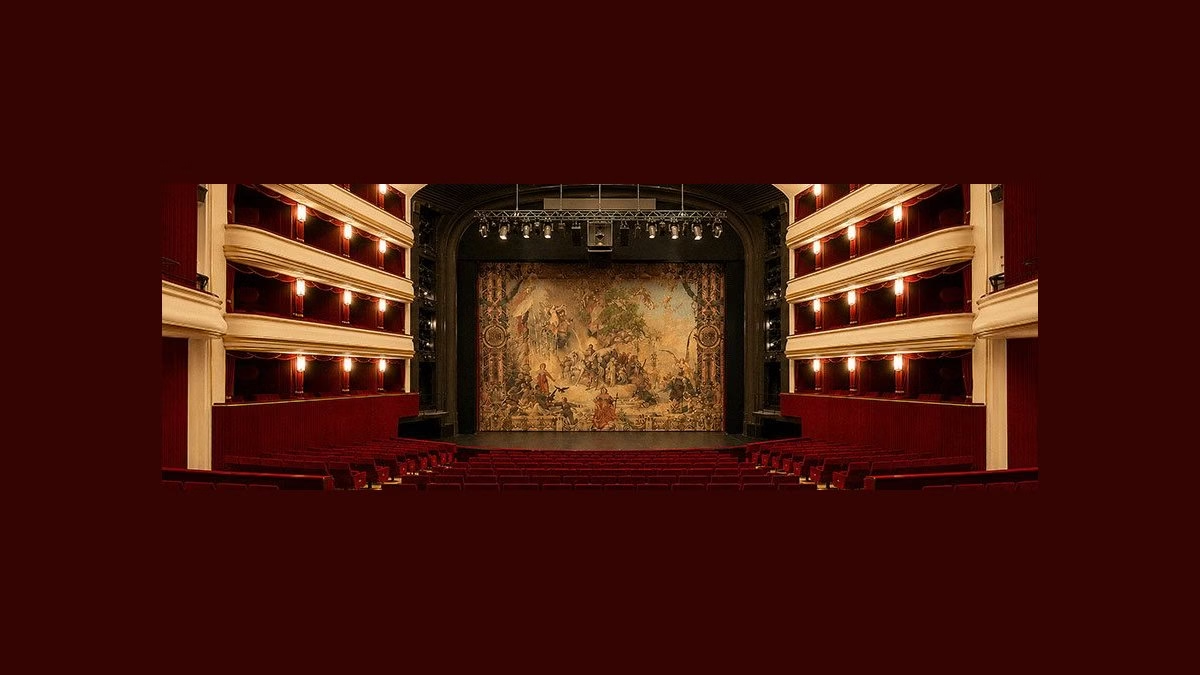
Vienna’s calendar for 19–25 October 2026 fills with museum shows, opera and concert nights, a national holiday, and the seasonal market openings that mark the shift into late autumn.
The main events in Vienna, Austria in the week of 19th-25th October 2026 run across art exhibitions, classical and contemporary music, stage performances, and public holiday traditions.
What they share is fixed dates and city venues. What separates them is how you get in — some need tickets bought weeks ahead, others are free and open to anyone who walks up.
Book the ticketed ones first. Vienna’s opera and the big concert halls sell single seats for a specific evening, and the good ones go before the week begins. If a performance is the reason for your trip, buy before you book the flight.
The free layer is the one visitors miss. National Day on 26 October brings the city out, and the seasonal markets need no reservation at all. If your dates are fixed and your budget is not, build the week around these and treat the ticketed nights as extras.
Check each venue’s own page for opening hours. Museums here often close one weekday, and it’s rarely the same day twice.
Vienna events this week at a glance
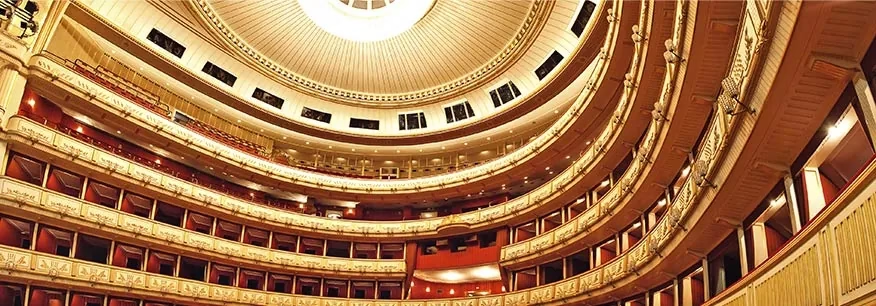
One lead point: book the ticketed items first, because the free ones don’t sell out. Everything below happens inside the same seven days.
| Event | Best for | Example |
|---|---|---|
| National Day celebrations | Free family day out | 26 October, Heldenplatz |
| Major museum exhibitions | Art lovers, rainy days | Albertina, Kunsthistorisches Museum |
| Opera and concert nights | Classical music fans | Wiener Staatsoper, Musikverein |
| Contemporary and club music | Late-night crowds | Flex, Grelle Forelle |
| Theater and stage shows | German-language audiences | Burgtheater, Volkstheater |
| Autumn markets and wine taverns | Food, casual evenings | Heuriger, seasonal markets |
| Guided city walks | First-time visitors | Innere Stadt tours |
The opera and the big museums are the two rows where waiting costs you. Standing room at the Staatsoper goes on sale at a set time on the day and is gone within minutes; seats bought a week out are the only reliable route.
Museum queues move fastest before 11am. After that, the Albertina and the Kunsthistorisches Museum both back up, and a rainy Tuesday is worse than a sunny Saturday.
For everything in the bottom three rows, do the opposite. Heuriger tables, club doors and most guided walks take walk-ups, so a plan made two days ahead is enough. If a walk lists a meeting point and a fixed start time, book it; if it lists only a district, turn up.
Skip the National Day crowds at Heldenplatz if anyone in your group dislikes noise, and catch the same celebrations from a side street instead.
National Day and public celebrations
National Day falls on 26 October, which sits just outside this week, so treat it as the closing note rather than the main act. The bigger point: the days before it are quieter on the streets and easier for museums. If you want the ceremony and the open buildings, plan for the 26th; if you want short queues and calm galleries, use 19–23 October instead.
- Free entry at federal museums and institutions on National Day, with long lines by mid-morning.
- Open-air ceremonies and displays in the city center, best viewed early.
- Family-friendly programming that suits children better than evening concerts do.
A concrete example: on 26 October, arrive at a federal museum by 9am. By 11am the same entrance can hold a queue of an hour or more, so the early slot is the one that works. Check each museum’s own website for that year’s exact opening hours, since they change.
Art exhibitions in Vienna this week
Art is where this week is strongest, because Vienna’s big museums run their autumn exhibitions through October. The Albertina, the Kunsthistorisches Museum, and the mumok all sit within a few tram stops of each other, so you can pair two in one day. If you have one free afternoon, pick one large museum; if you have a full day, do the MuseumsQuartier and stay there.
- Large permanent collections that reward a slow two to three hours.
- Temporary shows that change each season, so check the dates.
- Late-night openings on selected evenings, when crowds thin out.
For example, a single MuseumsQuartier ticket can cover more than one venue, and two hours there’s a realistic half-day. Confirm current exhibition dates and prices on each museum’s official page before you go, because autumn schedules shift.
Classical music and opera
Classical music is the reason many people pick this week, and the two anchors are the Wiener Staatsoper and the Musikverein. Both publish full monthly programs, so you can match a date to a work you actually want. If you care about the music, book a seated ticket early; if you just want the experience, standing room is the cheap route.
- Full opera productions with orchestra and staging, running most evenings.
- Symphony and chamber concerts at the Musikverein and Konzerthaus.
- Standing-room tickets sold shortly before curtain, limited in number.
A concrete example: standing-room places at the Staatsoper are sold at the box office a set time before the performance, and they go fast — check the opera house’s own ticketing page for that day’s rule. Seated tickets for popular titles can sell out weeks ahead, so the earlier you look, the better your choice.
Contemporary music and nightlife
Contemporary music covers the other half of Vienna’s sound, from indie rooms to electronic clubs, and it runs late. Venues like Flex and Grelle Forelle host touring acts and DJ nights, usually Thursday to Saturday. This suits you if you want a night out rather than a seated concert, and if you don’t mind starting after 10pm.
- Club nights with electronic and DJ sets, busiest on weekends.
- Live indie and rock shows from touring and local bands.
- Smaller bar venues for low-key gigs and cheap entry.
A concrete example: a club night on a Saturday can run from around 11pm until the early morning, so plan transport home before you go, since the U-Bahn stops overnight. Check each venue’s own listings for the exact date and door time.
Theater and stage performances
Theater in Vienna is mostly in German, which matters if you don’t speak it. The Burgtheater and Volkstheater carry the big productions, and some houses offer English surtitles or English-language nights. If your German is limited, look for a surtitled performance or a music-led show instead of a dense spoken play.
- Classic drama and modern plays at the national theaters.
- English surtitles on selected dates, so check the schedule.
- Dance and physical theater that works without strong language skills.
A concrete example: pick a dance or opera night if you want to skip dialogue entirely, and save the spoken drama for a surtitled date. Confirm which performances carry surtitles on the theater’s own program page.
Surtitles usually appear on a screen above the stage or on a small display at your seat, and they run in English only on certain dates rather than every night of a run. If a show you want has no surtitled date, the fallback is opera, operetta or dance, where the story survives without the words.
Seats in the upper tiers are cheap but can leave you craning at the screen instead of the stage. If reading along matters more than the view, pay for the stalls or the first rows of the balcony.
Markets, food and seasonal events
Autumn markets and wine taverns round out the week, and they’re the easiest events to join without planning. The Heuriger tradition — a wine tavern serving the season’s young wine — runs in the villages on Vienna’s edge, like Grinzing and Nussdorf. This suits you if you want a relaxed evening with food and no ticket.
- Heuriger evenings with local wine and cold plates, no booking needed.
- Seasonal markets that shift from summer to autumn produce in October.
- Street food and chestnut stands appearing as the weather cools.
A concrete example: a Heuriger dinner with a glass of wine and a plate of cold cuts is a simple, low-cost evening, and buses run to the wine villages from the city. Check opening days on each tavern’s own page, because many close one day a week.
Other events worth checking
A few more categories fill gaps in the week, and each is worth a look if the main ones don’t fit your dates.
- Jazz clubs: small rooms with live sets most nights, good for a late, seated evening and a drink. Cover charges are common and modest, and the music usually starts around nine, so there’s no need to arrive early.
- Gallery openings: free evening events in the smaller art districts, best for meeting people and seeing new work. They cluster on Thursday and Friday, and the crowd thins after the first hour, which is either the point or the problem depending on what you want.
- City walking tours: guided walks through the Innere Stadt, useful on your first day to get your bearings. The free models run on tips, so bring small notes; the paid ones cap group size and are easier to hear.
- Film screenings: original-language cinemas showing English films, a good rainy-day backup. Showings thin out on Mondays and Tuesdays, so check the day before rather than the day of.
How to choose Vienna events, 19th-25th October
The thing that settles your choice is how far ahead you can commit. If you’re booking weeks out, take the opera or a major exhibition — those are the ones that sell out, and early booking gets you a real seat. If you’re deciding on the day, stick to markets, Heuriger evenings, and walking tours, which need no ticket at all.
Your second deciding factor is language. If you don’t speak German, lean toward music, dance, and original-language cinema; if you do, the spoken theater opens up fully. Your third is time of day — if you’re working or in meetings until evening, the late club and jazz options fit better than a 7pm curtain.
These can be combined. A museum in the afternoon and an opera at night is a normal Vienna day, and a market dinner can follow a concert. But the ticketed items compete for your evenings, so picking one big night usually means leaving another. Decide which single event matters most, book it first, then fill the rest around it.
What to do first
Pick your one must-see — most likely an opera or a major exhibition — and book it today, because those are the only items here that run out. Once it’s booked, expect a confirmation with a date, time, and seat, and that email is your proof at the door.
Build the rest of the week around it with free markets and walks. Those need no booking, so they can move if the weather turns or you sleep in.
If a venue’s own page shows no availability for your dates, stop hunting for resale and switch to a different night or a different event — that’s the sign to change plans rather than chase a ticket. Resale listings for sold-out shows are where people lose both money and an evening.
One exception: if the only date that works is the one that’s gone, book the next-best event instead and keep the free day free. You’ll still have the trip you came for.
Conclusion
If you’re planning to go, check the official websites for exact times and any last-minute changes, then book your tickets early—popular events will fill up fast. You’ll also want to confirm whether any venues close for the holiday, so you aren’t caught off guard.
Last Updated on
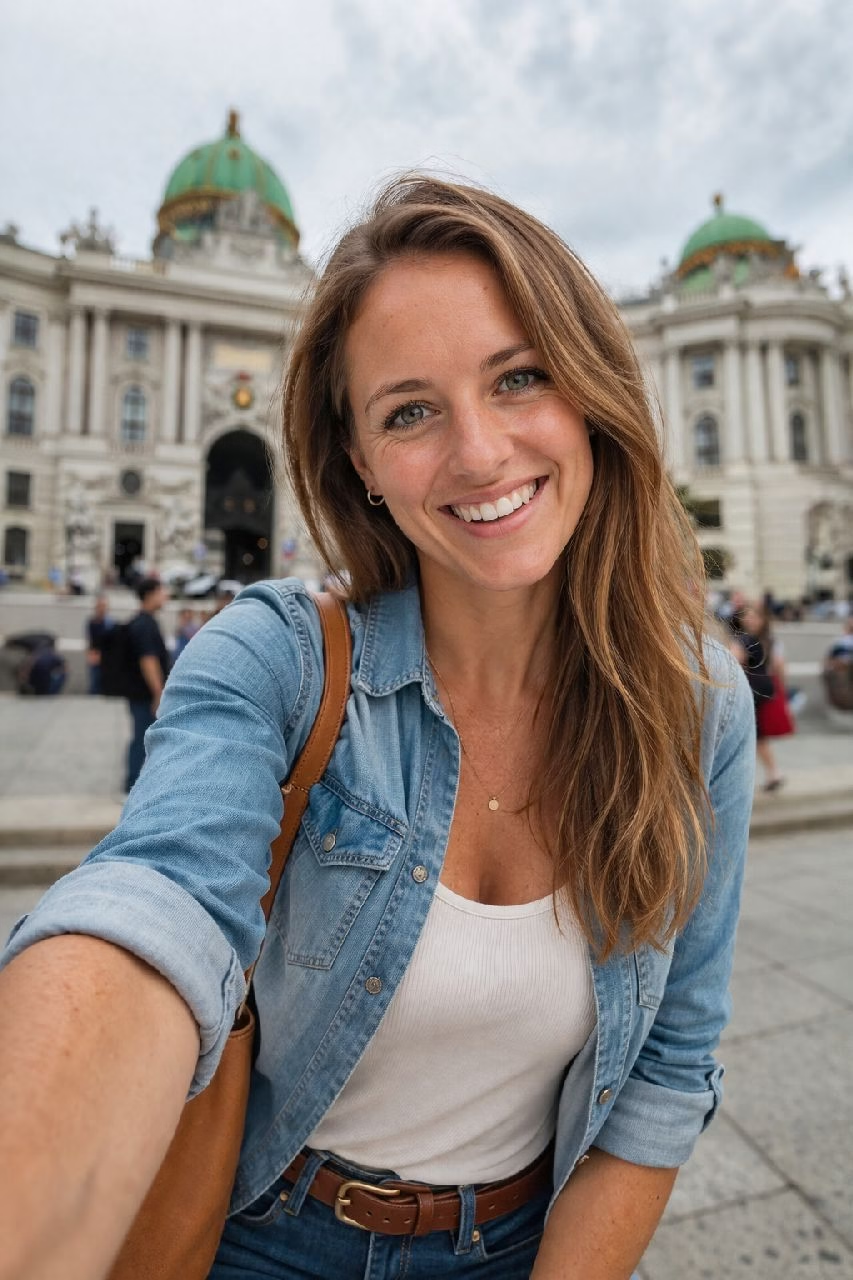
I’m Andrea, a travel writer based between Vienna and the Croatian coast, and I’ve been exploring both countries in depth for the past 10 years.
I’ve taken 50+ solo trips across Austria, Croatia, Germany, Switzerland, Slovenia, Italy and the wider Balkans, and I speak German, Croatian and English fluently, which means I get to have conversations most tourists never do. I know which Viennese coffee house the locals actually go to (hint: not the famous ones), and I know the Dalmatian islands well enough to tell you which ferry to take and which to avoid.
My writing is grounded in lived experience: I’ve navigated Austrian bureaucracy as a resident, hiked the Julian Alps in September when the crowds have gone, and eaten my way through Dubrovnik’s back streets at midnight. I cover Central Europe and the Adriatic for solo travellers who want something more than a highlight reel.
I also write in depth about Vienna and Austria at allaboutvienna.com, where you’ll find everything from neighbourhood guides to seasonal event coverage and expat tips.
When I’m not writing I’m usually hiking, swimming in the Adriatic, or arguing about which city makes better coffee. (It’s Vienna. It’s always Vienna.)