
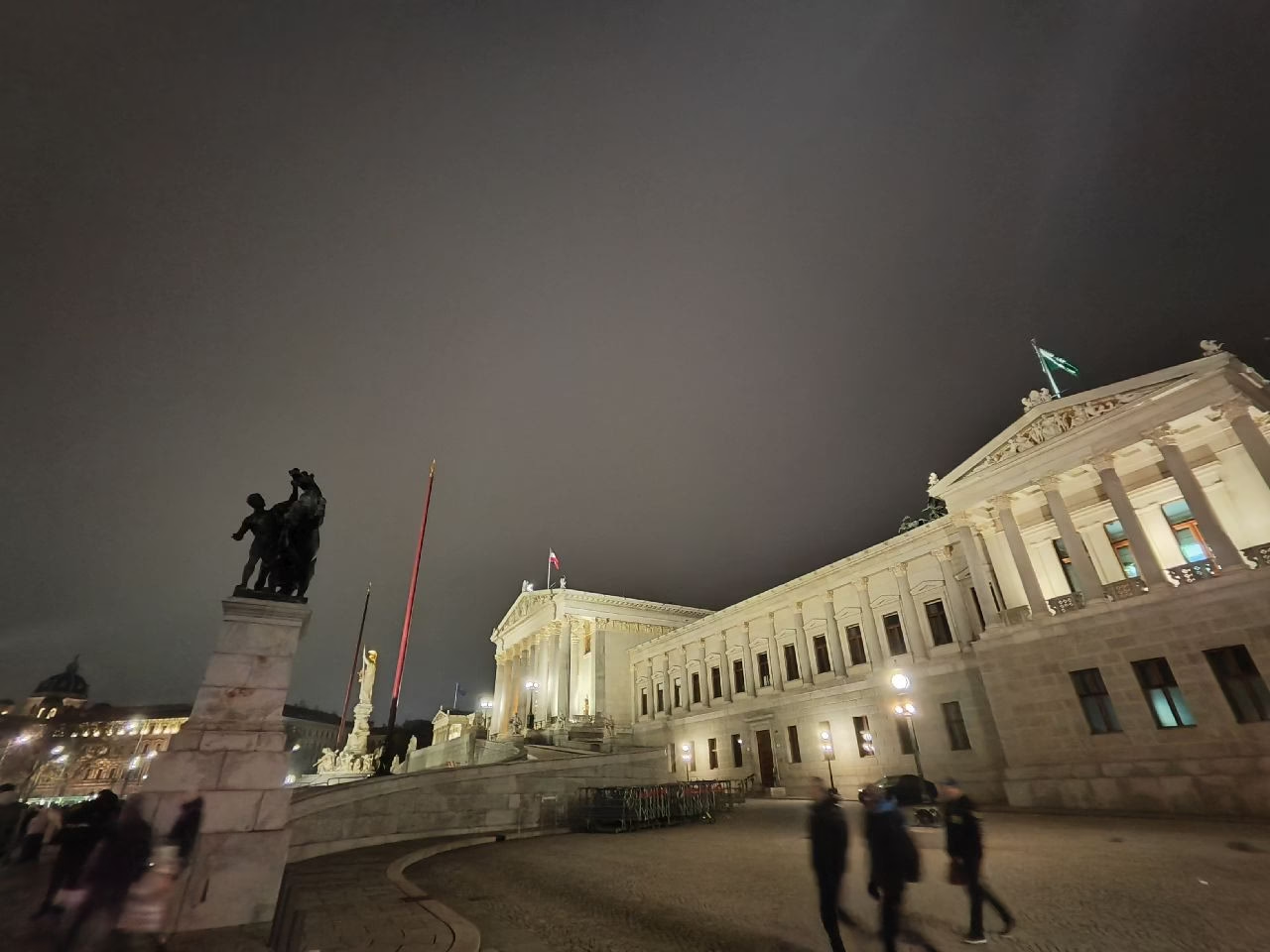
Vienna’s Ringstraße Boulevard is more than just a street—it’s a living museum, a testament to the city’s imperial past, and a showcase of grand architecture. For over 150 years, this circular avenue has been the heart of Vienna, circling its historic center and linking some of Austria’s most important sites. Walking the Ringstraße is not only a journey through history but also an experience filled with art, culture, and local life. This guide will take you step by step along Vienna’s iconic boulevard, revealing what to see, where to pause, and the hidden details that many first-time visitors miss.
Understanding The Ringstraße: Vienna’s Grand Idea
The Ringstraße was born out of a bold vision. In the mid-19th century, Emperor Franz Joseph I ordered the demolition of the old city walls, aiming to modernize Vienna and open it up to the world. Construction began in 1857, and by the 1870s, the boulevard was lined with palaces, government buildings, museums, and parks. The idea was to reflect the glory of the Austro-Hungarian Empire—a showcase for the world.
Today, the Ringstraße is about 5.3 kilometers (3.3 miles) long, circling the Innere Stadt (Old Town). Walking the whole loop takes most people 2–3 hours without stops, but with so much to see, it’s best to plan for at least half a day. The boulevard is divided into several sections, each with its own character and highlights.
Planning Your Walk: When And How To Explore
Vienna is a city for walkers, and the Ringstraße is best experienced on foot. Here’s how to make the most of your day:
- Start early: Mornings are quieter, perfect for photos and relaxed strolling.
- Comfortable shoes: The distance adds up quickly. Paved paths are smooth, but you’ll cover several miles.
- Weather: Spring and fall offer mild temperatures. In summer, shade from trees helps, but carry water.
- Navigation: Free maps are available at tourist offices. Google Maps works well, but street signs are clear.
If you get tired, the Vienna Ring Tram circles the boulevard and lets you hop on and off. Biking is also popular, but walking gives you the best chance to notice details.
The Major Sections Of The Ringstraße
The Ringstraße is not one road, but a series of connected streets. Here’s how the boulevard is usually divided, moving clockwise from the State Opera House:
| Section Name | Main Attractions | Atmosphere |
|---|---|---|
| Opernring | State Opera, Kärntner Straße | Elegant, lively |
| Burgring | Museum of Art History, Museum of Natural History | Grand, cultural |
| Dr.-Karl-Renner-Ring | Parliament, Volksgarten | Formal, political |
| Universitätsring | City Hall, University of Vienna | Academic, festive |
| Schottenring | Börse, Schottenkirche | Business, historic |
| Franz-Josefs-Kai | Danube Canal | Relaxed, trendy |
| Stubenring | MAK, Urania | Creative, scenic |
| Parkring | Stadtpark, Kursalon | Green, musical |
Each section offers unique views and experiences. Most visitors start at the State Opera and follow the boulevard clockwise, but you can begin anywhere.
Highlights Along The Ringstraße: What Not To Miss
Walking the Ringstraße is like flipping through the pages of Vienna’s history. Here are the top sites you’ll see along the way, with tips for enjoying each one:
Vienna State Opera (wiener Staatsoper)
At the southwestern corner of the Ringstraße sits the State Opera House, one of the world’s most famous. Built in 1869, it is a symbol of Vienna’s love for music. The building’s Neo-Renaissance style and grand staircase are impressive, even from the outside.
- Tip: Guided tours are available daily, offering a look behind the scenes.
- Fun fact: Standing tickets for evening performances can be bought for a few euros—arrive early to grab one.
Kunsthistorisches Museum And Naturhistorisches Museum
Across from the Burgring, two monumental museums face each other in Maria-Theresien-Platz. The Museum of Art History (Kunsthistorisches Museum) holds treasures from Rubens to Bruegel, while the Museum of Natural History features everything from dinosaur bones to rare gems.
- Tip: Both museums are architectural marvels. Even if you don’t enter, admire the symmetry and detail of their facades.
The Hofburg Palace
The former imperial palace is just off the Ringstraße. Today, the Hofburg houses the Austrian President’s offices, the National Library, the Imperial Apartments, and the famous Spanish Riding School.
- Tip: The Michaelerplatz entrance is a photogenic spot, with views of the palace dome and historic Roman ruins under glass.
- Hidden detail: Look for the statues of Hercules at the palace gates.
Austrian Parliament Building
The Parliament is easy to spot thanks to its Greek Revival columns and the statue of Pallas Athena in front. Built between 1874 and 1883, it was designed to represent democracy and wisdom.
- Tip: Free guided tours are available, but book ahead.
- Insight: Many visitors miss the intricate gold mosaics and the symbolic details on the building’s facade.
Volksgarten And Theseus Temple
Next to Parliament, the Volksgarten is a public park famous for its rose gardens. In spring and summer, over 3,000 rose bushes bloom here. In the center stands the Theseus Temple, a small, white building modeled after an ancient Greek temple.
- Tip: It’s a perfect spot for a short rest or a picnic.
Vienna City Hall (rathaus)
The Rathaus is a Gothic masterpiece, built between 1872 and 1883. Its tall spire and arcaded courtyard make it one of Vienna’s most photographed buildings. The square in front often hosts festivals, Christmas markets, and outdoor concerts.
- Tip: The Rathauskeller restaurant in the basement serves traditional Viennese food in historic surroundings.
- Practical: Check local schedules for events—some, like the Christmas market, are world-famous.
University Of Vienna
Founded in 1365, the University of Vienna is one of the oldest in Europe. The main building on Universitätsring is a blend of Renaissance and modern design. Statues of famous professors line the halls.
- Tip: The arcaded courtyard is open to visitors and offers a peaceful retreat.
Burgtheater
Opposite City Hall, the Burgtheater is Austria’s national theater and a major center for German-language drama. The exterior features statues of playwrights and mythological figures, while the interior boasts ceiling frescoes by Gustav Klimt.
- Tip: Even without attending a show, you can join guided tours to see the beautiful auditorium.
Schottenkirche And Börse
The Schottenring section includes the Schottenkirche, a church with origins in the 12th century, and the old Vienna Stock Exchange (Börse), an elegant 19th-century building.
- Insight: The Schottenkirche’s interior is often missed; its baroque chapels and art are worth a look.
Danube Canal And Urania
The Ringstraße touches the Danube Canal at Franz-Josefs-Kai. Here, the Urania observatory marks the city’s embrace of science and modernity. The area is popular for riverside walks and trendy bars.
- Tip: In summer, locals gather along the canal for music and street food.
Mak And Stadtpark
The Museum of Applied Arts (MAK) on Stubenring is a highlight for design fans. Across the boulevard, Stadtpark offers green space and the famous golden Johann Strauss statue.
- Tip: Stadtpark is a favorite for morning joggers and picnickers.
Kursalon Hübner
At the edge of Stadtpark, the Kursalon is a venue for classical concerts. The terrace overlooks the park, making it a romantic spot for coffee.
- Hidden gem: Free concerts sometimes take place outside the Kursalon in summer.
Ringstraße Architecture: Styles And Stories
The Ringstraße was designed as a “showcase of styles.” Architects mixed Neo-Gothic, Neo-Renaissance, Neo-Baroque, and other historic styles to create a sense of imperial grandeur. This approach, called Historicism, was meant to reflect Vienna’s diverse cultural heritage.
But there’s more than meets the eye. Many buildings hide symbols and messages in their designs:
- The Parliament’s Greek style reflects the ideals of democracy.
- The City Hall’s Gothic spires echo medieval tradition.
- The museums’ Renaissance look connects Vienna to the Italian masters.
A little-known fact: Some facades hide modern technology from the era, like early central heating systems and iron frameworks.
Parks, Gardens, And Green Spaces
One of the joys of walking the Ringstraße is the abundance of parks and gardens. These green spaces were part of the original plan, offering fresh air and relaxation in the city’s heart.
Key parks include:
- Stadtpark: Home to the Johann Strauss monument and a pond with ducks and swans.
- Volksgarten: Famous for its roses and shady benches.
- Burggarten: Once the imperial family’s private garden, now open to all.
Each park has its own feel. Stadtpark is musical and lively; Volksgarten is romantic; Burggarten is peaceful and classical.
Cafés, Food, And Local Flavor
Vienna is famous for its coffee culture, and the Ringstraße is dotted with historic cafés. These are not just places to eat and drink—they are part of the city’s social fabric.
Some iconic stops:
- Café Schwarzenberg (Parkring): Open since 1861, this is the oldest café on the Ringstraße. Known for coffee, cakes, and classic decor.
- Café Landtmann (Universitätsring): A favorite of Freud, politicians, and artists. Try the apple strudel.
- Rathauskeller: Traditional Viennese dishes in a vaulted setting under City Hall.
For a quick bite, look for Würstelstände (sausage stands) along the way. Grabbing a Käsekrainer (cheese-filled sausage) is a true local experience.
Events And Festivals On The Ringstraße
There’s almost always something happening along the Ringstraße. The broad avenues and open squares make perfect settings for public events.
Popular annual events include:
- Vienna City Marathon: Runners circle the Ringstraße in spring.
- Life Ball: One of Europe’s biggest charity balls, held at City Hall.
- Christmas Markets: The Rathausplatz transforms into a winter wonderland every December.
- Music Film Festival: Outdoor films and concerts at City Hall Square in summer.
Many events are free to attend. Even if you don’t plan ahead, you might stumble upon a parade, fair, or market.
Practical Tips For Walking The Ringstraße
To enjoy your walk fully, keep these tips in mind:
- Restrooms: Public toilets are available in parks and large buildings, but some cafés require a purchase.
- Public transport: Trams 1 and 2 follow most of the Ringstraße, and stops are clearly marked.
- Crosswalks: The boulevard is busy with traffic. Use crosswalks and pedestrian lights, especially near intersections.
- Language: Most signs are in German, but English is common in museums and major attractions.
- Accessibility: Sidewalks are wide and smooth, suitable for wheelchairs and strollers.
Route Suggestions: Classic And Themed Walks
While you can make your own route, here are two suggested walks to match different interests.
Classic Full Loop
- Start: Vienna State Opera
- Finish: Vienna State Opera (full circle)
- Distance: 5.3 km (3.3 miles)
- Time: 2–4 hours with stops
Route: Opera → Museums → Parliament → City Hall → University → Stock Exchange → Danube Canal → MAK → Stadtpark → Opera
Best for: First-time visitors who want to see everything.
Art And Architecture Focus
- Start: Kunsthistorisches Museum
- Finish: MAK (Museum of Applied Arts)
- Distance: 3 km (1.8 miles)
- Time: 2 hours with museum visits
Route: Museum of Art History → Parliament → City Hall → University → MAK
Best for: Art lovers and those with limited time.
Hidden Corners And Quiet Spots
Some sections of the Ringstraße are less crowded and offer peaceful moments:
- Burggarten: Relax among statues and palm trees.
- Schottenkirche: Step inside for quiet contemplation.
- Stadtpark’s eastern edge: Enjoy local life away from tourists.
Comparing The Ringstraße To Other European Boulevards
How does Vienna’s imperial ring compare to other great European avenues? Here’s a quick comparison:
| Boulevard | City | Length (km) | Main Features |
|---|---|---|---|
| Ringstraße | Vienna | 5.3 | Imperial palaces, museums, parks |
| Champs-Élysées | Paris | 1.9 | Shops, cafés, Arc de Triomphe |
| Unter den Linden | Berlin | 1.5 | Opera house, museums, Brandenburg Gate |
| Gran Vía | Madrid | 1.3 | Theaters, shopping, nightlife |
The Ringstraße stands out for its length, variety, and imperial architecture. Unlike others, it encircles the old city, offering a 360-degree view of Vienna’s history.
Hidden Details Most Visitors Miss
Even careful explorers often walk past secrets hidden in plain sight:
- Street lamps: Many lamps are original from the 19th century. Look for the city’s coat of arms on their bases.
- Statues on rooftops: Some buildings, like the Burgtheater, have statues high above street level that tell stories from mythology or history.
- Commemorative plaques: Plaques on facades reveal where famous composers, writers, or scientists once lived or worked.
- Fountain at Parliament: The fountain in front of Parliament features allegorical figures representing the main rivers of Austria.
Taking time to look up, down, and around can turn a simple stroll into a treasure hunt.
Guided Tours Vs. Self-guided Walks
Should you join a tour or explore alone? Both have advantages.
Guided Tours
- Pros: Expert guides share stories and facts, often including access to interiors and hidden spots.
- Cons: Less freedom to linger; set schedules.
Self-guided Walks
- Pros: Go at your own pace, stop for coffee, take detours.
- Cons: You might miss stories or overlook details.
If you want the best of both worlds, download an audio guide or use an app with detailed maps and commentary.
Accessibility And Visitor Services
Vienna is one of Europe’s most accessible cities. The Ringstraße is no exception:
- Sidewalks: Wide and mostly flat, with ramps at crossings.
- Wheelchair access: Major attractions have accessible entrances.
- Rest areas: Benches and cafés are frequent.
- Public Wi-Fi: Available at many hotspots along the boulevard.
Tourist information offices near the State Opera and St. Stephen’s Cathedral can provide additional help.
Sustainability And The Modern Ringstraße
Vienna is committed to sustainability. The Ringstraße has evolved with the times, balancing history with modern needs:
- Bike lanes: Dedicated paths run alongside much of the boulevard.
- Public transport: Trams and buses reduce car traffic.
- Green spaces: Parks are maintained with eco-friendly practices.
In recent years, the city has encouraged locals and visitors to use public transport or walk instead of driving. This helps preserve the elegant atmosphere and reduces pollution.
Famous Faces And Historical Moments
The Ringstraße has witnessed countless important events and famous residents:
- Sigmund Freud often walked here, stopping at Café Landtmann.
- Gustav Klimt painted theater ceilings on the Ringstraße.
- Emperor Franz Joseph opened the boulevard in 1865 with a grand ceremony.
Historic events, from imperial processions to modern demonstrations, have taken place along these wide streets.
Photographic Hotspots And Best Views
For memorable photos, try these spots:
- State Opera at dusk: The building glows with lights.
- Maria-Theresien-Platz: Symmetrical museums frame the statue of Empress Maria Theresa.
- Parliament from Volksgarten: Flowers and columns in one shot.
- City Hall at night: The illuminated facade is magical.
- Stadtpark pond: Golden Strauss statue reflected in water.
Sunrise and sunset are especially beautiful, with soft light on the historic buildings.
What Makes The Ringstraße Unique?
Unlike many historic boulevards, the Ringstraße was designed as a statement of power and culture, not just a place for shopping or traffic. Its unity of style, scale, and purpose is rare. Today, it remains a symbol of Vienna’s identity—a place where the past is always present, and everyday life continues among palaces and parks.
Many visitors focus only on the big sights, but the real charm comes from the small moments: a quiet corner in a rose garden, a hidden statue, the sound of a violin drifting from a street musician. The Ringstraße is best enjoyed slowly, with an open mind and a sense of curiosity.
Resources And Further Reading
If you want to dive deeper into Vienna’s history and the story of the Ringstraße, consider visiting the Wien Museum or reading up on the topic at the city’s official site. For a comprehensive overview, see the Ringstraße entry on Wikipedia.
Frequently Asked Questions
How Long Does It Take To Walk The Entire Ringstraße?
Most people need 2–3 hours to walk the whole 5.3 km (3.3 miles) if they walk at a steady pace. If you want to visit museums, parks, and cafés along the way, plan for at least half a day.
Is The Ringstraße Suitable For Children And Families?
Yes, the wide sidewalks, parks, and regular benches make it family-friendly. Kids can enjoy the gardens, fountains, and street performers, especially in Stadtpark and Volksgarten.
Can I Visit The Main Attractions For Free?
Many outdoor sights, gardens, and building facades are free to enjoy. Some museums and guided tours require tickets. Occasionally, special events or open days allow free entry to certain buildings.
What Is The Best Time Of Year To Walk The Ringstraße?
Spring (April–June) and fall (September–October) offer the best weather. Summer can be warm but lively, while winter brings festive lights and Christmas markets. Early mornings or evenings are quieter and cooler.
Are There Guided Tours In English?
Yes, many tour companies offer English-language guided walks of the Ringstraße and its main attractions. Audio guides and smartphone apps are also available for self-guided exploration.
Walking Vienna’s Ringstraße Boulevard is more than a sightseeing trip—it’s a full experience, blending imperial history, art, and local life. Whether you have a few hours or a full day, this grand avenue invites you to slow down, look closely, and let Vienna’s story unfold at your own pace.
Last Updated on
I’m Andrea, a travel writer based between Vienna and the Croatian coast, and I’ve been exploring both countries in depth for the past 10 years.
I’ve taken 50+ solo trips across Austria, Croatia, Germany, Switzerland, Slovenia, Italy and the wider Balkans, and I speak German, Croatian and English fluently, which means I get to have conversations most tourists never do. I know which Viennese coffee house the locals actually go to (hint: not the famous ones), and I know the Dalmatian islands well enough to tell you which ferry to take and which to avoid.
My writing is grounded in lived experience: I’ve navigated Austrian bureaucracy as a resident, hiked the Julian Alps in September when the crowds have gone, and eaten my way through Dubrovnik’s back streets at midnight. I cover Central Europe and the Adriatic for solo travellers who want something more than a highlight reel.
I also write in depth about Vienna and Austria at allaboutvienna.com, where you’ll find everything from neighbourhood guides to seasonal event coverage and expat tips.
When I’m not writing I’m usually hiking, swimming in the Adriatic, or arguing about which city makes better coffee. (It’s Vienna. It’s always Vienna.)